In brief
Knödel is a category, not one dish. Bavaria’s official specialities register documents Semmelknödel, made from stale bread rolls, eggs, onion and milk, as the everyday version found across all seven Bavarian districts. Franconia keeps two older, regional ones: Fränkische rohe Klöße, made from raw grated potatoes and traditionally torn apart rather than cut, and Gwichste, a nearly forgotten rye-flour dumpling from Lower Bavaria named for a surface that shines like polished shoes. The everyday boiled potato dumpling, Kartoffelknödel, turns up by name in the register’s own account of Schweinebraten’s Upper Bavarian style, served with dark-beer sauce and red cabbage. Which one lands on your plate mostly depends on the roast next to it and the region you are sitting in.
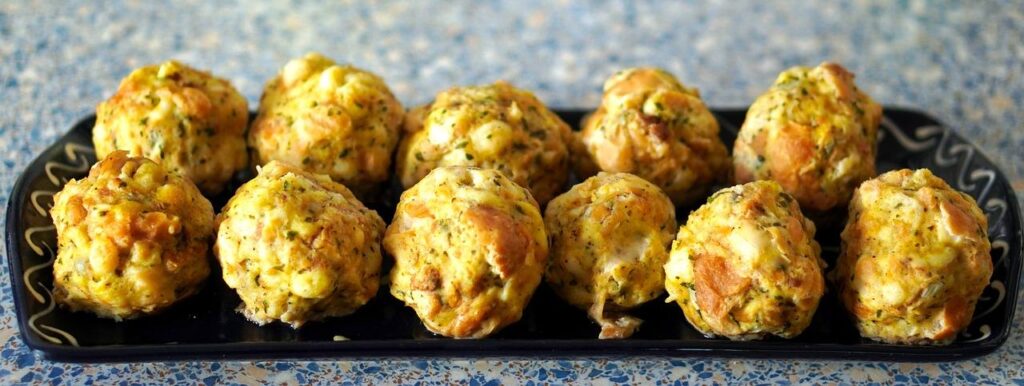
Ask for “Knödel” in Bavaria and the kitchen still has a follow-up question, because you have just ordered a category, not a dish, the way asking for “sandwich” would. Bread or potato is the first fork in the road, and after that the regions splinter further than any menu bothers to explain. This page sorts what is actually documented about each one and which plate it belongs next to; it is a companion to my guide to Bavarian food, where Knödel keeps showing up as the side dish everything else is built around.
Semmelknödel: the everyday dumpling
Semmelknödel, the bread dumpling, is the version you will meet most often. Bavaria’s official register gives a short ingredient list: stale bread rolls, eggs, onion and milk, formed and cooked in water1. It is documented across all seven Bavarian administrative districts, Mittelfranken, Niederbayern, Oberbayern, Oberfranken, Oberpfalz, Schwaben and Unterfranken, which makes it the closest thing this category has to a statewide standard.
The register calls it a “savory accompaniment to numerous dishes,” and lists the company it keeps: Bavarian pork roast, roasted goose leg, Lüngerl, an organ-meat stew, mushroom dishes, and plain meat broth1. Nothing goes to waste, either. Leftover Semmelknödel gets sliced and pan-fried until crisp, sometimes finished with a fried egg on top and a salad on the side.
Resi says Using stale bread is not a shortcut, it is the whole method, and treating it as a shortcut is how people end up with a dumpling the density of a doorstop. Fresh bread turns to paste in the mix; day-old rolls are what give Semmelknödel its texture. If yours came out gluey, that is almost certainly why, and no amount of extra egg fixes it.
Kartoffelknödel: named, but not fully documented
The everyday boiled potato dumpling most people picture when they hear “Knödel” does not have its own dedicated page on Bavaria’s specialities register the way Semmelknödel does. It does appear by name, though, in the register’s own account of Schweinebraten: the Upper Bavarian style is served “zu Dunkelbiersoße, Kartoffelknödeln und Blaukraut,” with dark-beer sauce, potato dumplings and red cabbage4. That confirms the dumpling and its pairing, even without a full ingredient breakdown from the register itself. My Schweinebraten guide has the rest of that plate.
Franconia's older dumplings
Franconia, in the north of Bavaria, keeps two dumplings that rarely leave the region.
Fränkische rohe Klöße, also called Kniedla, roha Kleeß or grüne Klöße, are made from raw grated potatoes, found in Mittelfranken, Oberfranken and Unterfranken2. They come with an instruction, not just a recipe: the register says the dumpling should be torn apart before eating, rather than cut, which breaks it into a coarser texture that holds more sauce. Texture varies by area, from loose to firm, and they are traditionally served with Franconian sauerbraten and with Bavarian Schweinebraten.
Gwichste is the rarer of the two, described in the register as an old specialty from Niederbayern that has almost been forgotten3. The ingredient list is famously short, rye flour, a pinch of salt, and water, sometimes with dark bread cubes added, and the dumplings were traditionally served in a large bowl of hot water at the center of the table, hard and glassy enough that diners had to pierce them with a fork to break in. The name itself is a description: their shiny surface “resembles freshly polished shoes,” gewichste Schuhe, which is where “Gwichste” comes from, and they are served alongside smoked meats or Kassler with sauerkraut.
Which Knödel goes with what
| Dumpling | Made from | Where it’s from | Served with |
|---|---|---|---|
| Semmelknödel | Stale bread rolls, egg, onion, milk | All seven Bavarian districts | Pork roast, roast goose, Lüngerl, mushroom dishes, broth |
| Kartoffelknödel | Potatoes | Oberbayern (Upper Bavaria) | Dark-beer sauce roast, red cabbage |
| Fränkische rohe Klöße | Raw grated potatoes | Franconia | Sauerbraten, Bavarian pork roast |
| Gwichste | Rye flour, salt, water | Niederbayern (Lower Bavaria) | Smoked meats, Kassler with sauerkraut |
Source: Genussorte Bayern, the Bavarian State Ministry of Food register1234.
Knödel is not Spätzle
It is worth saying plainly, because menus abroad sometimes blur the two: Knödel is a dumpling, formed into a ball and cooked whole in water. Spätzle is a soft egg noodle, pressed or scraped into boiling water in small irregular pieces. They can sit on the same table, both are common starch sides for a roast, but they are not the same category of food, and a recipe for one will not produce the other. My Spätzle guide covers that dish and where it sits between Bavaria and its neighbor Swabia, and my spätzle makers guide is the place to look if a press or a hopper is what you actually need, not a dumpling recipe.
How Bavaria eats them, step by step
- Check what’s on the plate next to it. A dark-beer sauce roast points to Kartoffelknödel; a plain pork roast or roast goose points to Semmelknödel; smoked meats point to Gwichste, if you happen to be in Niederbayern and find it on a menu at all1.
- Cut or tear, depending on which one. Semmelknödel and Kartoffelknödel are cut or eaten whole; Fränkische rohe Klöße is meant to be torn apart so the coarser surface picks up more sauce2.
- Save the leftovers. Sliced, pan-fried Semmelknödel with a fried egg is a legitimate second meal, not a consolation prize.
Frequently Asked Questions
What is Semmelknödel made of?
Stale bread rolls, eggs, onion and milk, formed into a ball and cooked in water, by Bavaria’s official description.
Is Kartoffelknödel a documented Bavarian specialty?
It is named in the official register as part of Schweinebraten’s Upper Bavarian serving style, though the register does not carry a standalone page with a full ingredient list for it the way it does for Semmelknödel.
What is the difference between Semmelknödel and Fränkische rohe Klöße?
Semmelknödel is made from bread and found across all of Bavaria. Fränkische rohe Klöße is made from raw grated potatoes and is specific to Franconia, and it is meant to be torn apart rather than cut.
What is Gwichste?
A nearly forgotten rye-flour dumpling from Niederbayern, made from just rye flour, salt and water, named for a shiny surface that resembles polished shoes.
What do you eat Knödel with?
It depends on the type: Semmelknödel goes with pork roast, roast goose, Lüngerl, mushroom dishes or broth; Kartoffelknödel with a dark-beer sauce roast and red cabbage; Fränkische rohe Klöße with sauerbraten; Gwichste with smoked meats.
Can you reuse leftover dumplings?
Yes, at least with Semmelknödel. The register describes slicing leftovers and pan-frying them crisp, sometimes topped with a fried egg and served with salad.
Why is a Fränkische rohe Kloß torn apart instead of cut?
Because tearing it creates a rougher surface that holds more sauce than a clean knife-cut would, per the register’s own instruction.
Is Knödel the same as Spätzle?
No. Knödel is a dumpling formed into a ball and cooked whole; Spätzle is a soft egg noodle pressed into boiling water in small pieces. Both can appear as a starch side for a roast, but they are made and cooked differently.
Related Articles
Sources
- Semmelknödel — Genussorte Bayern, Bavarian State Ministry of Food, Agriculture and Forestry (Kompetenzzentrum für Ernährung). Accessed 2026-09-24.
- Fränkische rohe Klöße — Genussorte Bayern, Bavarian State Ministry of Food, Agriculture and Forestry. Accessed 2026-09-24.
- Gwichste — Genussorte Bayern, Bavarian State Ministry of Food, Agriculture and Forestry. Accessed 2026-09-24.
- Bayerischer Schweinebraten — Genussorte Bayern, Bavarian State Ministry of Food, Agriculture and Forestry. Accessed 2026-09-24.