In brief
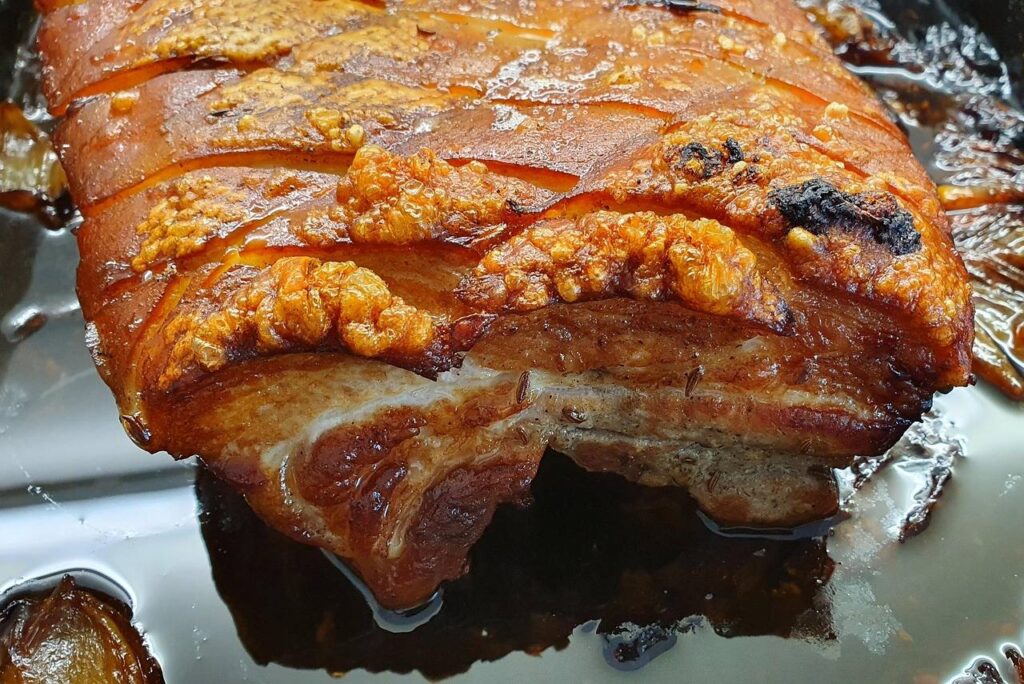
Schweinebraten is a Bavarian pork roast, cut from the shoulder, neck or ham, seasoned with salt, pepper, caraway and sometimes garlic, and roasted until the rind is crispy. The gravy is meat broth and dark beer, and the official Bavarian register is blunt about the one rule that matters: “the rind must be crispy”. Lower Bavaria serves it with sauerkraut and bread dumplings; Upper Bavaria serves it with the dark-beer sauce, potato dumplings and red cabbage. Munich’s own city guide backs up the plainer version of that same idea, describing it as served “in a sauce of dark beer with dumplings and cabbage salad”. It was not always a Tuesday-night dinner, either: in 1835, pork cost far more than the average meat price, and this roast moved from wealthier tables to a festive meal for ordinary people only over time.
Disclosure: some links on this page are affiliate links, marked by the products, tours and hotels they name. As an Amazon Associate, bavarianbistro.com earns from qualifying purchases. A purchase through these links may earn the site a commission at no cost to you, and it never affects what is recommended. How this works. Product prices and availability shown are as of the date stated and can change; the Amazon price at checkout applies.
Order Schweinebraten in Bavaria and you have entered an argument older than either regional recipe: the skin must be crispy, and a cook who serves it soft has not made a different style, she has made a mistake. This is the sliced Sunday roast on tables and beer-hall menus across the state, and Niederbayern and Oberbayern have been fighting about the rest of the plate for generations without ever touching that one rule. It sits next to Schweinshaxe in my guide to Bavarian food for a reason: both are pork, both drown happily in dark beer, and both live or die on the skin.
The cut and the seasoning
Bavaria’s official register of regional specialities is specific about where this roast comes from: the shoulder, preferably with the skin still on, the neck, or the ham1. The seasoning is short and unfussy, salt, pepper, caraway, and, depending on the recipe, garlic. Nothing here competes with the meat; the point is the roast itself and the crust that forms on top of it.
The one rule: the skin must be crispy
The register states the requirement almost as a law: “Die Schwarte muss knusprig sein,” the skin, or rind, must be crispy1. The roast goes into the oven with carrots, celery, parsley root and onions underneath it, and stays there until that rind delivers. A Schweinebraten with a soft, chewy top is, by the standard the dish is judged against, not finished.
Resi says If you cut into a Schweinebraten and the skin gives instead of cracking, a Bavarian cook does not call that a different style, she calls it a mistake, and she is right. I would send the plate back before I would call it fine, and I would not feel bad about it.
The dark beer gravy
The characteristic gravy is built from meat broth and dark beer, Dunkelbier in the register’s own words1. Munich’s city tourism guide describes the finished dish the same way from the diner’s side of the table, noting it is usually served “in a sauce of dark beer with dumplings and cabbage salad on the side”2.
The dark beer in question is what Bavarians call Dunkel, the everyday dark lager that was Munich’s standard beer before the paler Helles style overtook it starting in the 1890s3. My Bavarian beer styles guide has the rest of that lineup if you want to know what to pour alongside the roast.
Two regions, two plates
| Style | Region | What comes with it |
|---|---|---|
| Niederbayerischer Krustenbraten | Lower Bavaria | Sauerkraut and bread dumplings (Semmelknödel) |
| Oberbayerisches Schmankerl | Upper Bavaria | Dark-beer sauce, potato dumplings (Kartoffelknödel) and red cabbage |
Source: Genussorte Bayern, the Bavarian State Ministry of Food register1.
There is also a cold version, served with freshly grated horseradish and bread, and the traditional drink pairing the register gives is a liter of beer, finished with a fruit brandy1. Whichever style you get, the dumpling on the plate is worth knowing by name; my Knödel guide sorts the bread version from the potato one, and if cabbage shows up instead, sauerkraut vs Bayrisch Kraut explains why they are not interchangeable.
Schweinshaxe, the roasted whole knuckle rather than a sliced roast, is the dish people most often confuse this with; the two share a pig and a fondness for crackling but not a cut5. My Schweinshaxe guide covers the knuckle version on its own terms.
From luxury meat to festive dish
Pork was not always the everyday meat this roast now suggests. The register notes that pork roast started out as a luxury dish for the wealthy, and by 1835 pork cost significantly more than the average price of meat1.
Over time it moved down the table, from a rare dish served by the well-off to a festive meal that reached small farmers and laborers as well. That history is part of why Schweinebraten still carries a small sense of occasion in Bavaria, even now that pork is an everyday grocery item rather than a splurge.
Cooking one at home
The register does not publish a step-by-step method with exact oven temperatures or timings, so treat any specific recipe you find as one kitchen’s interpretation rather than an official standard. What it does establish clearly is the shape of the dish: a shoulder, neck or ham cut, salt, pepper, caraway and optional garlic, roasted with root vegetables underneath, finished until the rind cracks, with the pan drippings built into a gravy of broth and dark beer1.
Because the register does not fix a cooking time, the practical approach most home cooks land on is to sear the roast skin-side down first, then transfer it to the oven with the vegetables underneath and broth added partway through, finishing with a hot blast, a higher oven temperature or a few minutes under the broiler, to get the crackling the register insists on. None of those specific temperatures come from an official source, so treat them as a method, not a rule, and rely on the visual cue that actually matters: the skin has cracked and gone hard, not just browned.
A heavy cast-iron skillet earns its keep here, for browning the roast before it goes into the oven and for building the gravy in the same pan afterward. The Lodge Pre-Seasoned Cast Iron Skillet, 12 Inches, sold on Amazon, is sized for a shoulder or ham roast with room left for the vegetables underneath it4.
Resi says It earns its keep twice on this one plate: heavy enough to sear the skin properly, then it becomes the gravy pot the moment the roast comes out. One pan, two jobs, one less dish to wash.
Beyond the skillet, the shopping list the register supports is short: a pork shoulder, neck or ham roast with the skin on where you can get it, salt, pepper, whole or ground caraway, and a dark beer for the gravy. Caraway is worth checking your pantry for before you start, since it is less of a default spice in most American kitchens than it is in a Bavarian one; my German pantry staples page covers what else is worth stocking before you cook through this cluster of recipes.
Frequently Asked Questions
What cut of pork is used for Schweinebraten?
Shoulder, ideally with the skin on, neck, or ham, by the official Bavarian description.
What is the difference between Schweinshaxe and Schweinebraten?
Schweinebraten is a shoulder, neck or ham roast, sliced to serve, with a dark-beer gravy built into the pan. Schweinshaxe is the whole lower leg, roasted skin-on for crackling rather than sliced. My Schweinshaxe guide covers the knuckle version.
Why must the skin be crispy?
Because the register treats it as the defining requirement of the dish, stated outright as “the rind must be crispy.”
What beer goes in the gravy?
Dark beer, Dunkel in Bavarian terms, the everyday dark lager that was standard in Munich before Helles took over in the 1890s.
How does Lower Bavaria serve it differently from Upper Bavaria?
Niederbayern pairs it with sauerkraut and bread dumplings; Oberbayern with the dark-beer sauce itself, potato dumplings and red cabbage.
Was Schweinebraten always an everyday dish?
No. The register notes pork roast began as a luxury food for the wealthy, and by 1835 pork cost well above the average meat price, before it became a festive dish reaching ordinary households.
What do you drink with Schweinebraten?
The register’s own traditional pairing is a liter of beer, finished with a fruit brandy.
Related Articles
 Bavarian Food: The Dishes, How Munich Eats Them, and What to Cook at HomeFood
 Schweinshaxe: Crackling Pork Knuckle, the Beer-Hall WayFood
 Knödel: Bread Dumplings, Potato Dumplings and Which Goes with WhatFood
 Sauerkraut vs Bayrisch Kraut: Fermented Cabbage and Braised Cabbage Are Different DishesFood
 Bavarian Beer Styles: Helles, Dunkel, Weißbier, Märzen, Bock and the RestBeer
 Bratkartoffeln: German Pan-Fried Potatoes Done the Beer-Garden WayFood
 Cooking Bavarian in North America: Where to Buy the Ingredients and the Tools That MatterPantry and tools
 The German Pantry: Staples to Stock for Bavarian CookingPantry and tools
Sources
- Bayerischer Schweinebraten — Genussorte Bayern, Bavarian State Ministry of Food, Agriculture and Forestry (Kompetenzzentrum für Ernährung). Accessed 2026-09-24.
- Bavarian cuisine: these dishes have tradition — muenchen.de, City of Munich. Accessed 2026-09-24.
- Der Eisgalgen: Die Geschichte des Münchner Hellen — Bayerisches Bier. Accessed 2026-09-24.
- Lodge Pre-Seasoned Cast Iron Skillet, 12 Inches — Amazon.com. Accessed 2026-09-24.
- Bayerische Schweinshaxe — Genussorte Bayern, Bavarian State Ministry of Food, Agriculture and Forestry. Accessed 2026-09-24.