In brief
Bavaria has a short list of foods the European Union actually recognizes as its own, including the Breze, the Obazda spread, the Nürnberger Rostbratwurst and Bayerisches Bier itself. A longer list of dishes that fill every Bavarian menu, from Schnitzel to Rouladen, Sauerbraten and Spätzle, belong somewhere else entirely, mostly Austria, the Rhineland and Swabia. Bavaria is not Germany, and most of what a North American calls “German food” is Bavarian food wearing the bigger country’s name. Bavarians have their own word for everyone who lives outside their borders, and it is not a compliment.
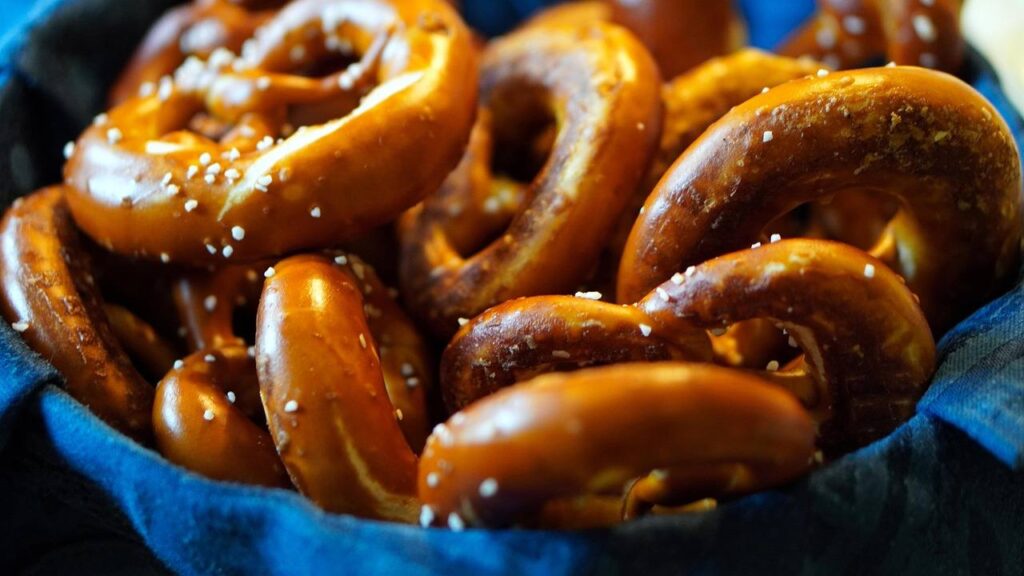
If you have ever eaten at a restaurant calling itself “German” and been served a soft pretzel, a schnitzel, a stein of Oktoberfest beer and a dirndl-wearing server, you have eaten a very Bavarian meal wearing a national costume three sizes too big. Germany has sixteen states, and fifteen of them would look at that menu and recognize almost nothing on it as their own. This page sorts the dishes that genuinely belong to Bavaria from the ones it has simply adopted so thoroughly that visitors assume the whole country eats this way, and it lives inside my guide to Bavarian food as the entry that starts the most arguments at a Munich dinner table.
What Bavaria actually owns
The European Union keeps a legal register of foods tied to a specific place, and Bavaria has managed to get a handful of its specialties onto it, which is as close to an official Bavarian food list as exists. The rule for getting on that list is specific, not sentimental: the EU’s own regulation defines a protected geographical indication as a name whose quality, reputation or other characteristic is essentially attributable to its geographical origin, with at least one step of making it actually happening there9. That is a narrower bar than most people assume, and it is why so few of the dishes on a Bavarian menu ever clear it. The Bavarian pretzel, filed as “Bayerische Breze,” has carried a Protected Geographical Indication since 21 February 2014, with a specification that spells out its “deep-glazed, copper-coloured crust” and distinguishes it from the thinner, higher-fat Swabian pretzel next door1. My page on making a real Bavarian pretzel covers the lye that gets it there.
Obazda, the beer-garden cheese spread of Camembert, butter and paprika, got the same protection in 2015, and the registration went through without a single objection filed against it2. The Obazda page has the actual recipe.
The Nürnberger Rostbratwurst, the finger-sized sausage sold three to a bread roll, has carried EU protection since July 20033. My Nürnberger Rostbratwurst page has the marjoram-heavy seasoning that makes it.
Even the beer has papers. “Bayerisches Bier” became a protected name in 2001, and the European Court of Justice went out of its way in 2009 to confirm the protection, comparing it to Champagne and Scotch Whisky45. My beer guide covers what that actually restricts, and a fuller rundown of everything on this list, plus a couple of names that almost made it, is on my page of Bavarian foods with EU protection.
That is a short list for a cuisine with this large a reputation, and it is precisely the point. Protection like this is expensive and slow to get, so its absence from a dish’s name proves nothing about how Bavarian it feels at a beer garden table. It is just the difference between a feeling and a filing.
On every Bavarian menu, and not Bavarian at all
Schnitzel
Order a Wiener Schnitzel in Munich and nobody blinks, but the name gives away the truth sitting in plain sight: Wien is Vienna, and the breaded veal cutlet is Austria’s dish, not Bavaria’s, dating to nineteenth-century Viennese kitchens and named on the same pattern as Vienna’s fried chicken dish, Backhendl. Bavaria sits an hour from the Austrian border, shares a language and a taste for fried things with it, and has absorbed the schnitzel so completely that most visitors never think to ask where it came from. My Wiener Schnitzel FAQ goes further into what the name is and is not allowed to mean.
Rouladen and Sauerbraten
Rouladen, the rolled and braised beef dish with bacon, onion and a pickle tucked inside, takes its name from the French “roulade,” a technique for turning tough, cheap cuts into something worth serving, and it spread nationwide in German cooking through the eighteenth and nineteenth centuries rather than starting in Bavaria at all6. Sauerbraten, the vinegar-marinated pot roast usually served alongside it, is a Rhineland dish at root, also claimed strongly by Westphalia and the Saarland, going back to a medieval habit of marinating tough meat in something sour to both tenderize and preserve it7. My page on where Sauerbraten actually comes from has the regional variations, several of which taste nothing alike.
Spätzle
Spätzle, the soft egg noodle that shows up under every schnitzel and every roast in Bavaria, is legally Swabian, not Bavarian. “Schwäbische Spätzle” carries its own EU protection, and the protected zone covers the entire German state of Baden-Württemberg plus Bavaria’s own Schwaben administrative district, which is the only part of Bavaria the protection actually reaches8. That district includes the Allgäu, which is why Bavaria’s real claim to Spätzle runs specifically through there. My Spätzle page sorts the legal reality from the menu reality.
Preißn, and why Bavarians keep score
Ask most North Americans to picture Germany and they will describe Bavaria: a dirndl, a cuckoo clock, a fairy-tale castle on a hill. Trachten outfits and Neuschwanstein really are distinctly Bavarian. The cuckoo clock is not; it comes from the Black Forest, which is nowhere near Bavaria, and Bavarians are perfectly happy to let the rest of the world keep making that mistake on their behalf.
Bavaria and the other fifteen German states share a passport and very little else, in Bavarian eyes, and Bavarians have historically rated themselves rather highly against everyone else in the country, whom they call Preißn, Prussians, whatever part of Germany they actually come from. It is said with a grin more than a sneer, and there is a saying for it: it is nice to be a Preiß, but higher to be a Bayer. Bavaria calls itself a Free State rather than an ordinary state, and it has never entirely gotten over the loss of its own king, Ludwig.
Resi says I am a Nordlicht, a Northern Light, myself, from the north of Germany, which is exactly why I get to say all of this: Bavaria is not Germany, it just has better marketing. Order the Weißwurst, but do not tell a Bavarian it represents the whole country, or you will be there a while.
Frequently Asked Questions
Is German food and Bavarian food the same thing?
No. Bavaria is one of sixteen German states, and its beer-garden dishes, dumplings and pretzel styles are regional, not national, even though they dominate how North Americans picture “German food.”
Is Schnitzel German or Bavarian?
Neither, strictly. Wiener Schnitzel is Austrian in origin, named for Vienna, and Bavaria simply eats a great deal of it.
Is Oktoberfest beer Bavarian?
Yes. Bayerisches Bier is one of the few EU-protected Bavarian foods, and Oktoberfest’s beer is brewed under that same protection by Munich’s breweries.
Is Spätzle a Bavarian dish?
Legally, no. Its EU protection is Swabian, and it only reaches into Bavaria through the Schwaben district, including the Allgäu.
Why do people confuse Bavaria with all of Germany?
Bavaria’s Trachten clothing, castles and beer culture are highly visible and heavily marketed for tourism, and dishes it has simply adopted, like Schnitzel and Rouladen, get lumped in as further proof.
Are cuckoo clocks Bavarian?
No. They come from the Black Forest, which is in a different part of southern Germany entirely, but the two get conflated constantly outside Germany.
What is a Preiß?
A Bavarian’s word, often affectionate, sometimes not, for any German from outside Bavaria, from the old word for a Prussian.
Is Rouladen actually from Bavaria?
No. It spread nationwide from French-influenced cooking, and the version paired with Sauerbraten is more closely tied to the Rhineland than to Bavaria.
Related Articles
 Bavarian Food: The Dishes, How Munich Eats Them, and What to Cook at HomeFood
 The Bavarian Foods with EU Protection: Breze, Obazda, Rostbratwurst, Bier and MoreFood
 Sauerbraten: The Marinated Pot Roast, Where It Comes From and How Bavaria Serves ItFood
 Spätzle: Swabian by Law, Bavarian by AppetiteFood
 Wiener Schnitzel FAQ: Veal or Pork, Austrian or German, and Why It Is Not a Hot DogFood
 Obatzda: The Bavarian Beer-Cheese Spread, What Goes in It and How to Make ItFood
 Bavarian Beer, Explained: Styles, Breweries, Beer Halls and Beer GardensBeer
 Rouladen: The Rolled Beef Dish on Every Bavarian Menu That Is Not BavarianFood
Sources
- Bayerische Breze specification — EUR-Lex, Official Journal of the European Union. Accessed 2026-09-26.
- Commission Implementing Regulation (EU) 2015/1002 — EUR-Lex, Official Journal of the European Union. Accessed 2026-09-26.
- Nürnberger Rostbratwürste — Genussorte Bayern, Bavarian State Ministry of Food, Agriculture and Forestry. Accessed 2026-09-26.
- Bayerisches Bier — UK Government protected food and drink names register. Accessed 2026-09-26.
- Bayerisches Volksgetränk — Bayerischer Brauerbund. Accessed 2026-09-26.
- Everything Rouladen — Germany Footsteps. Accessed 2026-09-26.
- Why Does Sauerbraten Taste So Different in the Rhineland Compared to Franconia or Saxony? — Germany Shop. Accessed 2026-09-26.
- Schwäbische Spätzle / Schwäbische Knöpfle — UK Government protected food and drink names register. Accessed 2026-09-26.
- Regulation (EU) No 1151/2012, Article 5 — EUR-Lex, Official Journal of the European Union. Accessed 2026-09-26.