In brief
Exactly six breweries have the right to serve beer at Oktoberfest: Augustiner, Hacker-Pschorr, Hofbräu (Staatliches Hofbräuhaus), Löwenbräu, Paulaner and Spaten, under a rule restricting pouring rights to “established and reputable traditional Munich breweries” brewing under both the 1487 Munich and 1906 German purity laws, and since 2022 “Oktoberfestbier” itself carries EU Protected Geographical Indication status and may only be brewed in Munich under that specification. Each of the six also runs its own address in the city: Augustiner traces to 1328 and Munich’s Augustinian monks, Paulaner to 1634 and the Neudeck ob der Au monastery, Hacker-Pschorr to a brewery first recorded in 1417, Löwenbräu to a brewing site working since at least 1524, Spaten to the first Munich Hell it brewed on 21 March 1894, and Hofbräu to Duke Wilhelm V’s court brewery of 1589. A 2026 Oktoberfest Maß from any of them runs €14.80 to €15.90, with the Augustiner-Festhalle’s own price rising from €14.50 in 2025 to €14.90 in 2026.
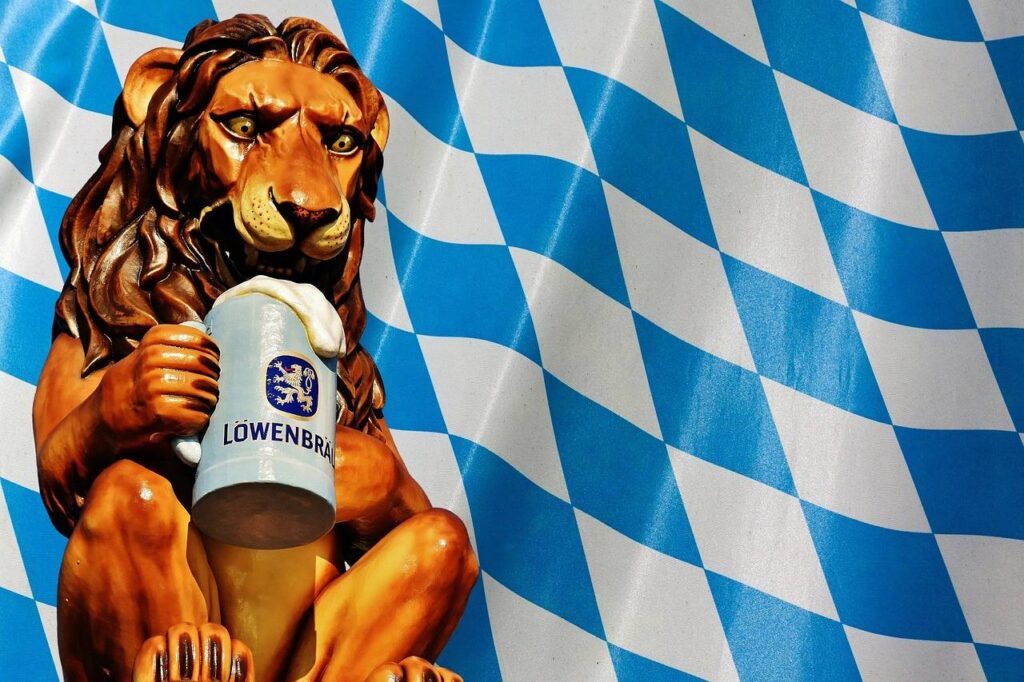
“The six Munich breweries” sounds like marketing copy, and it is not: it is a formal category the City of Munich actually enforces every September at Oktoberfest, with a velvet rope no amount of money gets you past if your brewery is not one of the six. It also happens to double as the shortest, most reliable list of where to drink in this city for the other eleven months of the year. This page is part of my Bavarian beer guide; for the Hofbräuhaus specifically, see is the Hofbräuhaus worth it.
The rule that makes the six
Oktoberfest’s own site is direct about the restriction: “Only beer from established and reputable traditional Munich breweries may be served at Oktoberfest,” a standard that requires compliance with both the Munich Purity Law of 1487 and the German Purity Law of 19061.
The city, as organizer, does not set beer prices, but it does review them “to ensure they are reasonable,” and in 2026 that reasonableness produced a Maß price band of €14.80 to €15.90 across the tents, with the wheat-beer-only Weinzelt charging a premium of €18.40; between six and seven million liters of beer are drunk at Oktoberfest each year, all of it from these six houses8.
Prices move a little each year. The Augustiner-Festhalle’s own Maß rose from €14.50 in 2025 to €14.90 in 2026, in line with the roughly 2.38 percent average increase the city recorded across all the tents98.
The six, one at a time
Augustiner. Munich’s oldest of the six, tracing to 1328 when Augustinian monks began brewing near Munich Cathedral. It is also, by its own description, “Munich’s last large private brewery,” majority-owned since 1996 by the Edith Haberland Wagner Foundation, and it draws its brewing water from its own 230-meter well, malts its own grain on-site, and insists on serving its Helles from traditional wooden barrels, “the oldest reusable container in the world.” Visit its beer garden, Augustiner-Keller, for Edelstoff straight from the barrel210.
Hacker-Pschorr. The oldest address of the six: a brewery at the corner of Sendlinger- and Hackenstraße is first mentioned in 1417. The Hacker and Pschorr names merged into one family business in 1793, when Joseph Pschorr married Maria-Theresia Hacker and took over her father’s brewery, and the modern Hacker-Pschorr Bräu AG formed from a later merger in 1972; the historic Altes Hackerhaus still operates on the original 1417 site4.
Hofbräu (Staatliches Hofbräuhaus). Founded in 1589 by Duke Wilhelm V for the Bavarian court, and opened to the public in 1828 by King Ludwig I. The Platzl tavern is the address everyone knows; brewing itself moved to Haidhausen and then, in 1988, to Munich’s Riem district7. Full profile: is the Hofbräuhaus worth it.
Löwenbräu. The “lion brewery” traces to a site working since at least 1524, with the Löwenbräu name first appearing in 1746/47. Georg Brey bought the operation in 1818 and grew it fast: by 1863–64 it produced a quarter of all beer brewed in Munich, and by 1912 nearly a million hectoliters a year, with the lion trademark registered in 1886. Its Munich stage today is the Bierpalast im Löwenbräukeller511.
Paulaner. Founded in 1634 when monks at the Neudeck ob der Au monastery began brewing, under the 1516 Reinheitsgebot, a strong beer they called Salvator, a recipe that dates to 1773 and remains the brewery’s signature. Paulaner’s Bräuhaus on Kapuzinerplatz has brewed on-site since 1989, and the brewery also created what it calls the world’s first alcohol-free wheat beer in 1986, and now exports to more than 80 countries3.
Spaten. The brewery behind the beer style Munich is best known for: on 21 March 1894, Spaten released the first Münchner Hell, at a time when dark, sweet-malty beer was the regional default. Spaten also brews an Oktoberfestbier each spring for the festival and claims more than 600 years of brewing history; rather than a historic tavern hall, it runs a visitor center6.
Quick reference
| Brewery | Founded | Known for | Visit |
|---|---|---|---|
| Augustiner | 1328 | Helles from wooden barrels, last large private Munich brewery | Augustiner-Keller |
| Hacker-Pschorr | 1417 | Münchner Hell, Kellerbier, the 1793 family union | Altes Hackerhaus |
| Hofbräu | 1589 | State ownership, opened to the public 1828 | Hofbräuhaus am Platzl |
| Löwenbräu | c. 1524 site / 1746–47 name | Scale — nearly a quarter of Munich’s beer by the 1860s | Bierpalast im Löwenbräukeller |
| Paulaner | 1634 | Salvator strong beer, wheat beer | Paulaner Bräuhaus, Kapuzinerplatz |
| Spaten | 600+ years claimed; Hell debuted 1894 | Inventing Münchner Hell | Spaten visitor center |
Source: Augustiner-Bräu2; Paulaner3; Hacker-Pschorr4; Löwenbräu5; Spaten6; Hofbräuhaus7.
None of the six runs a public factory tour inside the city the way some breweries elsewhere in Bavaria do. Weihenstephan, in nearby Freising, offers a bookable brewery tour with English slots on Tuesdays and Wednesdays at 10 a.m., though children under 6 are not admitted and anyone under 17 needs an accompanying adult12.
Resi says If what you actually want is tanks and mash tuns rather than a tavern, none of the six will give you that inside Munich, and I see no point pretending a gift shop is a brewery tour. Freising is a short train ride away, and it earns the trip for anyone who wants to see the actual brewing rather than just the results of it, several liters at a time.
Resi says Ask me which of the six to drink at first and I will steer you toward Augustiner every time. Wooden barrels are not a gimmick, they change the beer, and it is still the last of the six that answers to a foundation rather than a corporate parent, which is about as Bavarian a fact as a beer can carry. There is an old line here about preferring to be a Bavarian over a Prussian any day of the week, and Augustiner answering to no one outside the state is exactly the kind of thing that saying was invented to gloat about. That is not a knock on the other five. It is just where I would sit down first.
Frequently Asked Questions
Which breweries are allowed to serve beer at Oktoberfest?
Six: Augustiner, Hacker-Pschorr, Hofbräu, Löwenbräu, Paulaner and Spaten, under a rule requiring compliance with the Munich Purity Law of 1487 and the German Purity Law of 1906.
Which of the six Munich breweries is the oldest?
By brewing site, Hacker-Pschorr, first recorded in 1417. By continuous brand, Augustiner, founded in 1328 by Augustinian monks.
Is Oktoberfest beer a legally protected name?
Yes. Since 2022, “Oktoberfestbier” carries EU Protected Geographical Indication status and may only be brewed in Munich under its specification.
How much is a Maß of beer at Oktoberfest in 2026?
Between €14.80 and €15.90 depending on the tent, or €18.40 at the wheat-beer-only Weinzelt.
Which Munich brewery is privately owned rather than corporate?
Augustiner, majority-owned by the Edith Haberland Wagner Foundation since 1996, described by the brewery as “Munich’s last large private brewery.”
Do any of the six breweries offer public brewery tours?
Not the kind of factory tour Weihenstephan runs in nearby Freising; the six generally offer a tavern, beer hall or visitor center in Munich rather than a working-brewery tour.
Related Articles
Sources
- The six Munich breweries at Oktoberfest — oktoberfest.de, City of Munich. Accessed 2026-09-24.
- Augustiner-Bräu — Augustiner-Bräu Wagner KG. Accessed 2026-09-24.
- Paulaner — Paulaner Brauerei. Accessed 2026-09-24.
- Hacker-Pschorr — Hacker-Pschorr Bräu. Accessed 2026-09-24.
- Löwenbräu: Historie — Löwenbräu München. Accessed 2026-09-24.
- Spaten — Spaten-Franziskaner-Bräu. Accessed 2026-09-24.
- History — Hofbräuhaus. Accessed 2026-09-24.
- Beer price — oktoberfest.de, City of Munich. Accessed 2026-09-24.
- Beer prices 2026: breweries — muenchen.de, City of Munich. Accessed 2026-09-24.
- Augustiner-Keller — Augustiner-Keller. Accessed 2026-09-24.
- Löwenbräu — Löwenbräu München. Accessed 2026-09-24.
- Brewery tour — Bayerische Staatsbrauerei Weihenstephan. Accessed 2026-09-24.