In brief
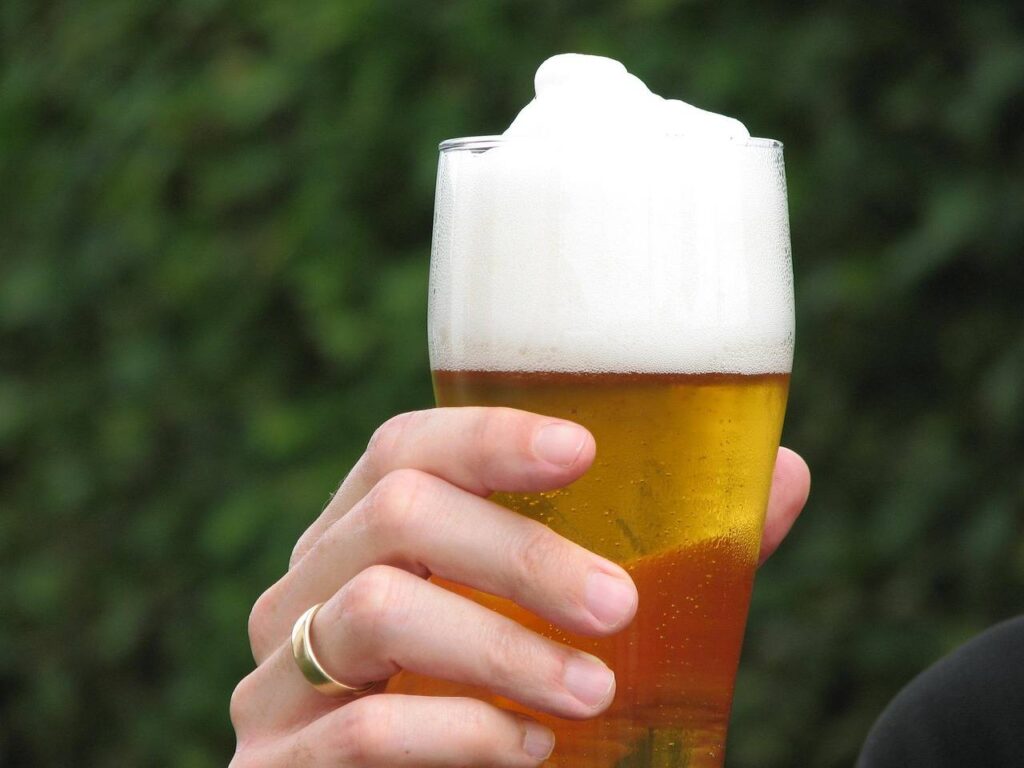
Weihenstephaner, Schneider Weisse, Paulaner, Erdinger and Ayinger are the five Bavarian hefeweizen names I would tell a North American to learn, and that is my judgment, not a certified ranking. Weißbier only became Bavaria’s best-selling beer style after a 1960s revival; before that it spent decades in what the Bavarian Brewers’ Association calls a “Dornröschenschlaf,” a Sleeping-Beauty slumber. Four of the five have a named US importer as of September 2026: Paulaner through Paulaner USA, Weihenstephaner through Total Beverage Solution, Erdinger through US Beverage, and Schneider Weisse through Global Beer Network. Whichever one you find, pour it into an actual Weizen glass, tall and curved to hold the head a hefeweizen throws.
Disclosure: some links on this page are affiliate links, marked by the products, tours and hotels they name. As an Amazon Associate, bavarianbistro.com earns from qualifying purchases. A purchase through these links may earn the site a commission at no cost to you, and it never affects what is recommended. How this works. Product prices and availability shown are as of the date stated and can change; the Amazon price at checkout applies.
If the only wheat beer you have had came in a chalice glass with a lemon wedge jammed in the rim, you have not had a hefeweizen, you have had something a bar decided looked German enough. The real thing is cloudy, faintly sweet, and tastes of banana and clove without anyone adding either, and Bavaria has been sorting out who brews it best since long before it became fashionable anywhere else. My Bavarian beer guide covers the style family end to end; this page is about five specific breweries and which of their bottles you can actually find on a North American shelf.
A style that nearly disappeared
Wheat beer reached Bavaria from Bohemia in the 15th century, and for a long stretch after that it was not everyone’s to brew. Duke Wilhelm IV granted a single Lower Bavarian noble family the exclusive right to brew it in 1548, and when that family died out the Wittelsbach dukes absorbed the privilege themselves, running a Bavaria-wide wheat-beer monopoly that helped fund the state budget for two centuries1. The monopoly ended in 1798. What followed was not a rush of new brewers so much as a long quiet spell: the Brauerbund’s own history calls the next century-plus a “Dornröschenschlaf,” and it took a 1960s revival to turn Weißbier into what it is today, Bavaria’s best-selling beer category, still growing1. None of that history has much to do with which bottle to buy. It explains why the breweries below all talk about the style with the seriousness of something that was once a royal monopoly and is now everybody’s to brew.
The five names
Weihenstephaner. Brewed at what is generally cited as the world’s oldest working brewery, on the hill above Freising a short train ride from Munich. Its hefeweizen is the one most often used as the reference pour by people who taste a lot of them.
Schneider Weisse. A Munich house that leans into the wheat style rather than treating it as one line among many; its US-facing catalog runs from the standard Original through the stronger Aventinus and the barrel-aged Eisbock, all built on the same wheat-beer base4.
Paulaner. One of Munich’s six big breweries, and by its own account the most internationally traveled: it says its beer is exported to and enjoyed in over 80 countries, and that 2016 was the first year it shipped a million hectolitres abroad, on top of brewhouses it runs in Beijing, Shanghai, Singapore and St. Petersburg2.
Erdinger. From the town of Erding northeast of Munich, and the largest wheat-beer specialist by volume; its portfolio, as its US importer lists it, runs to seven distinct styles built around the wheat base, including a non-alcoholic version and a Dunkel5.
Ayinger. A smaller, family-run Upper Bavarian brewery that shows up on North American import lists more often for its stronger seasonal beers than for its hefeweizen, but the hefeweizen is there and worth the search if you find it.
A word on labels before you buy: not everything a wheat brewery makes is a hefeweizen in the strict sense. Schneider Weisse’s own catalog runs from the standard Original and Hefeweiss, which are the style this page is about, up through Aventinus, a much stronger Weizenbock, and Eisbock, a Weizenbock partially frozen and drained of water to concentrate it further4. Erdinger’s seven-strong lineup includes a Dunkel (dark) and a non-alcoholic version alongside the standard Weissbier5. If a bottle says Weizenbock or Doppelbock on the label, it is a heavier, boozier cousin, not the everyday drink this page recommends.
Resi says “Worth seeking out” is exactly that, a personal opinion and not a scoreboard. I am not going to tell you Weihenstephaner beats Schneider Weisse; nobody has run that contest in a way I would trust, and anyone who tells you they have is selling something. What I will say is that all five are the real style, made where the style comes from, and that is a higher bar than most of what shares a shelf with them.
Which ones actually reach North America
This is the part that matters if you are standing in a bottle shop rather than a Munich beer garden. As of September 2026, four of the five have a named importer bringing them into the United States on purpose, not as an occasional pallet that wandered over.
Paulaner is imported by Paulaner USA, based in White Plains, New York, whose own site describes its portfolio as “Paulaner, Hacker-Pschorr, and Tsingtao”3. Weihenstephaner has been brought in by Total Beverage Solution, of Mt. Pleasant, South Carolina, since 2006, per that importer’s own trade site6. Erdinger’s US rights moved to US Beverage, headquartered in Stamford, Connecticut, effective January 1, 2024, in a deal the importer announced by name, naming the styles it would carry: “Weissbier, Non-Alcoholic, Kristall, Dunkel, Pikantus, Oktoberfest, and Brauhaus Helles”5. Schneider Weisse appears on the roster of Global Beer Network, whose product photos on its own site show the Eisbock, Aventinus, Festbier and Hefeweiss lines4.
Ayinger is the one I cannot fully confirm. It appears among the breweries listed on the importer Merchant du Vin’s own site, under the tagline “Importing Europe’s Finest Beers,” but the page never states in a sentence that Merchant du Vin is Ayinger’s importer, only implies it by putting the brewery on the list7. Treat that one as likely rather than certain until a clearer page turns up.
None of the four confirmed importers publish a consumer shipping option; each runs a store locator instead, pointing you to a retailer rather than your mailbox. My page on ordering German beer online covers the actual delivery paths, and none of them are as simple as clicking a brewery’s own site.
What to pour it in
A hefeweizen needs the room a standard pint glass does not give it. My beer glasses guide covers the whole family; the short version is that the tall, slightly hourglass-shaped Weizen glass exists specifically to hold this style’s enormous, long-lasting head, and to leave enough room above the liquid for it to sit there without spilling over your hand. A Schott Zwiesel Basic Wheat Beer Glass, 0.3 liter and dishwasher-safe, sells as a set of four for $45.64 as of September 20268.
Resi says If you are buying one glass for this style and this style only, get the Schott Zwiesel Basic Wheat Beer Glass and stop shopping. It is made in Germany, it is dishwasher-safe, and it is sized for a restaurant pour rather than a full 0.5-liter bottle, so with a big bottle you will be topping it up partway through, which with this style is not a hardship.
Frequently Asked Questions
What is the best German hefeweizen beer?
There is no independently verified ranking, so any answer is opinion. Weihenstephaner is the one most often used as a reference pour, but Schneider Weisse, Paulaner, Erdinger and Ayinger are all the genuine style and worth trying before you decide for yourself.
Is hefeweizen the same as Weißbier?
Yes, in Bavaria the terms describe the same wheat-beer style; “Weißbier” (white beer) is the older regional name and “Hefeweizen” (yeast wheat) describes the same unfiltered version.
Which German wheat beers are sold in the United States?
Paulaner, Weihenstephaner, Erdinger and Schneider Weisse each have a named US importer as of September 2026. Ayinger appears on an importer’s brewery list without an explicit statement confirming the relationship.
Why did Bavarian wheat beer almost disappear?
For roughly two centuries it could only be brewed under a ducal monopoly, and after that ended in 1798 it fell out of fashion for decades before a 1960s revival made it Bavaria’s best-selling beer category.
What glass should I use for a German hefeweizen?
A tall, curved Weizen glass, built to hold the style’s large, long-lasting head and to leave room for it above the beer.
Can I buy German hefeweizen online in the US?
Not directly from most of the breweries or their importers, which run retail locators rather than shipping to consumers. Third-party retailers sometimes carry it; see the page on ordering German beer online for the actual options.
Related Articles
 Bavarian Beer, Explained: Styles, Breweries, Beer Halls and Beer GardensBeer
 Weißbier: Bavaria’s Wheat Beer, and Where the Banana and Clove Come FromBeer
 Bavarian Beer Glasses: Maßkrug, Weizen Glass, Willi Becher and Which Beer Goes in WhichBeer
 Munich’s Big Six Breweries: What Each One Is Known For and Which to VisitBeer
 Bavarian Beer in the US and Canada: Which Brands Are Exported and How to Read the LabelBeer
 Ordering German Beer Online in the US: What Ships and What Does NotPantry and tools
 Bavarian Beer Styles: Helles, Dunkel, Weißbier, Märzen, Bock and the RestBeer
Sources
- Geschichte des Weißbieres — Bayerischer Brauerbund (Bavarian Brewers’ Association). Accessed 2026-09-24 via Wayback Machine snapshot 2024-12-08.
- Paulaner — Paulaner Brauerei. Accessed 2026-09-24.
- Paulaner USA — Paulaner USA. Accessed September 2026.
- Schneider Weisse — Global Beer Network. Accessed September 2026.
- U.S. Beverage Signs Partnership with Erdinger — US Beverage. Accessed September 2026.
- Weihenstephan Brewery — Total Beverage Solution. Accessed September 2026.
- Ayinger — Merchant du Vin. Accessed September 2026.
- Schott Zwiesel Basic Wheat Beer Glass 0.3 L (Set of 4) — Amazon.com. Accessed 2026-09-26.