In brief
Oktoberfest’s own home page calls itself “a piece of Munich’s soul,” a festival that “embodies the sense of home and the hospitality of the people of Munich”. A Bavarian watching your backyard version of it would recognize plenty to smile at and one or two things to wince at, and none of it would change whether your guests had a good time. I lived in Munich for years, I am not even Bavarian myself, and I am telling you plainly: the verdict that actually matters is theirs, not an imaginary Bavarian’s.
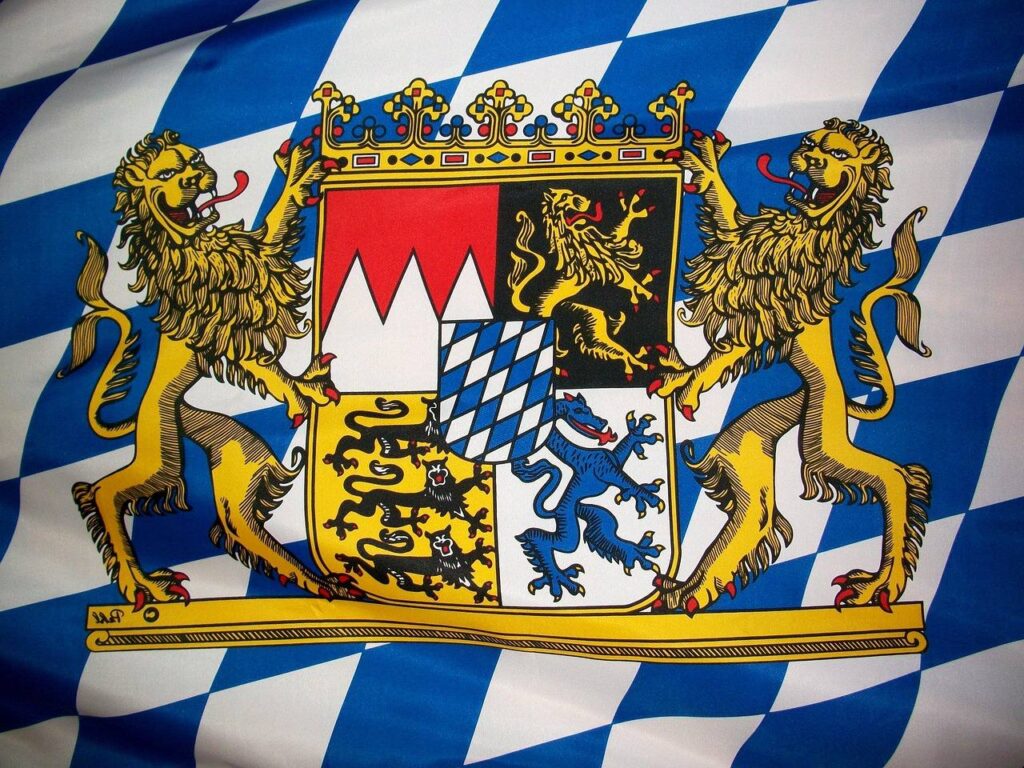
I should say upfront that I am not the Bavarian in this headline. I am a Northern Light, a Nordlicht in Bavarian eyes, who lived in Munich for many years before moving to North America, which means I get to tease Bavarians from the inside and the outside at once. That is exactly the vantage point this page needs, because the honest answer to “what would a Bavarian think of my party” has almost nothing to do with your décor and everything to do with a rivalry that predates your party by a couple of centuries, plus one running joke about a clock. This page rounds out my full Oktoberfest party plan, and it is the one article in the cluster with nothing to sell you.
The rivalry you have accidentally wandered into
The first thing most Americans and non-Germans get wrong about Germany is confusing it with Bavaria specifically. The Trachten outfits, the cuckoo clocks, Neuschwanstein castle: all of it reads as “German” to an outsider, and all of it is distinctly Bavarian, not German in general. Bavarians, for their part, have a noticeably higher opinion of themselves than they do of the rest of the country, which they refer to, in good fun, as Preißn, Prussians, whether or not the person in question has ever set foot in Prussia. There is a grain of truth under the joke, and the saying that carries it is “It’s nice to be a Preiß, but it’s higher to be a Bayer.” Bavaria also styles itself a Free State, and its people, by reputation, still miss their King Ludwig.
Here is the part that is entirely my own joke, and I will own it as one: the cuckoo clock everyone pictures as the quintessential German souvenir is from the Black Forest, which is not in Bavaria at all. Non-Germans lump it in anyway, the same way they lump Bavaria and Germany together generally, and a Bavarian will let you believe the clock is theirs for exactly as long as it is convenient and not one second longer.
Even the dialect draws a line
Munich’s own guide to the local dialect makes the Bavaria-versus-everything-else point in spelling, of all places. “Bairisch,” spelled with an i, is the dialect; “Bayerisch,” spelled with a y, is the Free State, a distinction that goes back to a decree by King Ludwig I in 18252. Bairisch itself is bigger than Bavaria’s own borders, spoken across the border in Austria, South Tyrol and a few pockets of northern Italy, and UNESCO lists it in its Atlas of Endangered Languages2. The same guide’s advice for anyone attempting a Bavarian word at a party is refreshingly low-pressure: “you don’t have to sound perfect; it’s the effort that counts”2.
What Munich's own tourism copy says about itself
Oktoberfest’s own homepage does not do understatement. It calls the festival “the world’s largest folk festival, a unique work of art in its own right, and a piece of Munich’s soul,” and says it “embodies the sense of home and the hospitality of the people of Munich—a folk festival for everyone”1. Munich’s own tourism history page adds the local nickname: “the Oktoberfest or ‘Wiesn’, as the locals affectionately call their folk festival, is an integral part of Munich tradition,” noting that “beer, tents and chicken are known worldwide” as a straight line from a royal wedding in 1810 that the city simply kept celebrating every year since3.
The one place a Bavarian would actually wince
Munich’s own outfit guide is generous about who gets to dress up: “any outfit is permitted,” it says, no dress code, no gatekeeping4. But the same page draws a real line between genuine Tracht, stitched rather than glued, in natural fabric, and the printed-beer-mug, plastic-apron kind, which it calls “more akin to Carnival gear than authentic traditional dress”4. That is the throughline for how a Bavarian would actually react to your party: amused indifference to whether your version is authentic, and a genuine, small wince at a plastic apron being sold as the real thing. It is not about who is allowed to wear a Dirndl. It is about the plastic apron pretending it is something it is not.
Resi says None of this changes my verdict. A party in a backyard in Ohio was never competing with the Wiesn, and a Bavarian’s opinion of your plastic apron is not the scoreboard that matters. Your guests are the scoreboard. If they had a good time, held a Maß without spilling it, and left knowing the difference between Bairisch and Bayerisch, you outperformed most actual tourists.
The verdict
A party is for the people standing in your yard, not for a Bavarian judge who was never invited and was never going to show up. Get the food right, get one or two facts right so you are not accidentally teaching your guests something wrong, and let the costumes be exactly as authentic as your budget allows. The rest, including the rivalry, the clock joke and the missed king, is color for the conversation, not a test you can fail.
Frequently Asked Questions
Would a Bavarian be offended by a costume-tier Dirndl at a party?
No. Munich’s own guide says there is no dress code even at the real Oktoberfest; a Bavarian might notice a plastic apron but would not take offense at it.
Why do Bavarians call other Germans "Preißn"?
It is a good-natured nickname for Prussians, used more broadly for non-Bavarian Germans, reflecting Bavaria’s higher opinion of itself relative to the rest of the country.
Is the cuckoo clock actually Bavarian?
No, it originates from the Black Forest, which is not in Bavaria; non-Germans commonly lump it in with Bavarian symbols anyway.
What is the difference between "Bairisch" and "Bayerisch"?
Bairisch, spelled with an i, refers to the dialect; Bayerisch, spelled with a y, refers to the Free State, a distinction dating to an 1825 decree by King Ludwig I.
Do I need to speak any German to host an Oktoberfest party?
No. Even Munich’s own dialect guide says effort matters more than getting the pronunciation perfect.
What actually matters most at an Oktoberfest party?
Whether your guests have a good time. That verdict belongs to them, not to an imagined Bavarian judge.
Related Articles
 Throw an Oktoberfest Party: The Plan, the Menu, the Beer, the Outfits and the GamesParty
 Oktoberfest Costumes, Honestly Rated: From the $30 Costume Dirndl to the Real ThingParty
 Oktoberfest Party Games: Maßkrug Holding, the Nail and the Hammer, and Five MoreParty
 Bavarian Words for Visitors: Servus, Grüß Gott, Prost and Twenty MoreTrachten and customs
 Bavaria the Free State: The Lion, the Flag, the Seven Regions and What Freistaat MeansTrachten and customs
 Bavarian Beer, Explained: Styles, Breweries, Beer Halls and Beer GardensBeer
 Oktoberfest in Munich: Dates, Tents, Reservations, What to Wear and What It CostsOktoberfest
Sources
- Oktoberfest — Oktoberfest.de. Accessed 2026-09-26.
- Learn the Bavarian Dialect — muenchen.de. Accessed 2026-09-26.
- History of Oktoberfest — muenchen.de. Accessed 2026-09-26.
- Oktoberfest Outfits: Dresses & Lederhosen — muenchen.de. Accessed 2026-09-26.