In brief
The Bavarian Forest National Park is Germany’s oldest national park, built around two visitor hubs, Nationalparkzentrum Lusen and Nationalparkzentrum Falkenstein, the latter home to an outdoor wolf enclosure. Next door in the town of Neuschönau is the park’s best-known attraction and, confusingly, not actually part of it: the Baumwipfelpfad, a privately run treetop walkway 1,300 meters long, built in 2009, leading to a 44-meter egg-shaped tower with views reaching the Alps on a clear day. Adult entry to the walkway is €13, with a family package for two adults and their children at €31, and it opens daily at 9:30 a.m. with last entry at 5 p.m. The park itself costs nothing to enter and is the rarer thing in Bavaria worth saying twice.
This is the forest side of Bavaria, the corner that gets none of the postcard traffic the Alps and the castles absorb, and it is worth knowing about for exactly that reason: real wilderness, an actual wolf population you can see safely, and a tower walk built for the view rather than for a king. It sits at the far eastern edge of the day trips in my guide to Bavaria by train, further out than most, which keeps the crowds thinner than anywhere else on that list.
Two parks in one visit, sort of
The confusing part first: the national park and the treetop walkway are two different operations that happen to sit next to each other. The park itself, run by the Bavarian state, is centered on two visitor hubs, Lusen and Falkenstein, each with its own trail network and its own exhibition hall1. The Baumwipfelpfad at Neuschönau is a separate, privately run attraction with its own ticket counter, not covered by anything the park itself issues2. Most visitors treat the two as one day out, and that is a reasonable way to plan it, but do not expect a single ticket to cover both.
The wolf enclosure
Founded as Germany’s first national park, the Bavarian Forest has made a point of reintroducing animals the region lost centuries ago, and the Falkenstein visitor center is where that effort is easiest to see: an outdoor Tier-Freigelände, an animal enclosure, with its own section on the park’s website titled plainly “Wölfe im Nationalpark,” wolves in the national park1. It is the closest most visitors will ever come to seeing a wild wolf in Germany without genuine luck and a great deal of patience, in an enclosure built for exactly that purpose.
Resi says Germany reintroducing wolves is not a universally popular decision back home, and you will hear both sides of that argument from anyone who grew up near a forest like this one. Whatever you think of the politics, standing at the fence and actually watching one is a different experience than reading about the debate, and it is free to do once you are in the park.
The treetop walkway
The Baumwipfelpfad is the reason a lot of visitors come this far east at all: a 1,300-meter wooden walkway threading through the forest canopy, built in 2009, climbing gradually to a 44-meter tower shaped like an egg, with views that reach the Alps on a clear day2. It is built to be low-barrier, accessible to wheelchairs, walkers and strollers the whole way, which is not something you can say about most Bavarian hiking2.
| Ticket | Price |
|---|---|
| Adult | €13 |
| Reduced | €12 |
| Child, 6–14 | €11 |
| Under 5 | Free |
| Family (2 adults + children) | €31 |
| Annual pass | From €32 |
Source: baumwipfelpfad.de2.
The walkway opens daily at 9:30 a.m. with last entry at 5 p.m. and closing at 6 p.m., which gives a comfortable window without needing to plan around a specific tour time the way the palaces near Munich do2.
Planning the day
Give the treetop walkway two hours including the queue at busy times, and the wolf enclosure and a short trail from Falkenstein another two or three. The two sites are close enough to combine but far enough apart that you will want a car or a well-timed local bus rather than expecting to walk between them; this is the one Bavarian day trip on this list where I would not try to do it entirely on foot from a single train station.
This is also the one place on this list where I would genuinely consider a rental car over the train, and my renting a car in Bavaria page goes through when that trade actually pays off. The distances between the visitor centers, the walkway, and any trailhead worth hiking are built for a car, and the region’s bus network, while it exists, is not built around a day-tripper’s schedule the way Munich’s S-Bahn is.
The forest itself
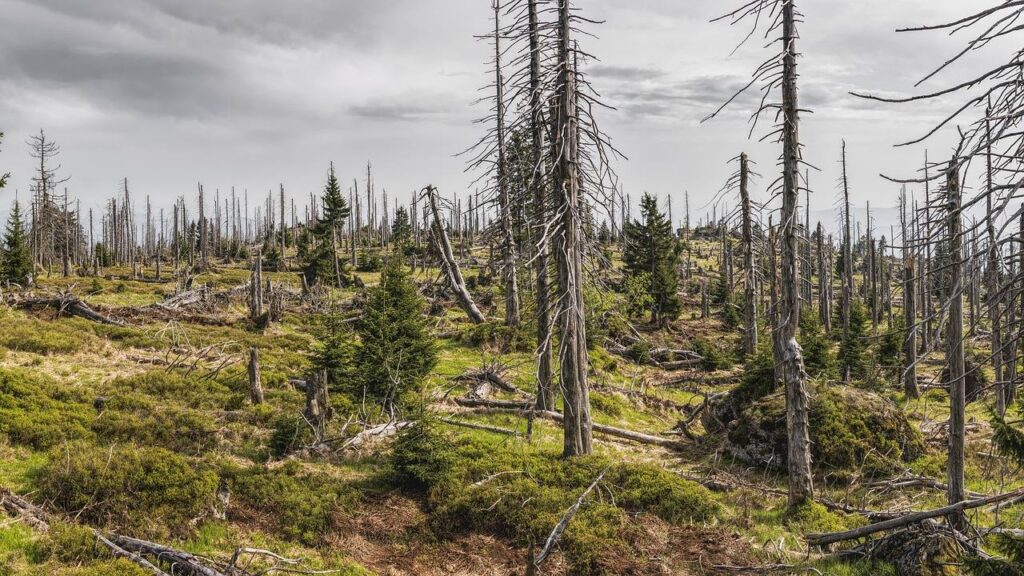
What sets this park apart from the rest of Bavaria’s outdoor attractions is scale: this is genuine old-growth and regrowth forest, protected since the 1970s as Germany’s first national park, not a managed garden or a single mountain with a cable car. Trails from both Lusen and Falkenstein range from short loops near the visitor centers to serious day hikes for anyone equipped for them, and much of the forest floor is left to do what forests do without human management, including standing dead timber that a tidier country park would have cleared. It is not the manicured version of nature that a lot of visitors expect from a “national park” in a country as orderly as Germany, and that is the point of it.
Where to base yourself
There is no hotel-booking angle in this corner of Bavaria the way there is near the castles or the lakes; what matters is picking a base close to whichever hub you plan to spend more time at. Stay near Neuschönau if the treetop walkway is the priority, since it sits right at the park’s edge there. Stay nearer Falkenstein if the wolves and the hiking trails matter more to you than the tower. Either way, this is forest country, quiet by design, and not a place to expect the density of restaurants and shops that Munich or the lake towns have.
Frequently Asked Questions
Is the Bavarian Forest National Park free to enter?
Yes, the national park itself has no admission charge; the Baumwipfelpfad treetop walkway next to it is a separate, paid attraction.
Are the treetop walkway and the national park the same thing?
No. The Baumwipfelpfad is a privately run attraction at Neuschönau, next to the park but not part of its own ticketing.
How much does the Baumwipfelpfad cost?
€13 for an adult, €12 reduced, €11 for children 6 to 14, and €31 for a family of two adults and their children.
Can you see wolves in the Bavarian Forest National Park?
Yes, in an outdoor enclosure at the Falkenstein visitor center, built as part of the park’s reintroduction work.
Is the treetop walkway wheelchair accessible?
Yes, the walkway is built to be low-barrier and accessible to wheelchairs, walkers and strollers along its full length.
How long is the Baumwipfelpfad?
1,300 meters of wooden walkway through the forest canopy, leading to a 44-meter tower with Alpine views on clear days.
Is the Bavarian Forest National Park worth a day trip from Munich?
Yes, if you want real forest and a wolf enclosure rather than another castle; it sits further out than most day trips on this site, so budget the extra travel time.
Related Articles
 Bavaria by Train: Day Trips from Munich and a Week Without a CarBavaria
 Regensburg Day Trip from Munich: Worth It, and How to Do It by TrainBavaria
 Bavaria with Kids: A Realistic ItineraryBavaria
 One Week in Bavaria by TrainBavaria
 Renting a Car in Bavaria: When It Beats the Train, and the Rules That Surprise AmericansBavaria
 Bavaria in Winter: What Is Open, What Is Closed, What Is Worth the ColdBavaria
Sources
- Information for visitors (English section) — Bavarian Forest National Park, Bavarian State Ministry for the Environment. Accessed 2026-09-27.
- Baumwipfelpfad Bayerischer Wald — Baumwipfelpfad Bayerischer Wald. Accessed 2026-09-27.