In brief
The Bayern-Ticket is Deutsche Bahn’s day pass for Bavaria’s regional trains, S-Bahn, U-Bahn, trams and buses, and it will not get you onto an ICE or IC. One traveler pays €34 in second class; a group of up to five pays €74, and up to three children between 6 and 14 ride along free on top of that. On a weekday it is valid from 9 a.m. to 3 a.m. the next morning; on a weekend or public holiday it starts at midnight, so you get the whole day. It also crosses the border, covering routes into Austria’s Außerfern, and on to Kufstein, Salzburg and Ulm. There is a cheaper night version too, from €32, valid from 6 p.m. for a group that only needs to get home.
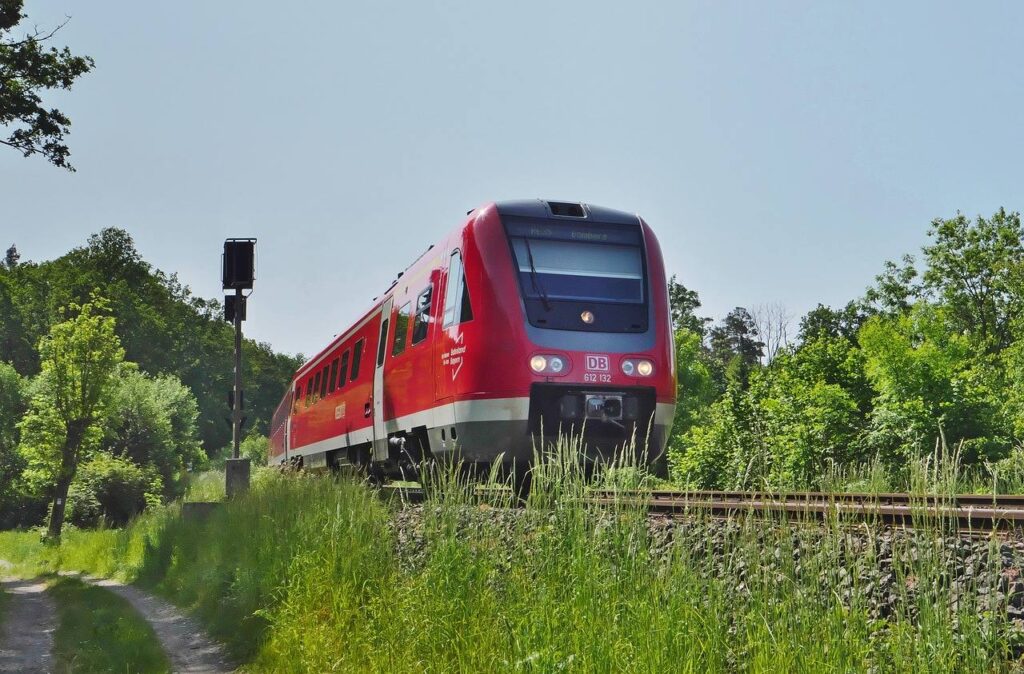
If you are traveling as a couple, a family, or five friends who all want one day of trains, trams and buses anywhere in Bavaria without buying five separate fares, the Bayern-Ticket is the reason German regional rail pricing exists in the shape it does. It is not a discount on the fast trains. It is a different ticket for a different kind of train entirely, and knowing which is which is the difference between a relaxed platform and re-reading the app at Nuremberg Hauptbahnhof while your connection pulls out. My guide to doing Bavaria by train leans on this ticket for most of its day trips, so here is exactly what it does and does not cover.
What it actually covers
The Bayern-Ticket is valid on regional trains (RE, RB), S-Bahn, U-Bahn, trams and nearly every bus line within Bavaria, plus a handful of routes that spill into neighboring states. What it will never cover is the fast stuff: ICE and IC trains are explicitly excluded, no matter how short the hop1. That single rule sorts almost every trip you’ll plan: if a connection shows up as ICE or IC in the app, the Bayern-Ticket does not apply to it, and you need either a separate fare or a different train on the same route.
The price, by group size
| Travelers | 2nd class, day | 2nd class, night |
|---|---|---|
| 1 | €34 | €32 |
| 2 | €44 | €39 |
| 3 | €55 | €46 |
| 4 | €64 | €53 |
| 5 | €74 | €60 |
Source: int.bahn.de1. First class runs from €46.50 for one traveler up to €134.50 for five, which is a strange amount of money to spend on a regional train, and not one I would recommend for a day trip you’re already discounting.
When it's valid: weekday, weekend, and the night ticket
The day ticket runs from 9 a.m. on a weekday until 3 a.m. the following morning; on Saturdays, Sundays and public holidays it starts at midnight, so the whole day is yours from the first train out1. There is also a night ticket, cheaper across every group size, valid Sunday through Thursday from 6 p.m. to 6 a.m. the next morning, and on Friday, Saturday and the day before a holiday from 6 p.m. to 7 a.m.1. It exists for the group that is only using the train to get home from a late dinner in Nuremberg or a beer garden outside Munich, not to spend a day sightseeing.
How far it reaches
The ticket does not stop at the Bavarian border. It is valid into Austria’s Außerfern region, and on the routes to Kufstein, Salzburg and Ulm, which is how you can day-trip to Salzburg on the same ticket you’re using inside Bavaria, no separate cross-border fare required1. It’s also the ticket behind day trips to Regensburg, Bamberg, Nuremberg and Berchtesgaden, all of which run on regional trains for at least part of the way.
Kids, dogs, and who counts as your group
Up to three children between 6 and 14 travel free with a ticket-holding adult, and children under 6 always ride free regardless of how many are in your party1. A small dog in a carrier is free; a larger dog needs its own ticket1. Everyone traveling on the ticket has to write their name on it before boarding, in pen, before a conductor asks — more on that below.
Resi says Buy it the night before on the DB Navigator app, not on the platform. Ticket machines exist, but there’s always one in your group who can’t get the machine to accept a card, and a train doesn’t wait for that argument.
The 9 a.m. catch
The weekday start time is the one thing that trips people up, because Bavaria’s biggest sights don’t wait for it. Neuschwanstein’s tickets are timed-entry, and the castle recommends arriving in Hohenschwangau one and a half to two hours before your slot2. If your entry time is 9:30, a Bayern-Ticket that only starts moving at 9 a.m. doesn’t get you there. The same problem hits an early Eagle’s Nest run. Weekend and holiday travelers don’t have this problem, since the ticket is valid from midnight; weekday travelers with an early fixed-entry ticket should either book a later slot or look at renting a car for that one day.
How to buy it
The Bayern-Ticket is sold through the DB Navigator app, at station ticket machines, and at DB service counters. Every traveler on it needs to be named on the ticket before the trip starts; a conductor checking IDs against an unnamed ticket can fine everyone aboard, group discount or not.
Bayern-Ticket or Deutschlandticket?
If you’re staying more than a couple of days and moving around a lot, it’s worth knowing the Bayern-Ticket has a cousin. The Deutschlandticket is a monthly subscription, not a day pass, and it covers the same category of regional trains, S-Bahn, U-Bahn, trams and buses nationwide, not just in Bavaria. For a one-week trip through Bavaria alone, the Bayern-Ticket bought day by day is usually cheaper for a group; the Deutschlandticket starts paying off for a solo traveler covering more than about a week, or crossing state lines. Either way, the ICE and IC exclusion is the same rule under a different name, and neither one gets you onto the fast train to save the day.
Resi says Don’t stand at the machine adding up five separate fares against one group ticket. For any group of two or more going any real distance, like Füssen and back, the Bayern-Ticket wins the arithmetic before you’ve finished doing it, and you keep the platform.
Frequently Asked Questions
What is included in the Bayern-Ticket?
Regional trains, S-Bahn, U-Bahn, trams and almost all bus lines across Bavaria for one calendar day, plus a few cross-border routes. It does not include ICE or IC trains.
How much does the Bayern-Ticket cost for a family of four?
€64 in second class for up to four named travelers, and up to three children aged 6 to 14 ride along free on top of that.
Can I use the Bayern-Ticket to get to Salzburg?
Yes. It’s valid on the route to Salzburg, along with Kufstein and Ulm, and into Austria’s Außerfern region.
What time does the Bayern-Ticket start on a weekday?
9 a.m., and it runs until 3 a.m. the following morning.
Is the Bayern-Ticket valid on ICE trains?
No. It only covers regional trains, S-Bahn, U-Bahn, trams and buses; ICE and IC trains are explicitly excluded.
Is there a cheaper version for a short evening trip?
Yes, the night ticket, valid from 6 p.m. and priced lower than the day ticket at every group size.
Do children travel free on the Bayern-Ticket?
Up to three children aged 6 to 14 travel free with a ticket-holding adult, and children under 6 always travel free.
Related Articles
 Bavaria by Train: Day Trips from Munich and a Week Without a CarBavaria
 One Week in Bavaria by TrainBavaria
 Is Salzburg Worth a Day Trip from Munich?Bavaria
 Renting a Car in Bavaria: When It Beats the TrainBavaria
 Munich Public Transport Explained: Zones, Tickets, the Deutschlandticket and the Bayern-TicketMunich
 Regensburg Day Trip from MunichBavaria
 Bamberg Day TripBavaria
 Berchtesgaden and the Königssee: The Boat, the Salt Mine and the ObersalzbergBavaria
Sources
- Regional day ticket Bavaria (Bayern-Ticket) — Deutsche Bahn. Accessed 2026-09-27.
- How to reach the castles — Hohenschwangau/Neuschwanstein official visitor information. Accessed 2026-09-27.