In brief
German mustard, especially the Bavarian sweet style, is typically made with whole mustard seeds and sweetened with sugar, honey or even applesauce, while Dijon is sharper, unsweetened and made with a milder vinegar base. German mustard’s heat ranges from sweet to genuinely fiery, with some regional versions adding horseradish, which is a wider range than Dijon covers on its own. If you need to stand in for plain American yellow mustard, the sourced advice is to reach for a milder German Mittelscharf rather than a hot one. For Weißwurst, Leberkäse or a soft pretzel, do not reach for Dijon at all; the pick is Händlmaier.
Disclosure: some links on this page are affiliate links, marked by the products, tours and hotels they name. As an Amazon Associate, bavarianbistro.com earns from qualifying purchases. A purchase through these links may earn the site a commission at no cost to you, and it never affects what is recommended. How this works. Product prices and availability shown are as of the date stated and can change; the Amazon price at checkout applies.
If you have ever swapped Dijon into a German recipe because it was already in the fridge, and wondered why the dish tasted off in a way you could not name: this is why. My pillar on cooking Bavarian in North America covers where to buy both; this page is about which one to actually use, and when the other one will not do.
Seeds, vinegar and sweetness: the real differences
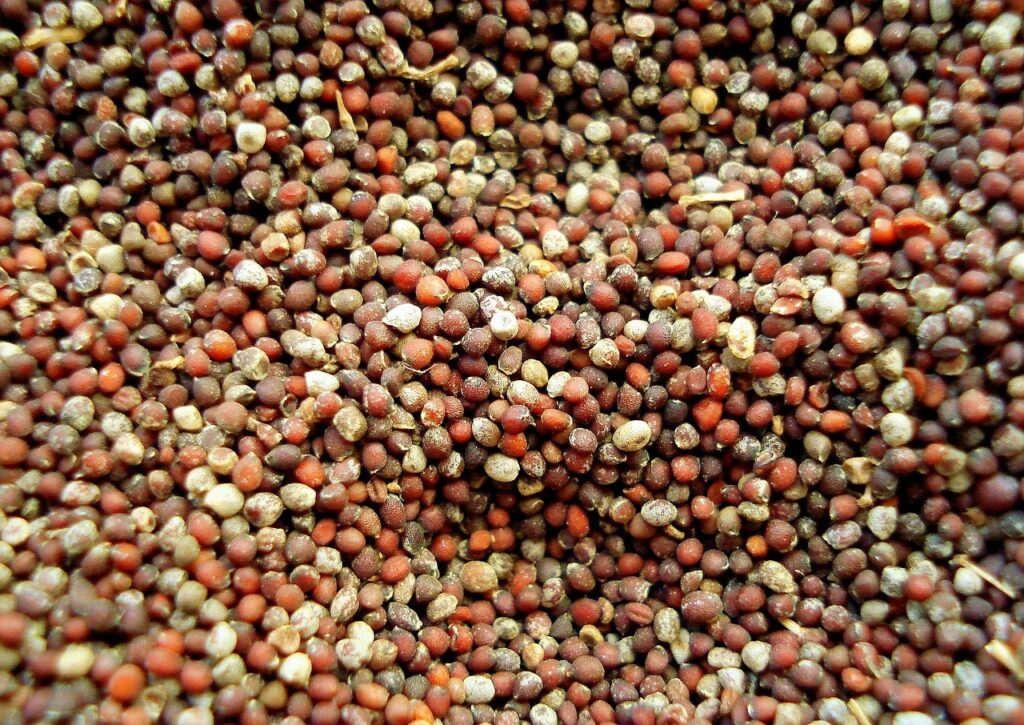
The clearest side-by-side comes from a culinary comparison of German and American mustard styles, used here for the German side since no French Dijon house’s own page was fetched for this piece. German mustard often uses whole mustard seeds, both yellow and brown together in a style like Mittelscharf, while common American mustard is made from powdered yellow-seed mustard, and some German regional styles, Düsseldorf’s among them, lean on a milder vinegar than American mustard’s water-and-vinegar base1.
Sweetness is where Bavarian mustard specifically pulls away from both German-in-general and Dijon: it is “sweetened with sugar, honey, and applesauce,” a description that would sound strange applied to a French Dijon, which stays sharp and largely unsweetened by design. On heat, German mustard as a category “ranges from sweet to very spicy,” with some regional variants adding horseradish for extra bite, a spread that covers far more ground than Dijon’s single, consistent sharpness1.
A German maker’s own product lineup backs this up from the inside. Kühne, a German vinegar-and-mustard specialist, sells a Dijon mustard described in-house as “strong, clear and aromatic,” positioned as a separate, distinctly labeled line from its own German-style Mittelscharf and Bavarian sweet mustards2. When a company that makes both styles keeps them as different products rather than relabeling one recipe twice, that is a maker’s own admission that they are not interchangeable.
Develey’s own Weißwurstsenf, the archetypal Bavarian sweet mustard, is built from mustard seeds, water, brown sugar, spirit vinegar and caramelized sugar syrup3. Compare that ingredient list against a traditional Dijon, built around brown or black mustard seeds and a base of white wine or verjus with no added sugar, and the two mustards are not close cousins so much as different foods that happen to share the name “mustard.”
Laid out side by side, the pattern holds across every point of comparison that has an actual source behind it.
| German mustard (Bavarian style) | Dijon | |
|---|---|---|
| Seeds | Whole, often yellow and brown together | Ground fine, brown or black |
| Vinegar | Milder in some regional styles, like Düsseldorf’s | Traditionally a white wine or verjus base |
| Sweetness | Sweetened with sugar, honey or applesauce | Unsweetened by design |
| Heat range | Sweet to genuinely spicy, some styles add horseradish | Consistently sharp, less range |
Source: Tasting Table on German versus American mustard1; Develey’s own Weißwurstsenf ingredient list3.
When Dijon actually works, and when it does not
Dijon earns its place in French cooking and in plenty of American recipes that call for a sharp, clean mustard flavor without sweetness, a vinaigrette or a pan sauce being the obvious cases. The trouble starts when a home cook substitutes it into a German dish specifically built around the sweeter, milder profile.
Resi says Do not put Dijon anywhere near a Weißwurst. It is too sharp for a dish designed around a mild sausage and a mustard that is supposed to be the gentle part of the plate, and it will fight the lemon and mace instead of sitting quietly next to them.
The one sourced substitute worth repeating is narrow and specific: if you are trying to replace plain American yellow mustard rather than a Bavarian sweet mustard, “seek out a milder Mittelscharf” German variety, according to the same comparison cited above. That same source explicitly warns against the reverse substitution, using German mustard in traditional German dishes as an American-mustard stand-in, since the flavor balance would be thrown off by something more pungent than the dish calls for1. I am not going to hand you a longer list of clever substitutes beyond that; nobody has actually tested and published one that I could verify, so a longer list would be guessing dressed up as advice.
The pick, for the dish this page is really about
For Weißwurst, Leberkäse, a pretzel or anything else that calls for Bavarian sweet mustard specifically, there is no substitute worth reaching for. Buy the real thing.
Resi says Händlmaier’s is so good I could eat it by itself, straight from the jar with a spoon, and nothing else has come close since. It is the one I pack for camping trips, and it is always a favorite among the friends I bring it to. Nothing compares, and that includes every jar of Dijon in your fridge right now.
Frequently Asked Questions
Can I use Dijon instead of German sweet mustard?
Not for a dish built around the sweet style, like Weißwurst or Leberkäse. Dijon is sharper and unsweetened, and it will unbalance a dish designed around a milder, sweeter mustard.
What is the best substitute for German sweet mustard?
The most honest answer is that there is not a well-tested one; the closest documented substitute advice applies to plain American yellow mustard, not to Bavarian sweet mustard specifically.
Why does German mustard taste sweeter than French mustard?
Bavarian-style German mustard is often sweetened with sugar, honey or even applesauce, while Dijon stays sharp and largely unsweetened by design, which is the core difference between the two traditions.
Does Dijon use the same mustard seeds as German mustard?
Not typically in preparation. German styles, especially Mittelscharf, often use whole yellow and brown seeds together, while Dijon is built around a different seed-and-liquid base that produces a smoother, sharper result.
Is all German mustard sweet?
No. German mustard as a category ranges from sweet to genuinely spicy, with some regional versions adding horseradish for extra heat. “Sweet” describes the Bavarian style specifically, not German mustard broadly.
What should I use instead of plain yellow mustard if I only have German mustard?
Go the other direction: a milder German Mittelscharf can stand in for plain American yellow mustard reasonably well, according to a sourced comparison of the two traditions.
Related Articles
 Cooking Bavarian in North America: Where to Buy the Ingredients and the Tools That MatterPantry and tools
 German Mustard Brands: Löwensenf, Händlmaier, Develey and the RestPantry and tools
 Weißwurst: How to Eat Bavaria’s White Sausage (Skin, Mustard and the Noon Rule)Food
 What Is Leberkäse? No Liver, No Cheese, and How Munich Eats ItFood
 Bavarian Sweet Mustard: What It Is, How to Buy It, How to Make ItFood
 The German Pantry: Staples to Stock for Bavarian CookingPantry and tools
Sources
- Difference Between German and American Mustard — Tasting Table. Accessed 2026-09-26.
- Senf — Carl Kühne KG. Accessed 2026-09-26.
- Develey Original Münchner Weißwurstsenf, 100 ml tube — Develey. Accessed 2026-09-26.