In brief
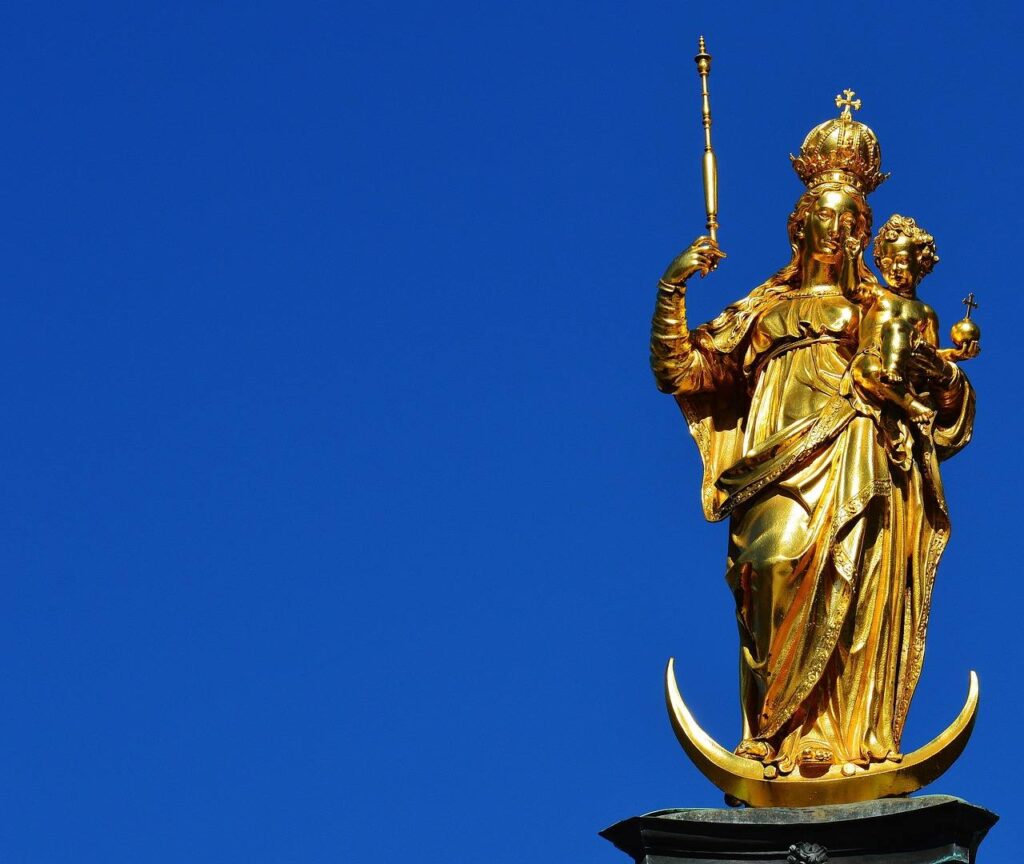
Only two Munich neighborhoods actually border the Theresienwiese: Westend and Schwanthalerhöhe to the west, home to the Bavaria statue that watches over the fairground. Ludwigsvorstadt, between the grounds and the Hauptbahnhof, was rebuilt after the war specifically with hotels and takes in roughly two million overnight guests a year. From the main train station it’s about a fifteen-minute walk to the grounds, and from the Hackerbrücke S-Bahn stop about ten. The historic Altstadt reaches it by a direct U4/U5 ride, not on foot. Reliable data on how much hotel rates actually rise during Wiesn week is thin — the one pricing article I found is a travel-advice site, not an official source, so treat its numbers as a shape, not a promise.
Disclosure: some links on this page are affiliate links, marked by the products, tours and hotels they name. A purchase through these links may earn the site a commission at no cost to you, and it never affects what is recommended. How this works.
Where to book Current rates for the Wiesn dates; the streets on this page sell out first.
Nobody needs to sleep on the Theresienwiese to enjoy Oktoberfest, and nobody should want to; but where you book changes your morning, because a ten-minute walk to a tent is one festival and a half-hour transfer with last night’s Maß still deciding things is another. This page goes through the neighborhoods that are actually close, in the order they actually are, using only what I could source about location and walking times, not the number a hotel search page invents for you. My Oktoberfest guide covers dates, tents and reservations, and if you would rather sleep outside the city altogether, see Oktoberfest as a day trip.
Westend and Schwanthalerhöhe: bordering the grounds
Directly west of the Theresienwiese sit Westend and Schwanthalerhöhe, the district that is home to the Bavaria statue and Ruhmeshalle overlooking the fairground itself, to Bavariapark, and to Augustiner-Bräu, Munich’s oldest brewery. The city’s own description calls it a former industrial workers’ quarter that has “managed to preserve its own distinct character” even as it has become fashionable, and it now includes the redeveloped former trade-fair grounds — about 1,800 residences and the Verkehrszentrum outpost of the Deutsches Museum1.
Resi says This is as close as a neighborhood gets: the grounds are next door instead of a transit ride away, and that is the entire pitch. It is residential and unglamorous — a former workers’ quarter, not a postcard — and you are booking it for the walk home, not for anything you will photograph.
Ludwigsvorstadt: between the grounds and the station
Ludwigsvorstadt sits between the Theresienwiese and the Hauptbahnhof, and it is, by its own history, built for visitors. The district’s own profile describes it as Munich’s historic “Bahnhofsviertel” (railway-station quarter): after World War II, “the railway district… was reconstructed with commercial buildings, particularly hotels and restaurants,” and the area now takes in roughly two million overnight guests a year, a scale no other central district matches2.
It is also where the Theresienwiese U-Bahn station sits, served directly by the U4 and U5 lines3, and it hosts the Central Bus Station (ZOB), which opened in 2009 for international coach traffic2. If minimizing the distance between your hotel door and a tent matters more to you than avoiding a small premium, this is the district to search first.
The Hauptbahnhof cluster
Munich’s main train station anchors the western edge of the Altstadt and the eastern edge of Ludwigsvorstadt, and it works as a base for more than proximity: every S-Bahn line stops there, about a 15-minute walk from the Theresienwiese’s north entrance, and the city runs one of its two official tourist information desks from inside the station, the other at Marienplatz35.
One S-Bahn stop closer to the grounds, Hackerbrücke, cuts that walk to about 10 minutes and is served by every S-Bahn line as well3. Staying near the Hauptbahnhof also means every other part of Munich, and the regional and long-distance trains to the rest of Bavaria, are a short walk from your hotel rather than a transfer away.
The Altstadt: a subway ride, not a walk
Munich’s historic center — the Frauenkirche, Marienplatz, the Residenz, the Viktualienmarkt — connects to the Theresienwiese by direct U4/U5 service from Karlsplatz/Stachus, at the Altstadt’s western edge3. There is no walking-distance claim to make here honestly; the appeal of staying in the Altstadt is the city itself, with Oktoberfest a few U-Bahn stops away rather than a walk. It is also where the second of the city’s two staffed tourist-information points operates, at Marienplatz in the New Town Hall5.
The U-Bahn line neighborhoods farther out
Beyond the immediate cluster, the U3 and U6 lines stop at Poccistraße and Goetheplatz, each about a ten-minute walk from the grounds on a calmer platform than Theresienwiese station itself — the routing the city recommends “if you are travelling with children,” since the direct Theresienwiese stop gets “very busy… especially in the evenings and on weekends”3. Staying one or two stops further out along the U3/U6 or U4/U5 lines trades a slightly longer ride for a quieter neighborhood and, presumably, an ordinary Munich hotel rate rather than a festival-week one, though no source I found breaks down room rates stop by stop, so treat that as a reasonable expectation rather than a documented fact.
What is actually known about Wiesn-week prices
No official Munich tourism source I could find publishes hotel counts or average rates by neighborhood, and anyone telling you “the Hauptbahnhof area has the most budget hotels” with real numbers behind it is going further than the city’s own data goes.
Reliable, official data on how far Munich hotel rates rise during the festival simply is not published anywhere I could find. The one source with specific figures is a travel-advice article, not an official or first-party site, so its numbers should be read as an indication of the pattern rather than a quote you can rely on for budgeting: it put ordinary Munich rates at roughly €80 to €150 a night, rising to €200 to €350 for mid-range properties near the grounds during the festival, and up to €300 to €500 on weekends for anything within walking distance of the Theresienwiese; hotels with U-Bahn access but not walking distance were put at roughly €150 to €2504.
The same article named the second weekend of the festival — September 26–27, 2026, this year — as the historically highest-demand, highest-price stretch, with weekday nights “noticeably cheaper”4. Nothing I could verify contradicts the general shape of that pattern — the closer to the grounds and the closer to a weekend, the more a room costs — but treat the exact euro figures as a planning guide, not a promise, and check current rates directly before booking.
Resi says I would take the ten-minute walk over the ten-minute subway ride, every time — Ludwigsvorstadt or the Hauptbahnhof cluster, not the Altstadt — and here is why: what goes in must come out, and a Maß or two has opinions about a train transfer that no hotel review will ever mention. Book early. The second weekend fills first, and the exact price you will pay is the one thing nobody selling you a room will tell you honestly.
Frequently Asked Questions
What is the closest neighborhood to Oktoberfest?
Westend and Schwanthalerhöhe border the Theresienwiese directly; Ludwigsvorstadt, between the grounds and the Hauptbahnhof, is the next closest and has the largest concentration of hotels.
How far is the Munich Hauptbahnhof from Oktoberfest?
About a 15-minute walk to the north entrance of the grounds, or a few minutes by U-Bahn or S-Bahn.
Can I walk to Oktoberfest from the Altstadt?
Not really. The Altstadt connects to the Theresienwiese by direct U4/U5 subway service from Karlsplatz/Stachus rather than on foot.
Do hotel prices really go up during Oktoberfest?
The only pricing data I found, from a travel-advice site rather than an official source, describes ordinary rates roughly doubling near the grounds and rising further on weekends, especially the festival’s second weekend, but no city or tourism-board source publishes its own figures to confirm the exact range.
Which U-Bahn stops are quietest for reaching the grounds?
Poccistraße and Goetheplatz on the U3/U6 line, about a 10-minute walk from the grounds, are calmer than the Theresienwiese stop itself and are what the city recommends for anyone traveling with children.
Related Articles
 Oktoberfest in Munich: Dates, Tents, Reservations, What to Wear and What It CostsOktoberfest
 Getting to Oktoberfest: U-Bahn, S-Bahn, Walking and Why Not to DriveOktoberfest
 Oktoberfest as a Day Trip: Staying in Augsburg, Salzburg or the Countryside InsteadOktoberfest
 The Best Days and Hours to Go to OktoberfestOktoberfest
 Oktoberfest for First-Timers: What Nobody Tells YouOktoberfest
 Munich for a First Trip: What Is Worth It, What Is Not, and How the City WorksMunich
 Where to Stay in Munich, by What You Are There ForMunich
Sources
- Schwanthalerhöhe: what to know — muenchen.de, City of Munich. Accessed 2026-09-24.
- Ludwigsvorstadt: what to know — muenchen.de, City of Munich. Accessed 2026-09-24.
- How to get to Oktoberfest: routes, tickets, stations, apps — muenchen.de, City of Munich. Accessed 2026-09-24.
- Book Oktoberfest hotels before prices explode — Oyster.com. Accessed 2026-09-24.
- Accommodation and hotels in Munich — muenchen.de, City of Munich. Accessed 2026-09-24.