In brief
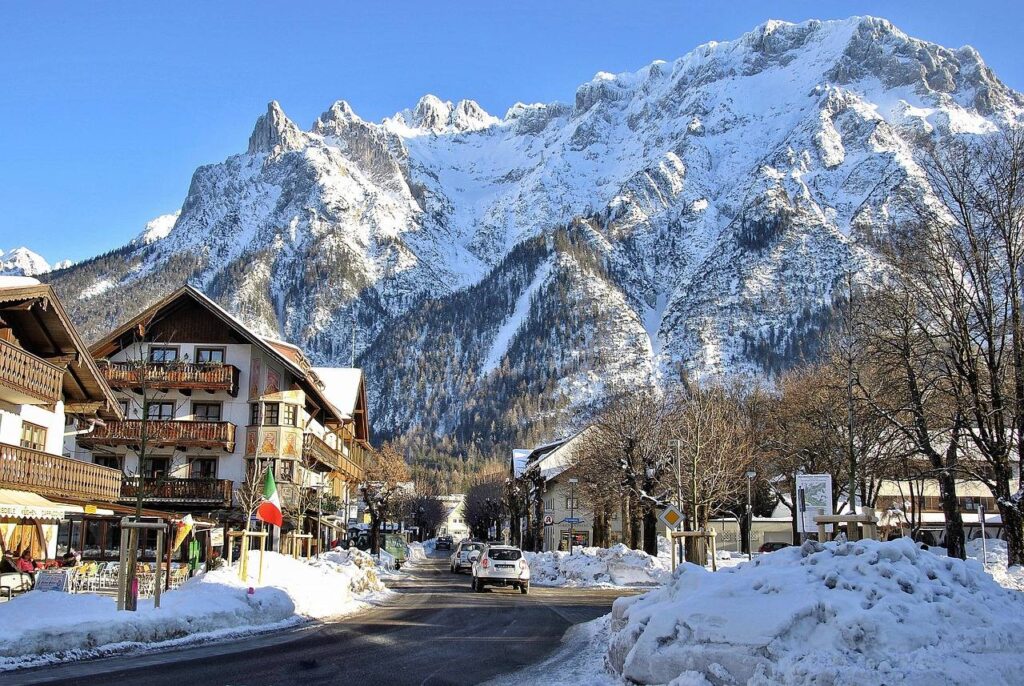
Mittenwald sits at the foot of the Karwendel range, on the last stretch of Bavaria before the mountains give way to Austrian Tyrol, and violin-making has been a living trade here for generations rather than a museum piece. The Karwendelbahn gondola climbs from the village, at 933 meters, to a summit station at 2,244 meters, one of the highest lifts in Germany. Streets throughout the village carry Lüftlmalerei, painted house facades, including one striking Passion scene on a building wall.
Disclosure: some links on this page are affiliate links, marked by the products, tours and hotels they name. A purchase through these links may earn the site a commission at no cost to you, and it never affects what is recommended. How this works.
Where to book Current rates for the town on this page.
Mittenwald gets treated as a footnote to Garmisch-Partenkirchen more often than it should be, a stop you pass through on the way to somewhere bigger. It has its own reason to get off the train: a village that has made violins for centuries, painted houses on nearly every street, and a gondola that goes higher than most people expect a small-town cable car to go. It is one stop on the longer route I cover in Bavaria by train, and it pairs naturally with a Garmisch-Partenkirchen day.
A village that still makes violins
Mittenwald belongs to the same tourism region as Oberammergau, the “Alpenwelt Karwendel,” and shares that neighbor’s taste for painted facades, but its own signature craft is different: violin-making, or Geigenbau, presented by the region’s own tourism site not as history behind glass but as a trade still practiced, “an existing tradition,” in the site’s own words1. Walk the main street and workshops are still doing the work the village became known for centuries ago, which is a different thing entirely from a woodcarving display case.
The Lüftlmalerei is the other reason to slow down here. House facades throughout the village carry painted scenes, and one building carries a striking Passion scene across its wall, the kind of decoration that turns an ordinary walk into something closer to an open-air gallery1.
The Karwendelbahn
The gondola that climbs out of the village is one of the highest in the country: it runs from 933 meters at the valley station in town, at Alpenkorpsstraße 1, up to 2,244 meters, and the operator’s own site describes it plainly as Germany’s second-highest gondola2. In the 2026 season it runs from March 30 through November 22, with hours that vary through the year; as one example, mid-May through mid-September it operates from 8:30 a.m. to 6 p.m.2. I could not confirm a specific round-trip ticket price from the page I fetched, so I am leaving that figure out; check the operator’s own site for current rates before you go.
Resi says If you only have the energy for one gondola on this leg of the trip, I would still put the Zugspitze first, because it is the taller claim and the one you will be asked about when you get home. But the Karwendelbahn is the one I would not skip on a second day, precisely because nobody has told you to go up it, and Mittenwald from 2,244 meters is not a view most visitors bother to collect.
The border
Mittenwald sits at the foot of the Karwendel range, in the same corner of Bavaria where the mountains form the frontier with Austrian Tyrol, close enough that the village has always felt like a last stop rather than a middle one1. What the geography means in practice: this is about as far into the Alps as a Bavarian day trip takes you before the country changes, which is part of why the village has always had one foot in Tyrolean culture as well as Bavarian.
A second day in the Alps, not a stopover
Most itineraries that mention Mittenwald at all treat it as a window seat on the way to Garmisch-Partenkirchen, twenty minutes of painted houses glimpsed from a train and then forgotten. I would give it a half day of its own instead, walking distance permitting: the workshops, the gondola, and a slow loop of the old streets add up to more than a photo stop deserves. Pair it with Garmisch-Partenkirchen on the same regional-rail day if your schedule is tight, but do not let the mountain town crowd out the village entirely just because it has the taller peak attached to it.
Getting there
Mittenwald sits on Bavaria’s regional rail network, and the Bayern-Ticket covers regional trains and nearly all local bus lines statewide on one ticket, starting at €34 for a single traveler in second class3. I have not personally timed the ride from Munich or from Garmisch-Partenkirchen, so I am not putting a specific duration here; check a live timetable before you plan the day around it.
Frequently Asked Questions
What is Mittenwald known for?
Violin-making, a craft still practiced in workshops in the village today, along with painted house facades and its position at the foot of the Karwendel range near the Austrian border.
How high does the Karwendelbahn go?
From the valley station in Mittenwald at 933 meters up to a summit station at 2,244 meters, making it one of the highest gondolas in Germany.
Is Mittenwald close to Austria?
Yes. It sits at the foot of the Karwendel range in the part of Bavaria where the mountains form the frontier with Austrian Tyrol, close enough that the mountains you look at from the village are partly Austrian.
Can you visit a violin workshop in Mittenwald?
The village’s own tourism region presents violin-making as a living, practiced trade rather than a museum display, with workshops still operating in town.
Is Mittenwald a day trip from Munich or from Garmisch-Partenkirchen?
Either works. It sits on the same regional rail corridor as Garmisch-Partenkirchen, close enough to pair the two on one longer day or as separate day trips.
What are the painted houses in Mittenwald called?
Lüftlmalerei, the same tradition of painted house facades found elsewhere in the Bavarian Alps, including one notable Passion scene on a building wall in the village.
Related Articles
 Bavaria by Train: Day Trips from Munich and a Week Without a CarBavaria
 Garmisch-Partenkirchen: The Partnach Gorge, the Ski Jump and the Zugspitze BaseBavaria
 Zugspitze: Cogwheel Train or Cable Car?Bavaria
 Oberammergau: The Passion Play, the Painted Houses and the WoodcarversBavaria
 The Bayern-Ticket: One Day of Regional Trains for a Group, ExplainedBavaria
 Bavaria or Austria for a First Alpine Trip?Bavaria
 One Week in Bavaria by TrainBavaria
Sources
- Alpenwelt Karwendel — Alpenwelt Karwendel. Accessed 2026-09-27.
- Karwendelbahn — Karwendelbahn. Accessed 2026-09-27.
- Bayern-Ticket — Deutsche Bahn. Accessed 2026-09-27.