In brief
The Oide Wiesn, the “Old Wiesn,” is a fenced-off historical section at the south end of the Oktoberfest grounds, and it costs €4 to get into, free for anyone under 15. Inside are three traditional tents, a museum tent, brass bands and historic fairground rides at €1.50 each, some dating to before the Second World War. It has been a permanent part of the festival since 2011, with one exception: every fourth year it steps aside for Bavaria’s central agricultural festival, next in 2028.
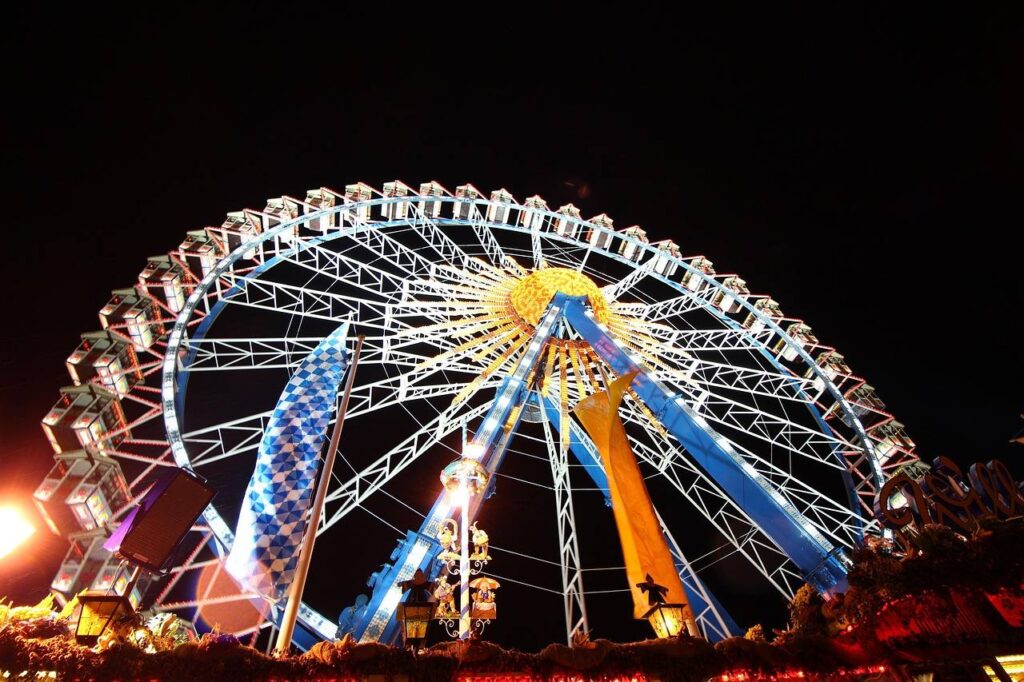
The main Oktoberfest grounds are loud, huge and built for the version of the festival most photographs show you. Behind its own fence at the south end sits a smaller, quieter Oktoberfest that looks like it did decades ago, and it is where I would send anyone who finds the main midway a bit much. This is the Oide Wiesn, and it is one section of the festival covered in my complete guide to Oktoberfest in Munich.
What it costs and who gets in free
Entry to the Oide Wiesn is €4 per person for anyone 15 and older, with children under 14 and disabled visitors carrying a valid pass admitted free, and the gate itself opens up for free entry after 9 p.m.1. That admission fee alone sets it apart from the rest of Oktoberfest, where getting onto the grounds and into every tent costs nothing. Once inside, the rides run €1.50 each, a flat rate that has nothing in common with the pricing on the main midway1.
What is actually inside
Three tents make up the heart of the Oide Wiesn, and each has its own character. Festzelt Tradition runs on brass band music and costume performances, the kind of programming the name promises. Schützenlisl is built around folk singers and a Volkssängerzelt sing-along tradition, the tent for anyone who wants to join in rather than just listen. Boandlkramerei, the musicians’ tent, serves Bavarian specialties alongside its own live music1. Beyond the three tents, a Museum Tent runs exhibits and children’s programs, giving the section a genuinely educational layer the main grounds do not bother with.
The rides are the other reason to come. The Kettenflieger Kalb, a chain flyer dating to 1919, and the Fahrt ins Paradies, a roller coaster from 1939, are both still running, alongside the strength-test game Dicke Berta and a set of historic carousels1. None of it is a museum piece behind glass; you buy a ticket and ride it, which is most of the appeal.
Why a family or a nostalgic goes here
The Oide Wiesn earns its reputation as the family and nostalgia corner honestly. The rides are gentler and older than the main midway’s, the tents are smaller and calmer than the giant beer halls a few hundred meters away, and the museum tent gives children something to do that is not standing in a beer line. For anyone who remembers an earlier, less commercial Oktoberfest, or who simply wants to see what one looked like, this fenced-off section is the closest the festival gets to time travel, three tents and a handful of century-old rides standing in for the whole history of the Wiesn.
None of that means it is a museum you walk through quietly. The brass bands in Festzelt Tradition and the sing-along culture in Schützenlisl are as loud and as social as anything on the main grounds, just on a smaller scale and without the reservation politics that come with the giant tents. A family with young children gets the calmer, cheaper rides; a couple looking for a table without a fight gets one too, since the section keeps its own crowd separate from the six-million-strong main event next door.
Resi says If the crowd at the big tents has already worn you out by early afternoon, walk south to the Oide Wiesn instead of giving up on the day. A cheaper beer, a quieter bench, and a roller coaster older than your grandparents is a fair trade for four euros.
The years it steps aside
The Oide Wiesn is not guaranteed every year. It has been a permanent fixture of the festival since 2011, but every four years it makes way for the Zentral-Landwirtschaftsfest, Bavaria’s central agricultural festival, which uses the same grounds in its place23. The next skipped years are 2028 and 2032, so anyone planning specifically around the Oide Wiesn should check the calendar before booking a trip built around it.
Who actually goes
The Oide Wiesn draws a real, and shrinking, crowd of its own: 373,083 paying visitors in 2025, down from 447,356 the year before4. That is a small fraction of the roughly six million people the main festival pulls in across the same stretch of days, which tells you something about who bothers to walk the extra distance south: fewer tourists chasing a photo, and more people who would rather have a smaller, cheaper Oktoberfest back for an afternoon than fight the crowds at the big tents.
Getting there
The Oide Wiesn sits inside the same grounds as the rest of Oktoberfest, at the south end past the main tent rows, so you do not need a separate ticket or a different station to reach it; my getting to Oktoberfest page covers the U-Bahn and S-Bahn stops that serve the Theresienwiese as a whole. Once you are through the main gates, following signage toward the historic section is the whole journey.
Frequently Asked Questions
How much does it cost to enter the Oide Wiesn?
€4 per person for anyone 15 or older; children under 14 and disabled visitors with a valid pass get in free, and entry is free for everyone after 9 p.m.
What tents are at the Oide Wiesn?
Three: Festzelt Tradition, Schützenlisl and Boandlkramerei, plus a Museum Tent with exhibits and children’s programs.
How much do the rides cost at the Oide Wiesn?
€1.50 per ride, a flat rate across the historic fairground.
Is the Oide Wiesn open every year?
No. It has run every year since 2011 except for one year in every four, when Bavaria’s central agricultural festival, the Zentral-Landwirtschaftsfest, takes its place. The next skipped years are 2028 and 2032.
What are the oldest rides at the Oide Wiesn?
The Kettenflieger Kalb, a chain flyer from 1919, and the Fahrt ins Paradies, a roller coaster from 1939.
Is the Oide Wiesn good for kids?
Yes. It has a dedicated Museum Tent with children’s programs, and its rides and crowds are noticeably calmer than the main Oktoberfest grounds.
Related Articles
 Oktoberfest in Munich: Dates, Tents, Reservations, What to Wear and What It CostsOktoberfest
 Oktoberfest History: From a Royal Wedding in 1810 to Six Million VisitorsOktoberfest
 Oktoberfest with Kids: Family Days, Tent Curfews and the RidesOktoberfest
 Oktoberfest Tents: All 14 Big Tents, the Small Ones and the Oide Wiesn, ComparedOktoberfest
 How Much Does Oktoberfest Cost? A 2026 Budget in Euros and DollarsOktoberfest
 The Best Days and Hours to Go to OktoberfestOktoberfest
 Oktoberfest by the Numbers: Visitors, Beer, Chickens and Lost ItemsOktoberfest
Sources
- The Oide Wiesn — oktoberfest.de, City of Munich. Accessed 2026-09-24.
- FAQs for Wiesn visitors — oktoberfest.de, City of Munich. Accessed 2026-09-24.
- The history of Oktoberfest — oktoberfest.de, City of Munich. Accessed 2026-09-26.
- Oktoberfest in figures: facts and figures about the Oktoberfest in Munich — muenchen.de, City of Munich. Accessed 2026-09-26.