In brief
A Radler is beer cut half-and-half with lemon soda, and the name is credited to Munich innkeeper Franz Xaver Kugler, who is said to have stretched a run of beer for thousands of thirsty cyclists in the summer of 1922 by mixing it with lemon soda at his inn near Deisenhofen. A shandy is the English-speaking world’s version of the same basic idea, beer mixed with something lemony, under a different name and without Kugler’s story attached to it. Bavaria now makes an estimated 350,000 hectoliters of beer-mix drinks a year, and about two-thirds of that is Radler. It was not always legal to sell pre-mixed: German tax law banned bottled beer-mix drinks until January 1, 1993. I drank Radler through every Oktoberfest I can remember, and it is still what I would hand you first.
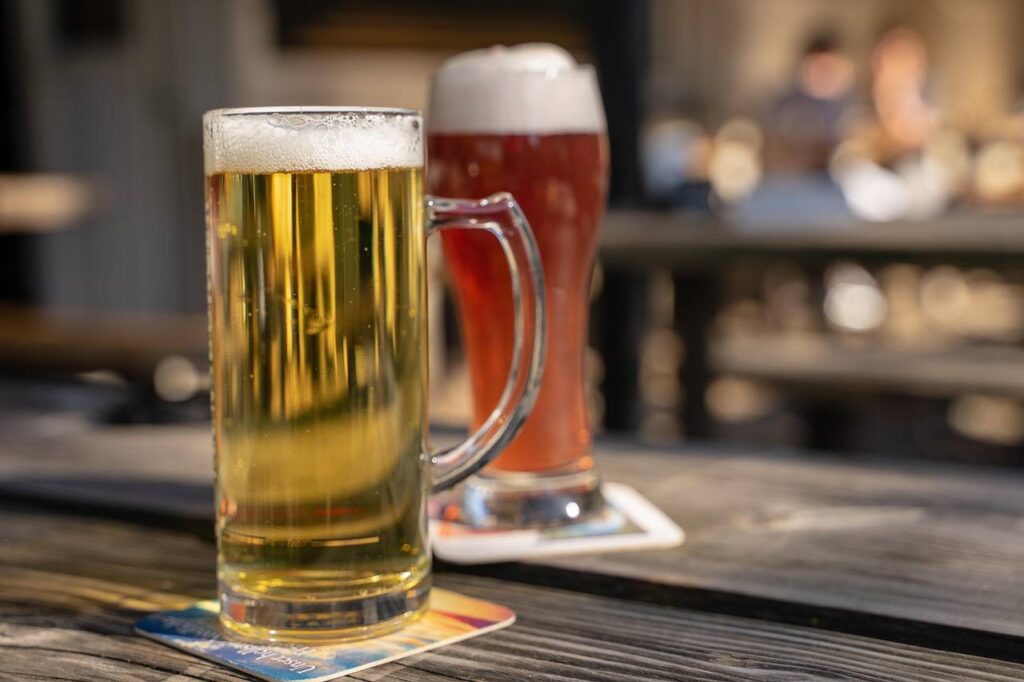
If you have stood at a Bavarian beer garden and watched the table next to you order something the color of beer that clearly is not just beer, that was a Radler, and it is not a lesser drink or a compromise. It is Bavaria’s own answer to a hot afternoon and a long list of things still to do, and it belongs on the same list as the styles in my Bavarian beer guide rather than off to the side as a novelty.
Where the name comes from
Munich’s own beer heritage body credits a specific innkeeper, Franz Xaver Kugler, who ran a rest stop for railway workers that later became a restaurant known as the Kugler-Alm, near Deisenhofen south of the city. After the First World War, Kugler cut a cycling path to his inn, and on one Saturday in the summer of 1922, an estimated 13,000 cyclists arrived at once. The beer ran short. Rather than turn people away, Kugler stretched what he had by mixing it half-and-half with lemon soda and served it as “Radlermaß,” reportedly so the cyclists could ride home without falling off their bikes1. Germanfoods.org, the German food trade association’s consumer site, tells the same basic story independently: cyclists arriving at “the Kugler-Alm Gasthof in Bavaria one hot day” to find the innkeeper short on beer, so he “mixed together half dark beer and half lemon soda and created a refreshing, low-alcohol drink that he named after the cyclists (Radler),” German for cyclist2. Radler, in other words, literally means “cyclist,” and the drink is named for the people it was allegedly invented to keep upright.
The original mix used dark Vollbier rather than the pale Helles most Radlers use today, a switch that came later as tastes in everyday beer shifted toward paler lagers. For decades a Radler had to be mixed to order, glass by glass, because German beer-tax law banned selling it pre-bottled; that changed on January 1, 1993, and the first ready-made bottled Radler on the market came not from Bavaria but from Hesse. There is even a tax quirk buried in the law: under the Biersteuergesetz, the lemonade half of a factory-made Radler is taxed as if it were beer, its sugar content treated the same way beer’s original wort strength is1.
Resi says I was never a beer drinker, so during Oktoberfest, or really any time I was in a beer garden, my drink of choice was always the Radler. It is a refreshing mix of half beer and half lemon soda, so it looks like regular beer but is a good deal less potent, which mattered to me more than it mattered to most of the people I was sitting with.
How much Radler is actually out there
This is not a niche order. Bavaria produces an estimated 350,000 hectoliters of beer-mix drinks a year, covering Radler, Russ’n and Cola-Weizen together, and roughly two-thirds of that total is Radler specifically. More than 30 percent of Bavarian breweries now make some version of a beer-mix drink1. Order one at a beer garden and you are not asking for a special favor, you are ordering something a third of the state’s breweries built a product line around.
The ratio, and mixing your own
The classic Radler is simple arithmetic: half beer, half lemon soda, poured into whatever glass you would otherwise use for the beer alone. Use a plain, mildly carbonated lemon soda rather than a sharp lemonade or tonic; the point is refreshment, not tartness. A pale Helles is the modern default, though there is nothing wrong with trying it the original way, with a darker beer, if you want to taste where the drink started.
Resi says The one thing nobody warns you about is what happens after. What goes in must come out, and I have watched more than a few visitors fail to budget for the bathroom line that a few liters of anything, beer or Radler, eventually demands. Others just do not pace themselves and regret the walk home. A Radler will not save you from either problem, it just delays it slightly, at a lower proof.
Where the shandy fits in
A shandy is the term used across the English-speaking world, particularly the UK, Ireland, Australia and Canada, for the same general idea: beer cut with a lemony soft drink, most often lemonade or a lemon-lime soda. It is not a Bavarian word or a Bavarian invention as far as this page’s sources establish, and no fetched, official page traces its history the way Munich’s own account traces the Radler to Kugler’s inn, so none is claimed here. Practically, a shandy and a Radler land in the same place: a lower-alcohol, beer-based drink built for a hot day, mixed roughly half and half, with the exact proportion left to whoever is pouring it. If you ask for a Radler in Bavaria and a shandy in a British pub, you should expect something close to the same glass, under two different names shaped by two different drinking cultures.
Frequently Asked Questions
What is the difference between a Radler and a shandy?
Mostly the name and the country. A Radler is the Bavarian and German term, credited to a Munich-area innkeeper in 1922; a shandy is the English-speaking world’s word for a very similar beer-and-lemon-soda mix, without that origin story attached.
What is in a traditional Radler?
Half beer, originally a dark Vollbier, and half lemon soda, mixed roughly 50-50.
Who invented the Radler?
Munich’s own beer heritage association credits innkeeper Franz Xaver Kugler, who is said to have stretched a beer shortage at his Kugler-Alm inn near Deisenhofen in the summer of 1922 by mixing it with lemon soda for a crowd of cyclists.
Why is it called Radler?
Radler means “cyclist” in German, and the drink is named for the cyclists it was reportedly invented to serve.
Can you buy pre-mixed Radler in bottles?
Yes, though it was not always legal. German tax law banned pre-bottled beer-mix drinks until January 1, 1993; the first ready-made bottled Radler came from Hesse once the law changed.
Is a Radler weaker than regular beer?
Yes. Cutting beer roughly half with lemon soda lowers the alcohol content proportionally, which is the whole appeal for anyone who wants the taste and the occasion without the full strength of a Maß.
Related Articles
 Bavarian Beer, Explained: Styles, Breweries, Beer Halls and Beer GardensBeer
 Oktoberfest Party Drinks Beyond Beer: Radler, Spezi, Schnapps and the Kids’ TableParty
 Munich Beer Garden Rules: Bring Your Own Food, Never Your Own BeerBeer
 Beer Hall or Beer Garden? How Munich’s Two Beer Cultures Differ and Which to PickBeer
 How Big Is a Maß? Bavarian Beer Sizes in Ounces, ExplainedBeer
 Oktoberfest for First-Timers: What Nobody Tells YouOktoberfest