In brief
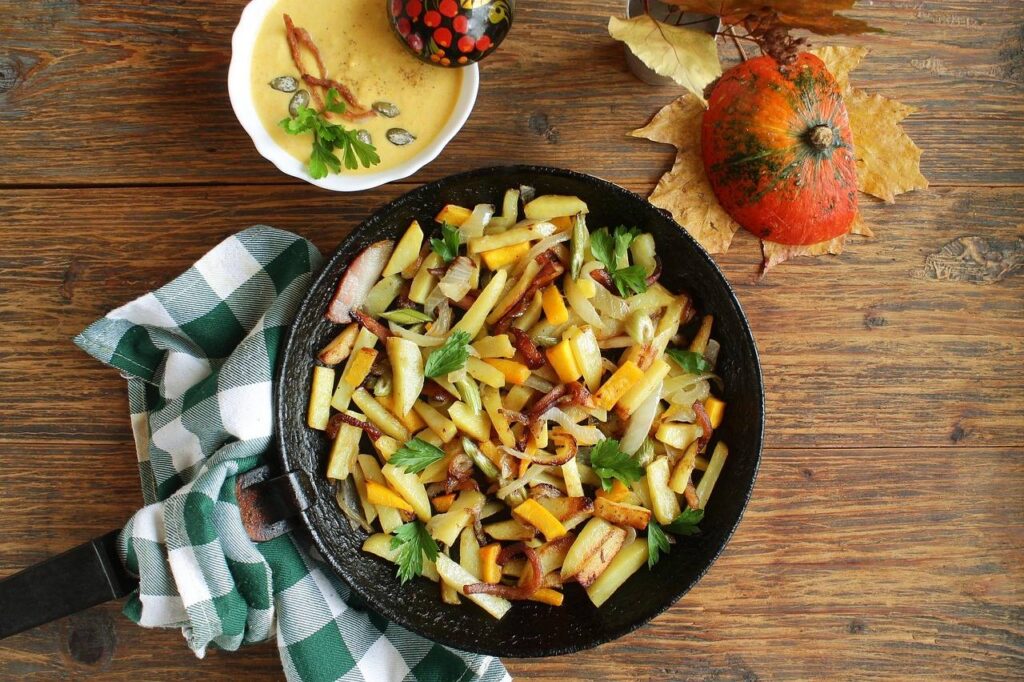
Bratkartoffeln are potatoes fried in a pan rather than boiled, and the name says exactly that: “braten” is to fry or roast, “Kartoffel” is potato. Bavaria’s official specialities register documents them as the standard side for Tellersülze, a cold aspic dish of meat, vegetables and egg, served alongside farmhouse bread and cabbage salad. That single sourced line is the clearest official record of the dish this site has found, not a full recipe with fixed proportions. Bratkartoffeln are not the same dish as Bavarian potato salad, which is dressed warm in vinegar and mustard rather than fried. A well-seasoned cast-iron skillet is the tool I would reach for to get the pan-contact browning the dish actually depends on.
Disclosure: some links on this page are affiliate links, marked by the products, tours and hotels they name. As an Amazon Associate, bavarianbistro.com earns from qualifying purchases. A purchase through these links may earn the site a commission at no cost to you, and it never affects what is recommended. How this works. Product prices and availability shown are as of the date stated and can change; the Amazon price at checkout applies.
Bratkartoffeln do not need explaining so much as they need managing expectations: they are potatoes fried in a pan, the name says so before the plate arrives, and no amount of onion or bacon changes that this is a side dish playing a side dish’s role. What is less obvious is where it sits on a Bavarian table, quietly holding up a cold plate rather than headlining next to the roasts covered elsewhere in my guide to Bavarian food.
What the name actually means
“Braten” is the German verb for frying or roasting, and it is the same root behind Schweinebraten, the pork roast. Applied to potatoes, it simply means potatoes cooked in fat in a pan rather than boiled1. That is the whole definition, and it is worth holding onto, because a lot of what gets attached to Bratkartoffeln online, bacon, onion, specific ratios, is common practice rather than anything documented in Bavaria’s own register of regional dishes.
Where the official record actually places this dish
Bavaria’s specialities register does not carry a standalone page describing Bratkartoffeln step by step. The clearest documented mention I found is in the register’s entry for Tellersülze, a cold Bavarian aspic dish of meat pieces, vegetables and egg with a slightly sour taste, served especially in warmer months. The register states plainly that Bratkartoffeln, farmhouse bread and Krautsalat, cabbage salad, are what go with it: “dazu schmecken Bratkartoffeln, Bauernbrot und Krautsalat”1.
That single sourced line is the most specific, verifiable fact available about the dish’s place on a Bavarian table: it is a fried-potato side that belongs next to a cold plate, alongside bread and a cabbage salad. Beyond that pairing, I am not going to assert ingredient ratios, a bacon-or-not answer, or a fixed method as if they were part of the official record, because they are not documented there.
Resi says If a recipe calls itself “the traditional Bavarian Bratkartoffeln,” read that claim the way you would read “grandma’s secret recipe” on a jar at the supermarket. The dish is real and common; a single fixed traditional method is not something Bavaria’s own register documents, whatever the blog post promises with a straight face.
Not the same dish as Bavarian potato salad
Bratkartoffeln get confused with Bavarian potato salad often enough to be worth separating clearly. The potato salad is dressed while both the potatoes and the dressing are still hot, with a warm vinegar-and-mustard vinaigrette rather than mayonnaise, and it is served warm or at room temperature, never fried2. Bratkartoffeln, by contrast, are cooked in fat in a pan and served hot off the heat.
One source describing the potato salad puts the contrast bluntly: “This is not the creamy, mayonnaise-laden potato salad you might be used to. Bavarian potato salad is something else entirely”2, and it is also, plainly, something else entirely from a plate of fried potatoes. My Bavarian potato salad guide covers that dish on its own terms.
What Bratkartoffeln usually sit next to
| Dish | Relationship |
|---|---|
| Tellersülze (cold aspic) | Documented pairing: served together with farmhouse bread and cabbage salad |
| Bavarian potato salad | A different dish entirely, dressed warm in vinegar and mustard, never fried |
| Cold cuts and Brotzeit plates | A common but not separately documented pairing on Bavarian cold-food boards |
Source: Genussorte Bayern register (row 1) and Days of Jay’s Bavarian potato salad recipe (row 2)12.
If you are assembling a full Brotzeit board rather than a single side, my Brotzeit guide covers what else typically goes on it.
What to buy: the pan matters more than the recipe
Because the dish is defined by pan contact rather than a fixed ingredient list, the equipment does more work than any specific recipe would. A heavy skillet that holds heat evenly, rather than a thin nonstick pan that cools the moment potatoes hit it, is what produces the browned edges the dish is known for. The Lodge Pre-Seasoned Cast Iron Skillet, 10.25 Inches, sold on Amazon, is sized for frying a full side portion of sliced potatoes without crowding the pan3.
Resi says It is the size that fits a full side of sliced potatoes without anyone having to fry in shifts, which is the whole problem with a pan one size too small.
Beyond the pan: waxy potatoes hold their shape better under high heat than starchy baking potatoes, and a fat with a reasonably high smoke point, whether that is clarified butter, lard or a neutral oil, keeps the potatoes from burning before they brown. None of those specifics come from an official Bavarian source; they are general pan-frying practice, offered here as practice rather than as a documented recipe.
The beer-garden version, in practice
Beer gardens and Brotzeit boards tend to treat Bratkartoffeln as a filling, inexpensive base for a plate that is otherwise cold cuts, cheese and bread, the same role the register documents next to Tellersülze. In practice, that usually means potatoes that were boiled the day before, sliced, and fried hard the next day, since day-old boiled potatoes hold together and brown better in a hot pan than freshly boiled ones do. That sequence, boil ahead, slice, fry to order, is standard kitchen practice for pan-fried potatoes generally, not a claim I can trace to Bavaria’s own register, so take it as a practical note rather than an official method.
Cooking Bratkartoffeln, step by step
- Start with potatoes that are already cooked. Boiled and cooled potatoes, ideally from the day before, slice cleanly and fry without falling apart the way raw potatoes tend to.
- Slice, don’t dice. Rounds or half-rounds give more flat surface area against the pan than cubes do, which is where the browning happens.
- Get the pan hot before the potatoes go in. A cold pan steams the potatoes instead of searing them, and steamed potatoes will not develop a crust no matter how long they stay on the heat.
- Resist stirring constantly. Let each side sit against the pan long enough to brown before turning; potatoes moved too often release moisture and soften instead of crisping.
- Season at the end. Salt drawn out too early pulls moisture from the potatoes before they have browned.
Frequently Asked Questions
What does "Bratkartoffeln" mean?
Fried or pan-roasted potatoes. “Braten” means to fry or roast, and “Kartoffel” is potato.
What is Bratkartoffeln traditionally served with?
The clearest documented pairing is with Tellersülze, a cold Bavarian aspic dish, alongside farmhouse bread and cabbage salad.
Is Bratkartoffeln the same as Bavarian potato salad?
No. Bavarian potato salad is dressed warm in vinegar and mustard and served warm or at room temperature. Bratkartoffeln are fried in fat and served hot.
Does the official Bavarian register give a recipe for Bratkartoffeln?
Not a dedicated one. The clearest documented reference is a single line pairing it with Tellersülze; beyond that, I did not find a standalone official page with a fixed ingredient list.
What kind of potato works best for Bratkartoffeln?
Waxy potatoes tend to hold their shape better under high, direct heat than starchy baking potatoes, though this is general pan-frying practice rather than a documented rule.
What pan should I use for Bratkartoffeln?
A heavy pan that holds even heat, such as cast iron, produces better browning than a thin pan that cools quickly once potatoes are added.
Related Articles
 Bavarian Food: The Dishes, How Munich Eats Them, and What to Cook at HomeFood
 Bavarian Potato Salad: Vinegar and Broth, Never MayonnaiseFood
 Sauerkraut vs Bayrisch Kraut: Fermented Cabbage and Braised Cabbage Are Different DishesFood
 Brotzeit: Bavaria’s Bread-Time Meal, and What Goes on the BoardFood
 Schweinebraten: Bavaria’s Pork Roast with Dark Beer GravyFood
 Wiesn Hendl: Oktoberfest Roast Chicken, and How to Make It at HomeFood
 How to Read a Bavarian Menu: 60 Words from Brezn to ZwetschgendatschiFood
Sources
- Tellersülze — Genussorte Bayern, Bavarian State Ministry of Food, Agriculture and Forestry (Kompetenzzentrum für Ernährung). Accessed 2026-09-24.
- Bavarian Potato Salad (Kartoffel Salat) — Days of Jay. Accessed 2026-09-24.
- Lodge Pre-Seasoned Cast Iron Skillet, 10.25 Inches — Amazon.com. Accessed 2026-09-24.