In brief
Würzburg does double duty on a Bavaria itinerary: it is the northern anchor of the Romantic Road and the Residenz, and it is the heart of Franconia’s wine country, a region that grows on limestone and shell-rock rather than the river slate you find further west. The city’s own tourism copy points visitors toward Silvaner, Riesling and Weißburgunder from the named vineyard sites around town, including Würzburger Stein-Berg, Würzburger Schlossberg, Würzburger Abtsleite and Würzburger Innere Leiste. Silvaner is the grape most identified with the region, and the old town’s Alte Mainbrücke runs past wine gardens that make the most of it.
Disclosure: some links on this page are affiliate links, marked by the products, tours and hotels they name. A purchase through these links may earn the site a commission at no cost to you, and it never affects what is recommended. How this works.
Where to book Current rates for the old town.
Most people who add Würzburg to a Bavaria trip are adding it for the Residenz, and that is a fine reason; it is also the wrong place to stop, because Würzburg sits at the actual center of a wine region that most of Franconia’s own visitors never bother to name. The city rewards a day that treats the palace as the morning and the vineyards as the afternoon, rather than the other way around.
The Residenz, briefly, and where wine takes over
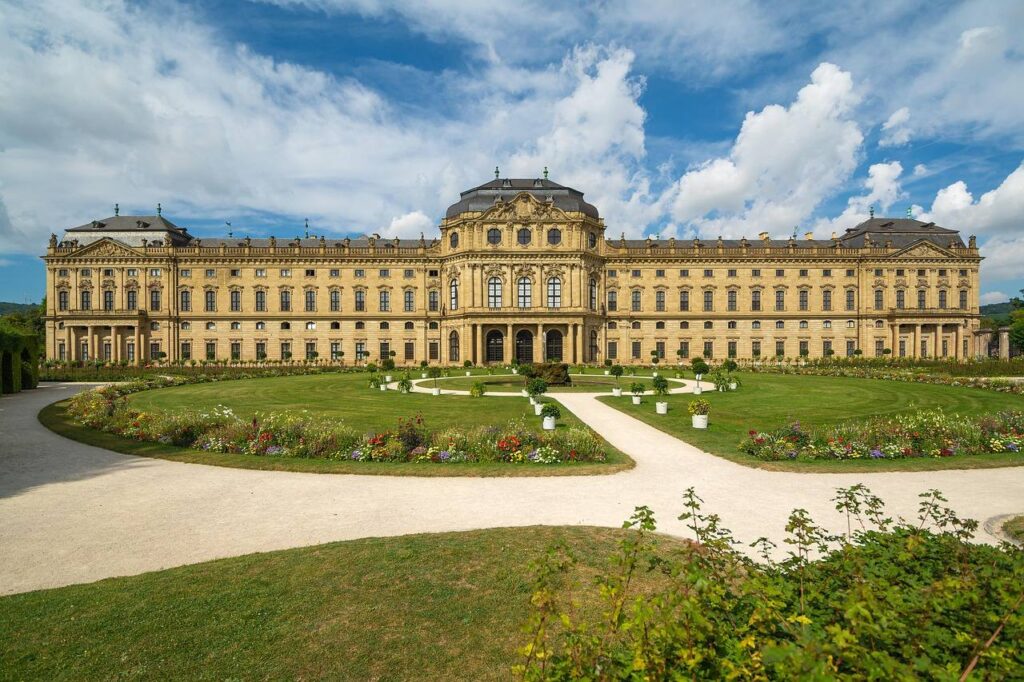
The Residenz itself, the vast baroque palace with its staircase ceiling fresco, sits at the edge of the Romantic Road corridor and is the reason most itineraries include Würzburg at all. Once you have seen it, the city’s own tourism copy makes its actual pitch clear: an invitation to “enjoy them with a wine from the Silvaner, Riesling or Weißburgunder (Pinot Blanc) grapes of the famous Würzburger Stein-Berg,” naming specific protected local vineyard sites: Würzburger Schlossberg, Würzburger Abtsleite and Würzburger Innere Leiste alongside the Stein-Berg itself1. Silvaner, in particular, is treated as Franconia’s signature grape, the wine you are meant to leave having tried even if you came for the palace1.
Resi says I would give the Residenz the morning and no more; the building earns its reputation, but Franconia’s wine culture is the part visitors from outside Germany usually skip entirely, and it is the more interesting half of the day.
Walking the wine into the afternoon
The practical version of “go taste Franconian wine” is a walk along the Alte Mainbrücke, the old bridge across the Main, which runs past wine gardens on both sides and gives you the easiest possible introduction to a Weinstube, Franconia’s version of a wine tavern1. You do not need a car or a booked tour to do this; it is a walk any visitor can manage between lunch and dinner, and it is the single best way to understand why Franconians consider their region distinct from the beer-first identity of Bavaria further south.
A note on the bottle: Franconian wine is famously sold in a squat, rounded flask unlike anything from the rest of Germany’s wine country, and you will recognize one on a shelf before you know its name. Never mind the bottle’s legal pedigree; what matters is what is on the label: Silvaner, Riesling or Weißburgunder, from a named site like the Stein-Berg, and that is enough to order confidently at any Weinstube in town1.
How the vineyard sites work
The named sites the city points visitors toward, Würzburger Stein-Berg, Würzburger Schlossberg, Würzburger Abtsleite and Würzburger Innere Leiste, are not marketing names; they are specific vineyard parcels, the same way a Bordeaux label names a specific château. Seeing the name on a bottle in a Weinstube is the fastest way to know you are drinking something rooted in the hills you can see from the bridge, rather than a generic regional blend1.
| What to order | What it tells you |
|---|---|
| Silvaner | Franconia’s signature grape; the safest first pour for a newcomer |
| Riesling | Grown on the same limestone sites, a step drier than most people expect |
| Weißburgunder (Pinot Blanc) | The rounder, softer of the three named grapes |
| A named site (Stein-Berg, Schlossberg, Abtsleite, Innere Leiste) | A specific Würzburg vineyard parcel, not a regional blend |
Source: romantischestrasse.de1.
Franconia is not quite Bavaria, and it will tell you so
Here is the thing nobody explains before you get there: Franconia, the northern third of the modern state, spent most of its history as a separate patchwork of bishoprics and free cities, only folded into Bavaria in the Napoleonic era, and a fair number of Franconians will let you know they consider “Bavarian” an imprecise label for what they are. Wine over beer is part of that identity, not incidental to it; where Munich organizes its calendar around Helles and Oktoberfest, Würzburg organizes its around a harvest. Visitors get this backward constantly, assuming the whole state runs on the same beer-hall rules, and Würzburg is where that assumption first breaks.
Getting there
Würzburg sits at the northern end of the Romantic Road corridor, which makes it a natural pairing with a longer Romantic Road itinerary rather than a single rushed day if your schedule allows it. If a single day is what you have, the regional network that the Bayern-Ticket covers reaches Würzburg the same way it reaches Nuremberg and Bamberg further south, and it is the ticket to check before booking anything else for the day. It also sits close enough to both of those Franconian stops that a longer trip through the north of Bavaria can string Würzburg, Bamberg and Nuremberg together over two or three days rather than treating each as an isolated errand out of Munich; my one week in Bavaria by train page walks through how that kind of route fits together.
Resi says If you can only fit one Franconian stop into a Bavaria by train week, I would pick Würzburg over Bamberg for the wine alone, though I would not blame anyone who picked Bamberg for the beer. They are not really competing; they are the same region’s two different answers to the same question.
Where to stay if you make it an overnight
Würzburg’s old town, close to both the Residenz and the Alte Mainbrücke, is the easiest base if you want the wine gardens within walking distance after dinner rather than a taxi ride away. The riverside area near the bridge itself puts you close to the Weinstuben without needing to cross town twice in one evening; either works for a one-night stop on a longer Romantic Road trip.
Frequently Asked Questions
Is Würzburg worth a day trip on its own?
Yes, particularly if you treat the Residenz as the morning stop and leave the afternoon for the wine gardens along the Alte Mainbrücke rather than rushing to the next town.
What wine is Franconia known for?
Silvaner is the region’s signature grape, alongside Riesling and Weißburgunder, grown on named local sites like the Würzburger Stein-Berg.
Do I need to book a wine tasting in advance?
No. Walking into a Weinstube along the Alte Mainbrücke and ordering a glass is the normal way to try Franconian wine; no reservation is required for a casual visit.
Is Würzburg on the Romantic Road?
Yes, it sits at the road’s northern end and is a common starting or ending point for a longer Romantic Road trip.
What does "Würzburger Stein-Berg" mean on a wine label?
It names a specific vineyard site in Würzburg, not a brand or a blend; several such named sites, including Schlossberg, Abtsleite and Innere Leiste, appear on Franconian labels.
Can you reach Würzburg by regional train from Munich?
Yes, it sits on Bavaria’s regional network, the same one the Bayern-Ticket covers.
Related Articles
 Bavaria by Train: Day Trips from Munich and a Week Without a CarBavaria
 Romantic Road Itinerary: 2, 4 or 7 DaysBavaria
 Bamberg Day Trip: The Old Town, Little Venice and the BeerBavaria
 Nuremberg Beyond the Christmas MarketBavaria
 One Week in Bavaria by TrainBavaria
 The Bayern-Ticket: One Day of Regional Trains for a Group, ExplainedBavaria
 Bavarian Beer, ExplainedBeer
Sources
- Würzburg — romantischestrasse.de, Romantic Road tourism association. Accessed 2026-09-27.