In brief
Food-grade lye for a proper Bavarian pretzel is sodium hydroxide, used as a solution under 4 percent, the same figure the EU’s own specification and King Arthur Baking both give. A small jar of USP-grade sodium hydroxide crystals, the kind sold for soap and candy making, is what home bakers actually buy, and a 2-pound jar runs $15.99 as of September 2026. Wear rubber or plastic gloves and eye protection, work in a stainless steel or glass bowl, and keep aluminum away from the bath entirely. If that sounds like more chemistry than your kitchen wants, baked baking soda gets you most of the way there, without the goggles.
Disclosure: some links on this page are affiliate links, marked by the products, tours and hotels they name. As an Amazon Associate, bavarianbistro.com earns from qualifying purchases. A purchase through these links may earn the site a commission at no cost to you, and it never affects what is recommended. How this works. Product prices and availability shown are as of the date stated and can change; the Amazon price at checkout applies.
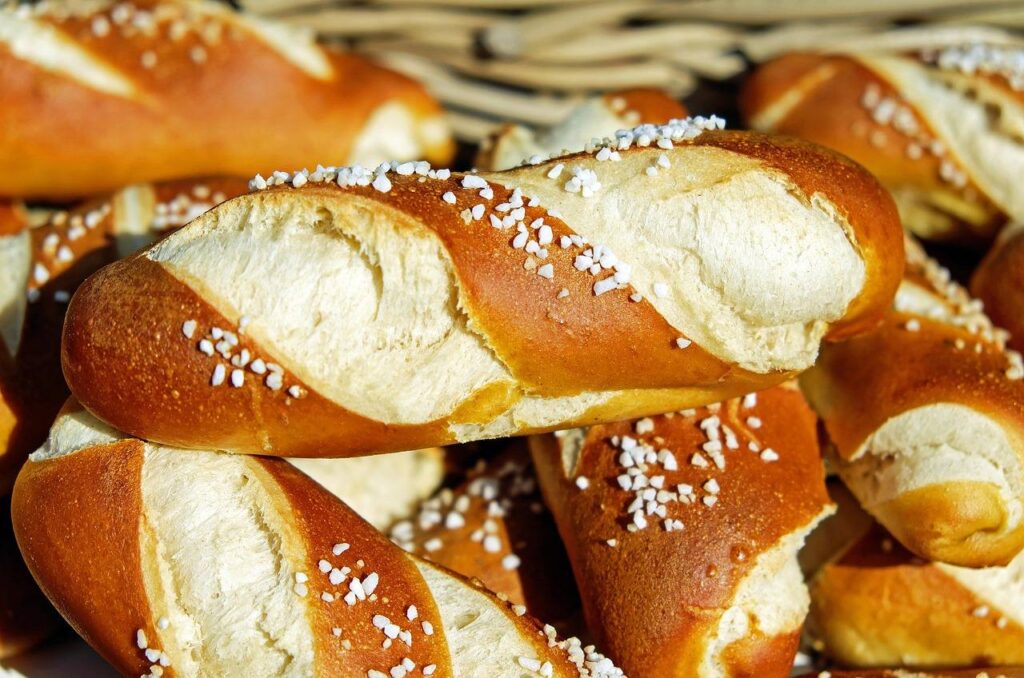
If the words “lye bath” made you close this tab once already: come back. It is the one step between a soft, pale dinner roll shaped like a pretzel and an actual Bavarian pretzel, the kind with a mahogany crust that cracks when you bite it, and it is far less alarming than it sounds once you know what you are buying and where the actual danger sits. This is one of the tools worth getting right, and my guide to cooking Bavarian food in North America has the rest of the shopping list.
What "food-grade lye" actually means
Lye is sodium hydroxide, and “food-grade” just means it is sold clean enough to touch food, as opposed to the industrial grade sold for drain cleaning or soap manufacturing at a lower purity. Bavaria’s pretzel does not leave this to guesswork: the EU’s own registered specification for the Bavarian pretzel calls for the shaped dough to be coated in a solution of under 4 percent sodium hydroxide before baking, on top of a raw-materials list that runs to wheat flour, water, yeast, salt, sodium carbonate and fat1.
King Arthur Baking’s own guidance for home bakers lands in the same range independently: a working solution of “3% to 4% (by weight) lye-to-water,” always with food-grade lye specifically, never the drain-cleaner kind2. Two sources arriving at the same number a continent apart is not a coincidence; it is the actual chemistry of what turns a pretzel that color.
What to buy
You are not buying a pretzel-specific product. You are buying plain sodium hydroxide crystals or beads, sold under the “food grade” or “USP/FCC” label, in a jar meant for home soap and candy makers, which happens to be exactly what a pretzel bath needs. On Amazon, Belle Chemical‘s “Sodium Hydroxide – Pure – Food Grade (Caustic Soda, Lye),” a 2-pound jar rated USP/FCC grade, lists at $15.99 as of September 20263. That is enough for a great many batches of pretzels; you use a small fraction of the jar per bath and keep the rest sealed.
Resi says Buy the smallest food-grade jar you can find and treat it like a chemical, because it is one, not like a baking ingredient you leave on the counter. Label it, keep it away from anything you would confuse it with in the dark, and do not decant it into an old spice jar. A pretzel is not worth a trip to urgent care over a labeling shortcut.
Handling it safely
King Arthur’s own tip sheet for working with lye is specific, and worth following to the letter rather than approximating. Wear “plastic or rubber gloves, eye protection such as goggles, clothing that protects your skin from splashes or spills, and closed-toed shoes.” Mix and dip in “a non-reactive bowl, such as stainless steel or glass,” in “a room with good airflow and not a small, confined space,” with plastic sheeting down to protect your counters. The article also recommends having a second person around until you are comfortable with the process2.
A commenter on Modernist Pantry’s own blog post about sodium hydroxide adds the rule every home baker who has done this more than once repeats: no aluminum anywhere near the lye, not the bowl, not a spoon, not the baking sheet underneath the parchment, because the reaction between lye and aluminum is exactly the one you do not want happening near your face5.
When you are done, both sources agree on the cleanup logic even if the exact wording differs: neutralize what is on your work surface with an acid, vinegar in King Arthur’s instructions, then rinse. King Arthur’s own steps: “wipe your work surface with an acid such as vinegar to neutralize any lye,” and for the diluted bath itself, “pour it directly down the drain, then follow with a few seconds of cold water from the sink faucet”2.
What the research could not confirm
Neither source fetched for this article gave specific guidance on how to store leftover lye between bakes, beyond the obvious (sealed, labeled, away from children and pets). A claim that it needs a specific HDPE plastic container surfaced only in an unverified search summary, not on either page actually read for this article, so it is left out here. If you want a definitive answer, ask the seller of the specific product you buy.
If you would rather skip the chemistry: baked baking soda
There is a real alternative, and it is not a myth invented to make nervous bakers feel better. Tasting Table’s explainer on the method is specific: bake plain baking soda on a foil-lined sheet “for around an hour,” which converts it to sodium carbonate, a stronger alkali than the baking soda you started with, though still nowhere near as caustic as true lye4.
To use it, the same source gives an exact ratio: “dissolve a third of a cup of cooked baking soda for each cup of water,” then dunk the shaped pretzels in that bath “for three to four minutes,” substituting the baked baking soda “at a 1:1 ratio in place of lye” by volume wherever a recipe calls for a lye bath4. The result, in the article’s own words, is pretzels that come out “bronze, salty, and smooth, with that chewy texture and slightly crusty surface,” described as “not far off” from the real thing, while the article is honest that baked baking soda is “not exactly the same substance” as lye and will not be chemically identical4. What you get is most of the color and the chew, none of the goggles, and a crust that a side-by-side taster would likely call close rather than identical. My lye versus baking soda page walks through both methods side by side if you want the full comparison before you decide.
Resi says I would tell a first-time pretzel baker to start with the baked baking soda, not because the lye is unmanageable, but because your first batch should be about shaping and timing, not about remembering where you put the goggles. Move up to real lye once the shaping is boring you.
The container question, plainly
Whichever bath you use, the container matters as much as the chemical. Stainless steel and glass are the two materials both the EU specification’s process and King Arthur’s own instructions point toward without objection; plastic works for lye specifically as long as it is a container you do not mind retiring afterward2. What you never reach for is aluminum, in any form, for the reason above: it reacts with lye in a way that plain steel and glass do not, releasing hydrogen and heat right next to a solution already capable of burning skin.
Frequently Asked Questions
Is food-grade lye the same as the lye in drain cleaner?
It is the same chemical, sodium hydroxide, but sold at a purity standard clean enough for food contact, rather than the industrial grade meant for drain cleaning, which can carry other additives you do not want anywhere near a pretzel.
What concentration of lye solution do pretzels actually need?
Under 4 percent by the EU’s own Bavarian pretzel specification, and King Arthur Baking independently gives the same working range of 3 to 4 percent lye to water by weight.
Can I use regular baking soda instead of lye?
Plain baking soda gets you partway there but is noticeably weaker. Baking it in the oven for about an hour converts it to sodium carbonate, a stronger alkali that gets much closer to a real lye crust, substituted at a 1:1 ratio for lye in a recipe.
Why can't I use an aluminum bowl or baking sheet with lye?
Lye reacts with aluminum, producing heat and hydrogen gas right next to a solution that can already burn skin and eyes. Stainless steel and glass do not have this reaction.
What safety gear do I actually need to make lye pretzels at home?
Rubber or plastic gloves, eye protection such as goggles, clothing that covers your skin, and closed-toed shoes, in a room with good airflow, following King Arthur Baking’s own guidance for home bakers.
How do I dispose of a lye pretzel bath safely?
Neutralize any lye left on your work surface with an acid like vinegar, then for the diluted bath itself, pour it directly down the drain followed by a few seconds of cold running water, per King Arthur Baking’s own instructions.
Where can I buy food-grade lye in the United States?
Plain food-grade sodium hydroxide, sold as crystals or beads for soap and candy making, is available from several sellers on Amazon in small jars, which is what most home bakers use for a pretzel bath rather than a pretzel-branded product.
Related Articles
 Cooking Bavarian in North America: Where to Buy the Ingredients and the Tools That MatterPantry and tools
 Real Bavarian Pretzels at Home: Lye or Baking Soda?Food
 Bavarian Food: The Dishes, How Munich Eats Them, and What to Cook at HomeFood
 Brotzeit: Bavaria’s Bread-Time Meal, and What Goes on the BoardFood
 The German Pantry: Staples to Stock for Bavarian CookingPantry and tools
 Spätzle Makers Compared: Press, Hopper, Board or ColanderPantry and tools
 The Bavarian Breakfast: Weißwurst, Pretzel, Sweet Mustard and a Morning Wheat BeerFood
Sources
- Commission Implementing Regulation (EU) — Bavarian pretzel specification — EUR-Lex. Accessed 2026-09-26.
- A Baker’s Tips for Safely Working With Lye — King Arthur Baking. Accessed 2026-09-26.
- Sodium Hydroxide – Pure – Food Grade (Caustic Soda, Lye), 2 Pound Jar — Amazon.com (Belle Chemical). Accessed 2026-09-26.
- The Baking Soda Secret To Better Soft Pretzels — Tasting Table. Accessed 2026-09-26.
- The Secret of Sodium Hydroxide — Modernist Pantry. Accessed 2026-09-26.