In brief
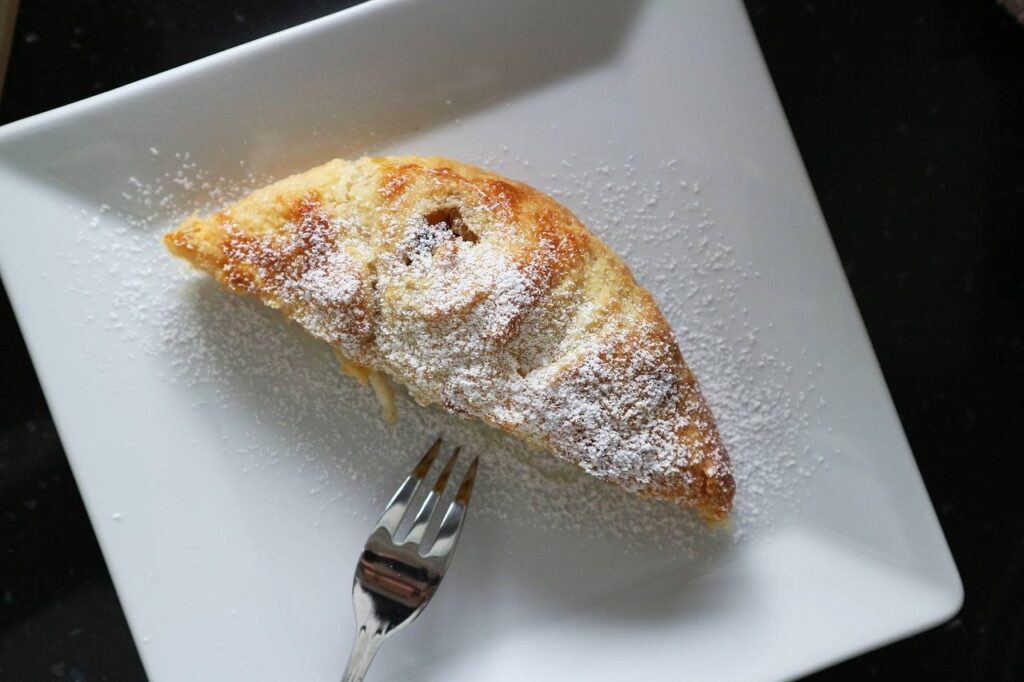
Apfelstrudel is a rolled apple pastry that traces back to the Ottoman Empire, as a distant cousin of baklava, before settling into Central European kitchens and becoming a fixture on Bavarian menus that never claimed to have invented it. The dough is not rolled with a pin so much as stretched by hand, and the test of a properly stretched sheet is whether you can read a newspaper through it. It is filled with apples, raisins, breadcrumbs, hazelnuts, sugar, cinnamon and butter, and baked until the pastry is crisp and golden. If your afternoon does not include hand-stretching dough over a tablecloth, a frozen strudel from Aldi’s Deutsche Küche line is the shortcut I actually use, and I am not embarrassed about it.
Disclosure: some links on this page are affiliate links, marked by the products, tours and hotels they name. As an Amazon Associate, bavarianbistro.com earns from qualifying purchases. A purchase through these links may earn the site a commission at no cost to you, and it never affects what is recommended. How this works. Product prices and availability shown are as of the date stated and can change; the Amazon price at checkout applies.
If you have eaten apple strudel in Munich and assumed it was as Bavarian as the pretzel next to it on the dessert menu: it is not, and that is fine, because Bavaria has never pretended otherwise. Apfelstrudel is one of the clearest cases on my guide to Bavarian food of a dish the region serves constantly and claims not at all, and once you know where it actually comes from, the whole thing makes more sense, including why the dough behaves nothing like a pie crust.
Not Bavarian, and not even originally Austrian
Strudel did not start in a Viennese kitchen either. A food-history site that traces its lineage describes it as having “traveled from the Ottoman empire,” calling it a distant cousin of baklava that settled into Central and Eastern Europe before becoming associated with Austria specifically1. From there it spread further still: European Jewish communities carried it to Israel, the United States and Argentina, and the same source calls it one of the staples of Ashkenazi cuisine, eaten at Rosh Hashanah, when apple is dipped in honey as part of the wish for a sweet year ahead1. Bavaria’s own culinary heritage register has no entry for Apfelstrudel at all, which is consistent with a dish the region adopted rather than originated.
The dough, stretched by hand
A strudel is not made with a rolling pin doing all the work. The dough is first flattened by hand and rolled only enough to get it started, and then stretched from underneath: closed fists, palms down, slide beneath the dough and pull gently from the center out toward the edges until the sheet is enormous and nearly transparent1. The traditional test for whether it is thin enough is almost a joke and is also completely serious: you should be able to read a newspaper through it1. Because a kitchen towel is rarely big enough for a sheet this size, the dough is stretched over a floured tablecloth instead, which is the detail that tells you this was never meant to be a quick weeknight pastry1.
How far the pastry traveled
The Ottoman-to-Central-Europe route is only half the journey. The same source that traces strudel back to a baklava cousin also follows it forward: European Jewish communities carried the pastry with them to Israel, the United States and Argentina, and it became one of the staples of Ashkenazi cooking specifically1. It shows up at Rosh Hashanah, the Jewish New Year, where apple dipped in honey is part of the ritual wish for a sweet year, and a fruit-filled pastry like Apfelstrudel fits naturally onto that table1. None of that history is Bavarian, or even strictly Austrian, and I find it more interesting than any invented palace anecdote: a pastry with Ottoman roots, refined somewhere in Central Europe, ended up on Bavarian dessert menus by one route and on Ashkenazi holiday tables by an entirely different one, and both are true at the same time.
What goes into the filling
The filling is built from apples, raisins, breadcrumbs, ground hazelnuts, sugar, cinnamon and butter, with a little lemon juice to keep the apples from turning gray and a splash of rum if you want it, then a final dusting of icing sugar once it is baked and cooled slightly1. The breadcrumbs matter more than they look like they should: fried briefly in butter first, they sit under the apples and soak up the juice that would otherwise turn the bottom of the pastry soggy before it ever gets a chance to be crisp on top.
- Stretch the dough over a large floured cloth until it is nearly see-through.
- Scatter buttered breadcrumbs and hazelnuts over two-thirds of the sheet.
- Layer sliced apples, raisins, sugar, cinnamon and a little lemon juice on top.
- Lift the cloth to roll the strudel over itself, away from you, into a long log.
- Bake until deep golden, then dust with icing sugar once it has cooled a little.
The honest shortcut
I sorely missed a lot of hearty Bavarian food after I moved to the US in the early 2000s, and I am not going to pretend that hand-stretching strudel dough over a tablecloth is a Tuesday-night activity for most people, including me on most Tuesdays. Once Aldi arrived in my state, its Deutsche Küche line turned out to carry frozen strudel among its rotating German staples, and it is one of my favorite items they stock; it only shows up once or twice a year, so when it does, I buy more than one box. That is not a confession, it is a recommendation.
If you would rather bake one from scratch and want the dough to have something to be stretched onto without dragging a tablecloth out of the linen closet, a USA Pan half sheet pan gives you the surface area to actually roll and transfer a strudel of this size once it is filled. The USA Pan Bakeware Half Sheet Pan, a set of two 17.75 by 12.75-inch aluminized steel pans, lists for $24.99 as of September 20262.
Resi says Buy the frozen strudel first, always. It is genuinely good, it takes twenty minutes in the oven instead of an afternoon over a tablecloth, and it will tell you whether you even like the dish before you invest in hand-stretched pastry. If you do want to make your own eventually, the sheet pan is the one piece of equipment that will not be doing double duty as a placemat.
Frequently Asked Questions
Is Apfelstrudel Austrian or Bavarian?
Neither, originally. It traces back to Ottoman pastries related to baklava, which settled into Central European kitchens and became associated with Austria before spreading onto Bavarian menus as well.
Why is the dough stretched instead of rolled?
Rolling alone cannot get the dough thin enough. Stretching it by hand over a floured cloth lets it thin out evenly until it is nearly transparent, which a rolling pin working against a countertop cannot manage without tearing it.
How thin should strudel dough be?
Thin enough that you could read a newspaper through it, which is the traditional test bakers use rather than a specific measurement.
What is in the filling besides apples?
Raisins, breadcrumbs fried in butter, ground hazelnuts, sugar, cinnamon, lemon juice, and often a splash of rum, finished with a dusting of icing sugar after baking.
Can I use store-bought dough instead of stretching my own?
Yes, and I do it myself. A good frozen strudel, including Aldi’s seasonal Deutsche Küche version, is a legitimate way to eat this dish without a free afternoon.
Is Apfelstrudel served hot or cold?
It is typically served warm, often with the filling still a little juicy from the oven, though it holds up fine at room temperature too.
What is the difference between strudel dough and phyllo dough?
Strudel dough is stretched by hand into one large, elastic sheet, while phyllo is usually bought pre-made in thin, separate layered sheets; they behave differently in the oven, and one is not simply a rebrand of the other.
Related Articles
 Bavarian Food: The Dishes, How Munich Eats Them, and What to Cook at HomeFood
 Kaiserschmarrn: The Torn Pancake Bavaria Borrowed from AustriaFood
 Dampfnudel: The Steamed Yeast Dumpling with the Salty CrustFood
 Bavarian Desserts: Bayrisch Creme, Kaiserschmarrn, Dampfnudel and the RestFood
 Cooking Bavarian in North America: Where to Buy the Ingredients and the Tools That MatterPantry and tools
 German Grocers That Ship in the US and CanadaPantry and tools
 How to Read a Bavarian Menu: 60 Words from Brezn to ZwetschgendatschiFood
Sources
- Austrian Apfelstrudel — 196 Flavors. Accessed 2026-09-26.
- USA Pan Bakeware Half Sheet Pan, Set of 2 Baking Sheets, Aluminized Steel — Amazon.com. Accessed 2026-09-26.