In brief
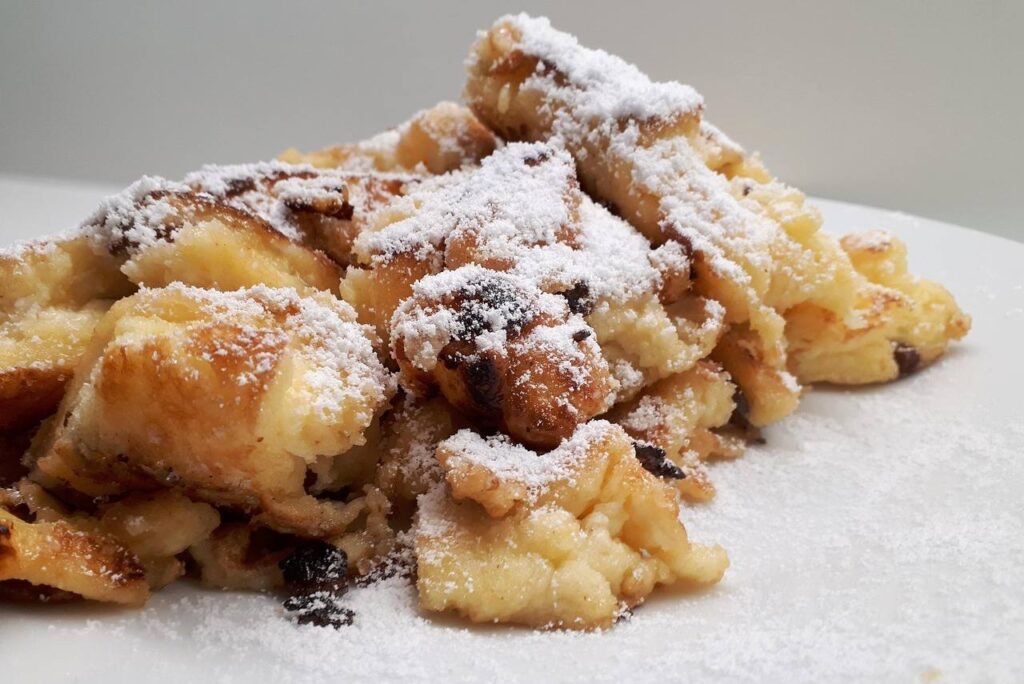
Kaiserschmarrn is a thick pancake fried in a skillet, then torn into ragged, sugared pieces with two forks instead of flipped whole, and served with applesauce. It is not a Bavarian invention: Munich’s own city guide is upfront that the dish “originated in Austria,” and it still lands on most Bavarian dessert menus anyway. There is no entry for it in Bavaria’s own culinary heritage register, the way there is for a Weißwurst or a pretzel, because Bavaria has never claimed to have invented it, only to have adopted it happily. A well-seasoned 12-inch cast iron skillet, the kind that gets the torn edges properly caramelized instead of steamed, lists for $34.90 as of September 2026.
Disclosure: some links on this page are affiliate links, marked by the products, tours and hotels they name. As an Amazon Associate, bavarianbistro.com earns from qualifying purchases. A purchase through these links may earn the site a commission at no cost to you, and it never affects what is recommended. How this works. Product prices and availability shown are as of the date stated and can change; the Amazon price at checkout applies.
If you have ordered dessert in a Bavarian beer hall and what came back looked like a pancake that lost a fight: that is not a kitchen mistake, and nobody owes you an apology for it. Kaiserschmarrn arrives torn on purpose, dusted white with powdered sugar, with a small bowl of applesauce alongside, and it is one of the more forgiving entries in my guide to Bavarian food, because most of what makes it good happens after the batter is already in the pan, not before.
Borrowed, and not quietly
Bavaria does plenty of dish-borrowing from its southern neighbor, and Kaiserschmarrn is one of the clearer cases of it. Munich’s own city tourism guide, in a rundown of dishes visitors should try, says so plainly: Kaiserschmarrn “originated in Austria,” fried dough with raisins folded through it, usually served with applesauce on the side1. That is the extent of what a source I would actually trust will tell you about its history without wandering into legend. Any version you have heard involving an emperor, a rejected pancake, or a court chef improvising on the spot is exactly that, a story, and I am not going to repeat it here as fact, because nothing in Bavaria’s own food-heritage records backs it up.
Where it landed
Once the dish crossed the border, it stayed. Bavaria’s culinary heritage register, which spells out an official recipe for a Weißwurst down to the casing, has no entry for Kaiserschmarrn at all, which fits an imported dish rather than a native one. What is not in question is that it shows up on Bavarian menus generally, alongside dishes the region does claim as its own1. Whether one particular beer hall or mountain hut serves it more often than the next kitchen in town is not something any source I checked actually measured, so treat a “Kaiserschmarrn today” chalkboard as an invitation, not a ranking.
What is actually in the name
“Kaiser” is simply the German word for emperor, and “Schmarrn” is an Austrian and Bavarian word for a mess, or nonsense, the kind of thing you would say about a plan that fell apart. Put together, the name describes exactly what lands on the plate: a pancake deliberately wrecked. Nothing more elaborate than that needs to be true for the name to make sense, which is one reason I am skeptical of every elaborate origin story attached to it.
Not quite a pancake, not quite a soufflé
If you are picturing an American pancake with extra steps, adjust your expectations. A Kaiserschmarrn is fluffier and looser than that, closer to a cross between a pancake and a very lazy soufflé, and it is not meant to hold together as a single disc the way a diner stack does. The batter is thick enough to set into a proper layer in the pan, but the whole dish is built around the idea that it gets broken apart before it reaches you, which is a different design goal than any pancake I grew up eating in the north of Germany. It also does not travel well as leftovers, which is Resi-speak for: make only as much as you intend to eat in one sitting, because a reheated Kaiserschmarrn loses the crisp edges that were most of the point.
It is also not a crepe wearing a costume. A crepe is thin on purpose and folded, not torn, and a Kaiserschmarrn that comes out crepe-thin has usually been under-battered rather than authentically light. The test is not thinness; it is whether the torn pieces have enough structure to hold a little crisp edge while staying soft in the middle, which only happens if the batter had some body to it before it ever hit the pan.
How Kaiserschmarrn is made
There is no official Bavarian recipe to quote here, so this is the method rather than invented measurements. A thick batter, closer to a pancake batter than a crepe batter, goes into a hot, well-buttered pan and is left alone just long enough to set on the bottom. Instead of being flipped in one piece, it gets torn into rough, bite-sized pieces right in the pan, using two forks or the edge of a spatula, which lets the torn edges pick up more color and more crisp than the rest of the batter ever will. Raisins, if you are using them, go into the batter itself, not scattered on top afterward. The whole thing finishes with a heavy dusting of powdered sugar and gets served hot, straight from the pan it was torn in, with applesauce or a fruit compote on the side.
- Make a thick pancake batter and let it rest briefly.
- Pour it into a hot, buttered pan and let the bottom set without stirring.
- Tear the pancake into rough pieces with two forks, right in the pan.
- Let the torn pieces catch extra color for another minute or two.
- Dust heavily with powdered sugar and serve with applesauce.
The pan that actually helps
A nonstick pan will get you a Kaiserschmarrn that tastes fine and looks pale. What the torn pieces want is steady, even, retained heat, the kind a thin pan cannot hold once it is opened up and stirred. The Lodge Pre-Seasoned Cast Iron Skillet, the 12-inch version with the silicone handle holder, lists for $34.90 as of September 20262, and it is not a single-dish purchase; it is the pan that also does your Bratkartoffeln and your morning eggs for the next twenty years.
Resi says Buy the cast iron, not the nonstick pan already living in your cupboard. It gives the torn edges something to actually caramelize against, and it will outlast whatever pan you are currently using to justify not buying it. My one complaint: it is heavy enough that you want a confident grip before you start tearing anything, and it does not want a trip through the dishwasher, ever.
Frequently Asked Questions
Is Kaiserschmarrn Austrian or Bavarian?
Austrian by origin. Munich’s own tourism guide describes it as a dish that started in Austria and simply became common on Bavarian menus.
What does "Kaiserschmarrn" mean?
“Kaiser” means emperor, and “Schmarrn” is the German word for a mess or nonsense. The name describes a pancake torn apart on purpose.
What is Kaiserschmarrn served with?
Most commonly applesauce, spooned on or served in a small bowl alongside the torn, sugared pancake.
Do I need raisins in Kaiserschmarrn?
No. Raisins are common but not mandatory; leave them out if you or your guests do not want them, and nobody at the table will notice a rule was broken.
Is Kaiserschmarrn a breakfast or a dessert?
In Bavaria it is generally treated as a dessert or a sweet main course rather than a morning dish, unlike Weißwurst, which is strictly a late-morning food.
Why is Kaiserschmarrn torn instead of flipped?
Tearing it in the pan lets the ragged edges pick up extra color and crispness that a single flipped pancake never gets, which is most of the point of the dish.
Do I need a special pan to make it at home?
No, but a heavy pan that holds its heat, cast iron especially, gets you closer to the texture you would get in a Bavarian kitchen than a thin nonstick pan will.
Related Articles
 Bavarian Food: The Dishes, How Munich Eats Them, and What to Cook at HomeFood
 Apfelstrudel: Why It Is on Every Bavarian Menu, and How the Pastry Is StretchedFood
 Dampfnudel: The Steamed Yeast Dumpling with the Salty CrustFood
 Bavarian Desserts: Bayrisch Creme, Kaiserschmarrn, Dampfnudel and the RestFood
 How to Read a Bavarian Menu: 60 Words from Brezn to ZwetschgendatschiFood
 Cooking Bavarian in North America: Where to Buy the Ingredients and the Tools That MatterPantry and tools
 Wiener Schnitzel FAQ: Veal or Pork, Austrian or German, and Why It Is Not a Hot DogFood
Sources
- Bavarian cuisine: These dishes have tradition — muenchen.de (Munich city tourism). Accessed 2026-09-26.
- Lodge Pre-Seasoned Cast Iron Skillet with Silicone Handle Holder, 12 Inches — Amazon.com. Accessed 2026-09-26.