In brief
As of September 2026, six Bavarian foods carry an EU Protected Geographical Indication: the Bayerische Breze, Obazda, the Nürnberger Rostbratwurst, and three separate beer names, Bayerisches Bier, Münchener Bier and Oktoberfestbier. Getting one of these names registered means passing a specific legal test, not just being famous. Weißwurst, despite carrying Munich’s own name, has no EU protection that this research could find. Spätzle has protection too, but the registered name is Swabian, not Bavarian, and it only reaches into part of the state.
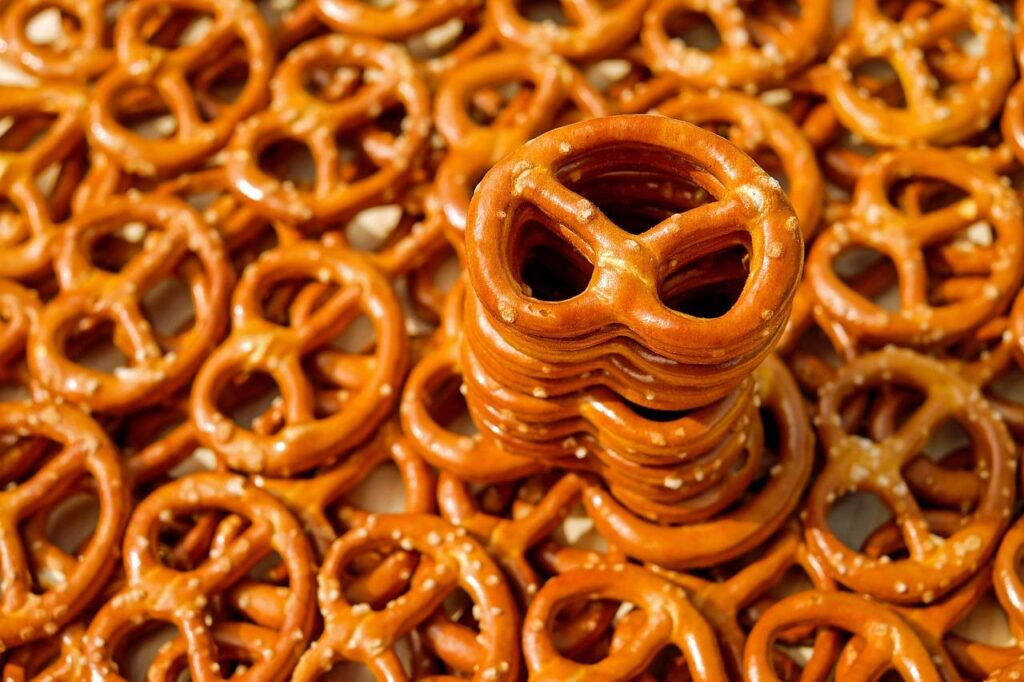
Every Bavarian specialty shop and every beer garden menu likes to imply that what you are eating is somehow legally Bavarian, and almost none of it is. A small number of names, though, actually are, registered with the European Union the same way Champagne and Parma ham are, with a legal document behind them and a specification a producer has to meet to use the name at all. This page is the full list, as far as this research could confirm it, and it sits alongside my guide to Bavarian food for anyone who wants to know which claims on a package are real.
What "EU protection" actually means
The European Union runs a quality-schemes register for agricultural products and foodstuffs, and a name only qualifies for a Protected Geographical Indication, a PGI, if it meets a specific legal definition: it has to identify a product originating in a specific place, whose given quality, reputation or other characteristic is essentially attributable to that geographical origin, with at least one of the production steps actually taking place there9. That last part matters. A PGI does not require every step of production to happen in the named region, the way the stricter Protected Designation of Origin does; it requires only that the origin genuinely explains something about the product, and that part of the making happens where the name says it does9.
The Bavarian foods on the list
| Name | Status | Protected since | Category |
|---|---|---|---|
| Bayerische Breze (Bavarian pretzel) | PGI | 21 February 2014 | Baked goods |
| Obazda / Obatzter | PGI | 26 June 2015 | Prepared cheese spread |
| Nürnberger Rostbratwürste | PGI | July 2003 | Meat product |
| Bayerisches Bier | PGI | 5 July 2001 | Beer |
| Münchener Bier | PGI | 18 July 1998 | Beer |
| Oktoberfestbier | PGI | 2022 | Beer |
Source: EUR-Lex and the EU’s protected-names register123467.
Bayerische Breze
The Bavarian pretzel’s specification describes a “deep-glazed, copper-coloured crust” with “rugged cracks that form during the baking process,” a soft interior, and a lye bath under 4% sodium hydroxide that gives it that color and chew1. The same filing draws the line against its Swabian cousin directly: the Bavarian pretzel has thicker arms set higher up and no standard middle split, while the Swabian version runs a higher fat content1. My pretzel page covers making one at home, lye and all.
Obazda
Obazda’s registration, effective 26 June 2015, went through the EU’s opposition process with zero objections filed against it, which is not nothing for a spread made mostly of aging Camembert2. The specification requires ripe soft cheese, at least half the finished product by weight, plus butter, paprika and salt. My Obazda page has the full recipe.
Nürnberger Rostbratwurst
The finger-sized sausage sold “drei im Weggla,” three to a roll, has carried protection since July 2003, restricted to a specification built around pork, marjoram, mace, ginger and cardamom, stuffed into narrow sheep casings3. My Nürnberger Rostbratwurst page has the rest of the seasoning list.
Three separate beer protections
Bavarian beer is the one category with more than one name registered, and it is worth knowing they are not the same protection, filed at different times for different reasons.
“Bayerisches Bier” covers beer from Bavarian brew kettles generally, brewed under the Bavarian version of the Reinheitsgebot, and it became a protected name effective 5 July 2001, a status the European Court of Justice went out of its way to reconfirm by ruling on 2 July 2009, comparing it in the same breath to Champagne, Cognac, Scotch Whisky and Parma ham45.
“Münchener Bier” is a narrower, older protection specifically for beer brewed within the city of Munich itself, registered a full three years earlier, on 18 July 19986. Not every Bavarian beer qualifies for it, only Munich’s, which makes it the tightest geographic net of the three.
“Oktoberfestbier” is the newest of the three, protected only since 2022, and it covers specifically the beer the festival’s own breweries pour inside the tents each year7. My beer guide has how the styles inside all three protections actually differ on the glass.
"And more": Spätzle is protected, but it is not Bavaria's protection
Spätzle, the soft egg noodle under half the plates in Bavaria, does carry an EU protection, registered as “Schwäbische Spätzle / Schwäbische Knöpfle.” The name itself gives away the geography: the protected zone is the German state of Baden-Württemberg plus Bavaria’s own Schwaben administrative district, which means most of Bavaria sits outside the protection entirely, and only the Allgäu corner of the state is legally allowed to call its version by the protected name8. It belongs on this list because readers searching for Bavarian PGI foods will run into it, and because knowing it is Swabian, not Bavarian, is the whole point. My Spätzle page goes into the overlap in full.
What is missing: Weißwurst
Weißwurst is the dish most likely to make this list by reputation alone, and this research could not find an EU registration for it, under any name, as of September 2026. That does not prove none exists; it means a search of the EU’s own register did not surface one. Munich’s own culinary-heritage register lists Weißwurst among its traditional specialties, which is a real and specific honor, but it is a different, less legally binding category than a PGI. My Weißwurst page covers the dish on its own terms.
Resi says A protected name is worth something, but it is a legal fact, not a taste test. Some of the best things on a Bavarian table, Weißwurst included, have never bothered to file the paperwork, and I would not trust anyone who tells you a missing seal means a lesser dish.
Frequently Asked Questions
What does PGI mean on a food label?
Protected Geographical Indication. It means a name is legally tied to a place because the product’s quality or reputation comes from that origin, with at least part of the production happening there.
Is Weißwurst an EU-protected food?
Not as far as this research could confirm, as of September 2026, despite it being one of Munich’s most famous dishes.
Is Bavarian beer legally protected?
Yes, in three separate ways: Bayerisches Bier generally, Münchener Bier for beer brewed in Munich specifically, and Oktoberfestbier for the beer served at the festival.
Is Spätzle a Bavarian PGI food?
No. Its protection is registered as Swabian, and only Bavaria’s own Schwaben district, including the Allgäu, falls inside the protected zone.
How is a PGI different from a PDO?
A PDO requires every production step to happen in the named region; a PGI requires only that at least one step happens there and that the origin genuinely explains the product’s quality or reputation.
Does a food need to be famous to get EU protection?
No. It needs to pass a specific legal application process, which is slower and more expensive than simply being well known, which is why some famous dishes, like Weißwurst, have never been registered.
Related Articles
 Bavarian Food: The Dishes, How Munich Eats Them, and What to Cook at HomeFood
 Bavarian vs German Food: What Is Actually DifferentFood
 Obatzda: The Bavarian Beer-Cheese Spread, What Goes in It and How to Make ItFood
 Real Bavarian Pretzels at Home: Lye or Baking Soda?Food
 Nürnberger Rostbratwurst: The Finger-Sized Sausage with Its Own EU ProtectionFood
 Bavarian Beer, Explained: Styles, Breweries, Beer Halls and Beer GardensBeer
 Spätzle: Swabian by Law, Bavarian by AppetiteFood
 Weißwurst: How to Eat Bavaria’s White Sausage (Skin, Mustard and the Noon Rule)Food
Sources
- Bayerische Breze specification — EUR-Lex, Official Journal of the European Union. Accessed 2026-09-26.
- Commission Implementing Regulation (EU) 2015/1002 — EUR-Lex, Official Journal of the European Union. Accessed 2026-09-26.
- Nürnberger Rostbratwürste — Genussorte Bayern, Bavarian State Ministry of Food, Agriculture and Forestry. Accessed 2026-09-26.
- Bayerisches Volksgetränk — Bayerischer Brauerbund. Accessed 2026-09-26.
- Bayerisches Bier — UK Government protected food and drink names register. Accessed 2026-09-26.
- Münchener Bier — UK Government protected food and drink names register. Accessed 2026-09-26.
- The Six Munich Breweries at Oktoberfest — Oktoberfest.de. Accessed 2026-09-26.
- Schwäbische Spätzle / Schwäbische Knöpfle — UK Government protected food and drink names register. Accessed 2026-09-26.
- Regulation (EU) No 1151/2012, Article 5 — EUR-Lex, Official Journal of the European Union. Accessed 2026-09-26.