In brief
The word you need at Oktoberfest is Prost, and if you are toasting the whole table rather than one person, it becomes Prost beianand, “cheers, everyone”. The band strikes up “Ein Prosit der Gemütlichkeit” several times an hour, and the whole tent finishes it with the chant “Oans, zwoa, drei, gsuffa,” one, two, three, drink. That chant is also the cue to clink, since the city’s own page for the song describes it as exactly that, the chant people clink glasses to. Holding a full Maß properly means gripping the handle in a closed fist with the mug held away from your body, not cradled against your chest, which is also the first rule of competitive stein-holding.
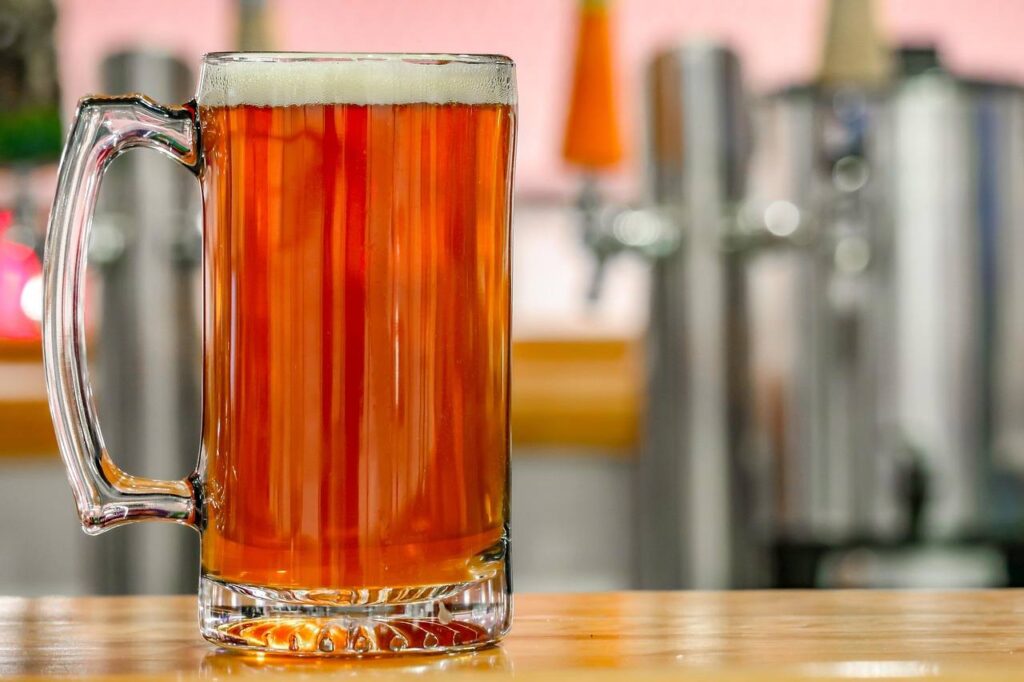
Someone across the table lifts a liter of beer at you, says something that sounds like “Prost bei-uh-nawnd,” and waits. You have about a second to decide whether to stand, clink, or just lift your own mug and nod. Nod. This is the toasting page of my complete guide to Oktoberfest in Munich, and it exists because the actual list of things you need to know here is short enough to fit on one page, not because the topic is complicated.
The word you need: Prost
Prost is German for cheers, said to whoever you are looking at across a stein. Munich’s own city site, in its guide to Oktoberfest dialect, gives the group version as “Prost beianand,” which it translates as “Cheers, everyone!” and notes is “addressed to the whole table”1. Beianand means, roughly, all together, so the difference is exactly what it sounds like: Prost for the person across from you, Prost beianand when you are raising your mug at a bench of ten. The same page also has “Stoß ma o,” which it translates as “Let’s toast,” the thing you say before the Prost, not instead of it1.
You do not need dialect beyond this. Nobody at a table of strangers is quizzing your pronunciation, and a mangled “Prost” said while actually making eye contact and lifting your mug lands better than a perfect one mumbled at the table.
Ein Prosit, the song that starts it for you
You will not need to start a toast yourself, because the band does it for you, repeatedly. “Ein Prosit der Gemütlichkeit,” roughly “a toast to conviviality,” is the song the tent bands play several times every hour, and everyone in a Bavarian beer tent who is capable of standing does so when it starts. It is short on purpose, since its whole job is to end the same way every time: the chant “Oans, zwoa, drei, gsuffa,” “one, two, three, drink,” after which the entire tent drinks together1. Who actually wrote the tune is disputed in different accounts, so this page is not going to hand you a composer’s name it cannot stand behind; what matters for your evening is that it plays, everyone stands, and you have three counts to get your mug up.
Clinking, and what it is actually for
The chant that ends “Ein Prosit” is, in the words of the city’s own page, “the chant when clinking glasses”1, so the clink and the countdown are the same moment, not two separate customs to remember. Turn toward whoever is nearest, touch mugs (or get close if the bench is packed and a full swing risks beer on your neighbor), and drink on “gsuffa.”
Resi says Holding eye contact while you clink is a piece of German folklore I have heard argued about at length, usually by people who have had two Maß, and I would not build your evening around it. Get the mug up, get the clink in before the band moves on, and worry about eye contact never.
How to actually hold a Maß
A full Maß is a liter of beer in a mug heavy enough to feel it, and the handle exists for a reason: hold it there, in a closed fist, not by wrapping your palm around the glass itself. The official rules for competitive stein-holding, the sport where contestants hold a full Maß at arm’s length for as long as they can, specify that “the stein must be held by the handle and gripped so that the logo area…faces directly away from the competitor” with “a closed fist,” and that “the thumb may not rest on top of the stein handle,” with the arm “extended straight with no bending at the elbow” and “held out directly in front of the competitor, not out to the side”2. Nobody at your table is asking you to hold your Maß at arm’s length for ten minutes; that is a sport, not dinner. But the grip is the same one you want for an ordinary toast and an ordinary walk back from the bar: handle in your fist, mug held slightly away from your body, so a clink does not end with beer on your shirt.
If beer is not your drink
You can do all of this with a Radler in your hand and nobody will know the difference from across the bench, which is more or less the point. I was not a beer drinker myself, so my drink at Oktoberfest and in the beer gardens was always the Radler, half beer and half lemon soda, refreshing, less potent, and it looks exactly like a regular beer from three seats away. You toast with it the same way, Prost and all, and the only thing you are skipping is the second half of the alcohol.
If you would rather learn the words before you land, my dictionary of Oktoberfest terms has the rest of the vocabulary, and the first-timers page covers what nobody tells you before the first Maß arrives.
Frequently Asked Questions
What does Prost mean at Oktoberfest?
It is German for cheers, said to the person you are toasting; add beianand, “Prost beianand,” when you are toasting the whole table at once.
What is Ein Prosit der Gemütlichkeit?
The Oktoberfest toasting song the tent bands play several times an hour, ending in the chant “Oans, zwoa, drei, gsuffa,” one, two, three, drink, at which point the tent drinks together.
Do you clink Maß mugs at Oktoberfest?
Yes, on the chant that closes Ein Prosit; that chant is the city’s own description of the moment glasses are clinked.
Who wrote Ein Prosit?
Accounts disagree on the composer, so this page does not name one; what matters practically is that every tent band plays it and everyone stands for it.
How do you say cheers in Bavarian dialect?
Prost works everywhere; “Prost beianand” is the version for a whole table, and “Stoß ma o” means “let’s toast,” said just before it.
How do you hold a Maß without spilling it?
By the handle, in a closed fist, held slightly away from your body rather than cradled against your chest, the same grip used in competitive stein-holding.
Can you toast with a Radler instead of beer?
Yes. It looks like a regular Maß from across the table and the toast works exactly the same way.
What is a Noagerl?
The last bit of beer left at the bottom of the Maßkrug, the one nobody quite finishes.
Related Articles
 Oktoberfest in Munich: Dates, Tents, Reservations, What to Wear and What It CostsOktoberfest
 The Oktoberfest Dictionary: Wiesn, Maß, O’zapft is and 40 More WordsOktoberfest
 Oktoberfest for First-Timers: What Nobody Tells YouOktoberfest
 Bavarian Words for Visitors: Servus, Griaß Di, Prost and Twenty MoreTrachten and customs
 Oktoberfest Without a Reservation: How the Unreserved Seats Work and When to Show UpOktoberfest
 Oktoberfest Party Drinks Beyond Beer: Radler, Spezi, Schnapps and the Kids’ TableParty
 Munich Beer Garden Rules: Bring Your Own Food, Never Your Own BeerBeer
 Bavarian Manners: Tipping, Quiet Hours, Sundays and PfandTrachten and customs
Sources
- Learn the Bavarian dialect for Oktoberfest — muenchen.de, City of Munich. Accessed 2026-09-26.
- Official Steinholding Rules — US Steinholding Association. Accessed 2026-09-26.