In brief
Munich’s official 30-year climate average puts September at a mean of 14.7°C (58°F) and October at 10.1°C (50°F), which is the honest range for a festival that opens in the last third of September and closes in the first week of October. September is also one of Munich’s drier months by the city’s own long-term numbers, averaging 78.1 millimeters of rain across the month against a summer peak of over 120 millimeters in June. None of this is a forecast for this year’s festival, only what four decades of Munich Septembers and Octobers average out to, which is enough to tell you how to pack.
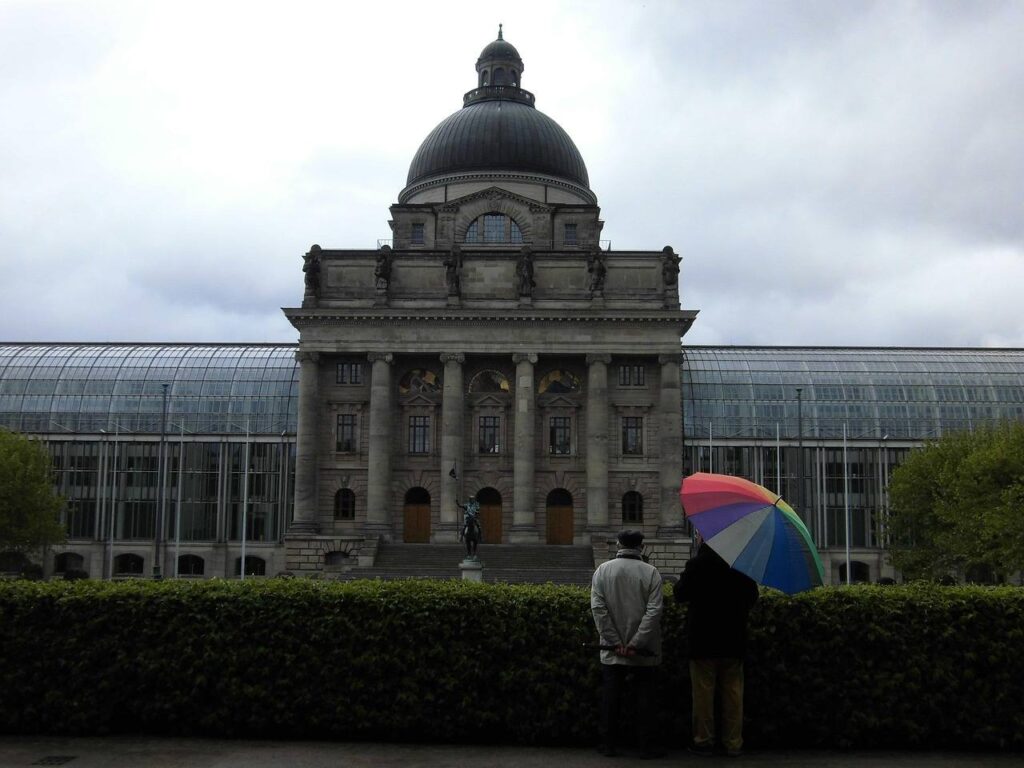
Nobody can tell you what the weather will do on your specific day at the Wiesn, and this page will not try. What the German national weather service, the Deutscher Wetterdienst (DWD), can tell you is what late September and early October in Munich look like on average, over a 30-year reference period, which is a far better packing guide than a two-week forecast you check three months out. This is part of my complete guide to Oktoberfest in Munich, and it is the only page in the cluster that will not promise you sunshine.
The numbers, from the DWD itself
The DWD’s current 30-year climate normal (1991–2020) for the München-Stadt station puts the mean temperature at 14.7°C in September, dropping to 10.1°C in October, against an annual mean of 10.1°C for the whole year1. At Munich’s airport station, which is the DWD station with published daily highs and lows, September averages a daytime high of 19.4°C (67°F) and an overnight low of 8.8°C (48°F); October’s daytime high drops to 13.6°C (56°F), with nights averaging 4.5°C (40°F)1. That October figure matters more than it looks: the 2026 Wiesn runs into the first days of October, so the closing days of the festival are meaningfully colder than opening weekend, not a rounding error.
| Month | Mean temp (city) | Daily high / low (airport) | Rainfall (airport) | Sunshine (city, daily avg) |
|---|---|---|---|---|
| September | 14.7°C / 58°F | 19.4°C / 8.8°C (67°F / 48°F) | 68 mm | 5.7 hours |
| October | 10.1°C / 50°F | 13.6°C / 4.5°C (56°F / 40°F) | 49 mm | 4.1 hours |
Source: Deutscher Wetterdienst, 1991–2020 climate normals1.
September is also, by the DWD’s own numbers, one of Munich’s calmer months for rain: 78.1 millimeters at the city station and 68 millimeters at the airport, well under the June–August summer peak of well over 100 millimeters a month, when Central Europe’s thunderstorm season is at its worst1. October is drier again, at 66.9 millimeters city-wide. None of that means it will not rain on your specific day. It means the festival’s dates were not chosen by accident: late September sits in a genuinely calmer stretch of the Munich weather year than midsummer does.
Frost is the other number worth knowing before the festival’s last week: Munich averages 1.3 frost days in October at the city station, against essentially zero in September1. A frost day does not mean a frozen festival, but it does mean the early mornings in the final days can sit close to freezing, especially if you are one of the people queueing before a 9 a.m. weekend opening.
What to pack
Layer, and plan for the temperature swing within a single day rather than a single number. A September afternoon in the high teens Celsius (mid-60s Fahrenheit) can still open with an 8 or 9°C (mid-40s Fahrenheit) morning, and the tents themselves run warm once they fill with a few thousand people, so a jacket you can tie around your waist matters more than a heavy coat. For the closing week, add a real layer for the walk home: an evening in the low single digits Celsius is common by the DWD’s own October averages, not a freak event.
A collapsible umbrella earns its space in a bag under the three-liter limit; a full-size one does not, and most tents will not let you bring it in regardless. Closed shoes you do not mind getting wet are worth more than anything waterproof above the ankle, since the ground around the tents gets churned up fast once it rains.
Resi says I would rather be slightly too warm inside a tent than caught without a layer walking back to the U-Bahn after midnight in early October. The beer tents heat up on their own; the platform at Theresienwiese does not.
Tents versus beer gardens when it rains
This part does not need a climate normal, just an understanding of what each place actually is. The tents are enormous covered structures with their own bands, heating and thousands of seated guests, and rain outside changes nothing about what happens inside one, beyond a wetter walk to the door. A beer garden is the opposite: open tables under chestnut trees, built for exactly the kind of clear, warm evening the DWD’s May-to-September numbers describe, and the first real rain empties one out fast. If the forecast for your day looks unsettled, the Wiesn’s tents are the more reliable plan of the two; my guide to Munich’s beer gardens is the one to read for the dry-weather version of this trip instead.
Frequently Asked Questions
What is the weather like at Oktoberfest?
By Munich’s 30-year averages, September runs a mean of about 14.7°C (58°F) with daytime highs near 19°C (67°F), and the festival’s early-October closing days cool toward a 10°C (50°F) mean, so pack for both a mild afternoon and a cold evening.
Does it rain a lot at Oktoberfest?
September is one of Munich’s drier months on average, at roughly 68 to 78 millimeters of rain for the month, well under the summer peak, though a rainy day at any point in the festival is entirely possible.
Is Oktoberfest cold at night?
Evenings cool noticeably, especially in the festival’s final week in early October, when overnight lows average around 4 to 5°C (40°F) at the airport station.
What should I wear to Oktoberfest if it rains?
Closed, water-tolerant shoes and a layer you can add or remove matter more than a bulky raincoat; a compact umbrella fits the festival’s own bag-size limits better than a full-size one.
Is the last week of Oktoberfest colder than the first?
Yes. The festival opens in late September and runs into early October, and Munich’s October averages are noticeably cooler than September’s by the DWD’s own numbers.
Should I go to a beer garden or a tent if the weather looks bad?
A tent, since it is a large covered structure unaffected by rain, while a beer garden depends on outdoor seating and empties out once it starts raining.
Where does this weather data come from?
The Deutscher Wetterdienst’s (DWD) official 30-year climate normals for the 1991–2020 reference period, not a forecast for any specific year.
Related Articles
 Oktoberfest in Munich: Dates, Tents, Reservations, What to Wear and What It CostsOktoberfest
 What to Wear to Oktoberfest, and Whether You Have ToOktoberfest
 The Best Days and Hours to Go to OktoberfestOktoberfest
 Oktoberfest for First-Timers: What Nobody Tells YouOktoberfest
 Munich Beer Gardens: The Big Ones, the Quiet Ones and How to ChooseBeer
 Beer Hall or Beer Garden? How Munich’s Two Beer Cultures Differ and Which to PickBeer
 The Best Time to Visit Bavaria, Month by Month, from the Climate RecordsBavaria
 Staying Safe at Oktoberfest: First Aid, Safe Space, Lost and FoundOktoberfest
Sources
- Climate Data Center: Multi-annual climate normals 1991–2020 and Klimawerte von München (Flughafen) — Deutscher Wetterdienst. Accessed 2026-09-24.