In brief
A real Munich beer garden lets you bring your own food and eat it under its chestnut trees, a custom that goes back to a 19th-century compromise between the brewers and the city’s innkeepers, not to any modern tourism idea. The one rule that actually is written into law today, the 1999 Bavarian Beer Garden Ordinance, sets the closing hour instead: music off by 10 p.m., last food and drink by 10:30, and the tables cleared so the neighbors can sleep by 11. The biggest of them, the Königlicher Hirschgarten, seats more than 500 people indoors, 1,200 more at its served outdoor tables and 7,000 at self-service tables beyond that, and calls itself the largest beer garden in the world. Not every garden publishes a seat count; the Seehaus on the Kleinhesseloher See does not, and I would rather tell you that than make one up. Which garden to pick comes down to what you actually want from the afternoon: a beer hall’s worth of noise with the roof taken off, or two trees and a corner nobody bothers you in.
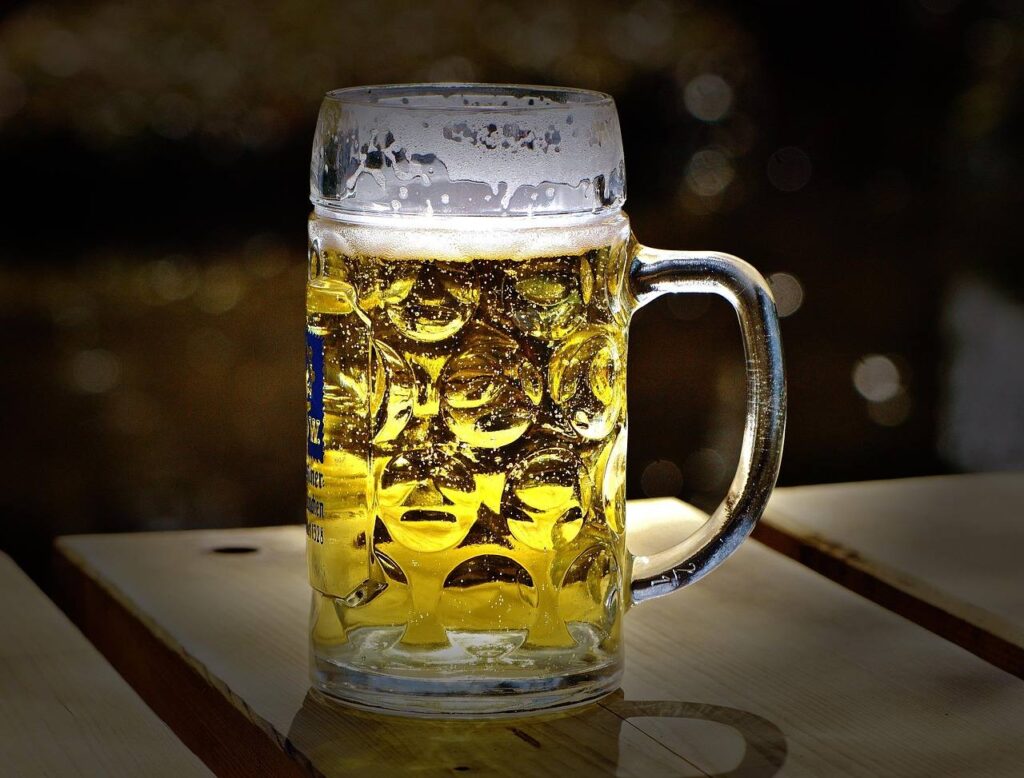
If you have ever shown up at a beer garden with your own bread, cheese and a tomato in a paper bag, half braced for a waiter to chase you off, you can relax. That bag is the entire point. Munich’s beer gardens are one of the only places in the country where bringing your own dinner is not just tolerated, it is the custom the garden was built around; you pay for the beer, and the food is yours to sort out. It is one of the stranger things to explain to a first-time visitor, and it belongs in my guide to Bavarian beer as much as anywhere. This page is about where that rule came from, which gardens are actually worth the tram ride, and how to choose one when Munich seems to have a beer garden behind every second building.
Where "bring your own food" actually comes from
The story people repeat is that beer gardens grew out of 19th-century ice cellars. That much is true: brewers needed to keep their bottom-fermented “Sommerbier” cold through the summer, so they dug deep cellars, cut ice from frozen lakes each winter, and, where no lake was handy, sprayed wooden towers called Eisgalgen with water on cold nights to grow icicles they could break off and store below1. To slow the ice’s melting, they planted big shade trees over the cellars, chiefly limes and chestnuts, and Munich went to sit under them on weekends. The part people leave out is what happened next: brewers started selling food at these shaded cellars too, and the city’s professional innkeepers, the Wirte, complained. The authorities did not want to alienate the brewers, who by then held real political weight, so they split the difference. Brewers could keep pouring beer at their cellars but were barred from selling food, while their guests were explicitly permitted to bring their own. That 19th-century compromise, not a modern noise law, is where “bring your own Brotzeit” comes from, and it is still the rule that separates a real beer garden from a restaurant with tables outside.
The 1999 ordinance actually regulates noise, not food
The Bayerische Biergartenverordnung, issued on April 20, 1999 and in force since that May 1, does not mention food at all. What it sets is hours and decibel limits, because a few thousand people drinking outdoors next to a residential street is, by any measure, loud. “Daytime” for a beer garden runs 7 a.m. to 11 p.m., with noise capped at 65 decibels in mixed-use zones, 60 in general residential areas and 55 in the quietest ones. To hit the 11 p.m. cutoff, the law requires music to stop by 10, food and drink service to end by 10:30, and the crowd to have cleared out by 112.
| Rule | Detail |
|---|---|
| Daytime hours | 7:00 a.m. – 11:00 p.m. |
| Noise limit, mixed/core/village zones | 65 dB(A) |
| Noise limit, general residential zones | 60 dB(A) |
| Noise limit, pure residential zones | 55 dB(A) |
| Music must stop | 10:00 p.m. |
| Food and drink service ends | 10:30 p.m. |
| Grounds must be clear by | 11:00 p.m. |
Source: gesetze-bayern.de2.
A garden can get an exception for special circumstances, but that is the baseline every genuine Munich beer garden operates under, and it is why you will rarely find one still pouring at midnight the way a beer hall does.
The largest gardens, and what each one actually offers
Not every big beer garden advertises its own size, and I am not going to hand you a number I cannot trace to the venue itself.
| Garden | Known since | Seating (as the venue states it) | What it is known for |
|---|---|---|---|
| Königlicher Hirschgarten | 1791 | 500+ indoors, 1,200 served outdoors, 7,000 self-service | Calls itself the world’s largest beer garden; a working deer enclosure gives it the name |
| Chinesischer Turm (Englischer Garten) | Run by the Haberl family since 1974 | Not stated by the venue | Live music, ox specialties trucked in from a farm 20 km away |
| Augustiner-Keller | Tied to the Augustiner brewery | Not stated by the venue | Edelstoff served straight from a wooden barrel; a Lagerkeller, a Jagdstube and an events hall besides the garden itself |
| Seehaus im Englischen Garten | Run by the Kuffler hospitality group | No verified figure found | Sits directly on the Kleinhesseloher See, the small lake inside the English Garden |
Source: hirschgarten.de, chinaturm.de, augustinerkeller.de, kuffler.de34.
The Hirschgarten has operated continuously since 1791 and is open daily from 11 a.m. to midnight, with the kitchen closing at 10 p.m., and the deer enclosure that gives it its name is still there. Its own price list, current as of June 2026, is a fair guide to what a Maß actually costs away from Oktoberfest: a liter of Augustiner Lager runs €8.80, Augustiner Edelstoff €9.00, Tegernseer Spezial Export €9.40 and König Ludwig’s dark and wheat beers €10.80, all considerably less than the €14.80 to €15.90 a liter costs at the Wiesn35.
How to choose, by what you actually want
If you want the biggest possible scene. Go to the Hirschgarten. Nowhere else in Munich seats this many people under trees, and the self-service side means you can walk in without a reservation and still find a table, even if it is a long one you are sharing with strangers.
If you want live music and do not mind a queue for a bench. The Chinesischer Turm, under its own pagoda-shaped tower in the Englischer Garten, has run under the same family since 1974 and treats music as a fixture rather than an occasional extra.
If you want the beer, specifically. Augustiner-Keller pours its Edelstoff from a wooden barrel rather than a pressurized keg, which the brewery itself makes a point of, and it is worth the detour if that distinction matters to you.
If you want quiet and a view of water instead of a crowd. The Seehaus sits on the small lake inside the English Garden. It will not tell you how many seats it has, and that is fine; you are not going there to count them.
Resi says My drink at any beer garden was always the Radler, half beer and half lemon soda. It looks exactly like a regular Maß from across the table, costs the same, and lets you sit outside all afternoon without the second one catching up to you. Order it by name; nobody will blink.
If you would rather have someone else pick the route between gardens than plan it yourself, the one I checked is the Munich City Bike Tour + Beer Garden Lunch Stop. Run by Fat Tire Tours Munich (also known as Unlimited Biking), it is a four-hour guided ride past Königsplatz, the English Garden and the Eisbach surfers, with a 30-minute stop at the Chinesischer Turm beer garden itself; the bike and helmet are included, but the beer and food at the stop are on you. It was $46.45 a person as of September 26, 2026, rated 4.9 from 322 reviews, with free cancellation up to 24 hours ahead6. It will not replace an afternoon you plan yourself, but it is a fast way to see four or five gardens’ worth of Munich in one sitting.
Frequently Asked Questions
Can you really bring your own food to a Munich beer garden?
Yes, at any garden with the traditional Biergarten status, which is most of the well-known ones. It goes back to a 19th-century arrangement between the brewers and the city’s professional innkeepers, not a modern rule for tourists.
What is the largest beer garden in Munich?
The Königlicher Hirschgarten, by its own count: more than 500 seats indoors, 1,200 at served outdoor tables and 7,000 more in its self-service section.
How late do Munich beer gardens stay open?
Under the 1999 noise ordinance, music stops by 10 p.m., service ends by 10:30, and the grounds are supposed to be clear by 11.
Do you have to bring your own beer too?
No. Buying your own beer from the garden is the one part of the transaction that stays with the venue; only the food is bring-your-own.
Which Munich beer garden is best for kids?
The Hirschgarten’s own deer enclosure gives children something to look at between courses, and its size means you are unlikely to be turned away for a lack of tables.
Is the Chinesischer Turm the same as the Hofbräuhaus?
No. The Hofbräuhaus is an indoor beer hall in the city center; the Chinesischer Turm is an outdoor beer garden inside the Englischer Garten park, named for the wooden pagoda at its center.
Do beer gardens take cards?
It varies by venue and is worth having cash for regardless, the same as at Oktoberfest.
Related Articles
 Bavarian Beer, Explained: Styles, Breweries, Beer Halls and Beer GardensBeer
 Beer Hall or Beer Garden? How Munich’s Two Beer Cultures Differ and Which to PickBeer
 Munich Beer Garden Rules: Bring Your Own Food, Never Your Own BeerBeer
 Munich Beer Halls Beyond the Hofbräuhaus: Augustiner, Paulaner, Löwenbräu and the RestBeer
 Munich’s Big Six Breweries: What Each One Is Known For and Which to VisitBeer
 How Big Is a Maß? Bavarian Beer Sizes in Ounces, ExplainedBeer
 Andechs from Munich: The Monastery Beer Garden and the Hike Up to ItBeer
 The Englischer Garten: Beer Gardens, the Eisbach Surfers and the Chinese TowerMunich
Sources
- Biergärten — Bayerischer Brauerbund, via Wayback Machine snapshot dated 2026-06-10. Accessed 2026-09-24.
- Bayerische Biergartenverordnung — Bayern.Recht, via Wayback Machine snapshot dated 2026-06-21. Accessed 2026-09-24.
- Königlicher Hirschgarten — Hirschgarten. Accessed 2026-09-24.
- Chinesischer Turm — Chinesischer Turm; Augustiner-Keller — Augustiner-Keller; Kuffler Hospitality Group — Kuffler. Accessed 2026-09-26.
- Hirschgarten beer price list (June 2026 edition), linked from hirschgarten.de/en/. Accessed 2026-09-24.
- Munich City Bike Tour + Beer Garden Lunch Stop — Viator, product 128691P2, operator Fat Tire Tours Munich. Accessed 2026-09-26.