In brief
Browning meat is the step that decides whether a goulash, a stew or a roast tastes like something or tastes like boiled protein, and it happens in the few minutes before any liquid goes into the pot. Achim “Chef Keem” Thiemermann, the Austin chef this site’s food-trailer name comes from, laid the technique out himself in a 2010 post: hot fat, small batches, no crowding, and a pan bottom left dark with fond once the meat comes out. The fond gets deglazed with wine or stock, scraped up off the pan, and it becomes the base of the sauce rather than something scrubbed away in the sink. Skip any one of those steps and the dish still cooks. It just does not taste like it was worth the pot.
Disclosure: some links on this page are affiliate links, marked by the products, tours and hotels they name. As an Amazon Associate, bavarianbistro.com earns from qualifying purchases. A purchase through these links may earn the site a commission at no cost to you, and it never affects what is recommended. How this works. Product prices and availability shown are as of the date stated and can change; the Amazon price at checkout applies.
If your stew or your goulash tastes thin no matter how long it simmers, the problem usually happened in the first five minutes, not the last two hours. Braising covers a great many sins, but it cannot invent flavor that was never built into the pot in the first place, and the flavor gets built by browning the meat properly before anything else goes in. This is the companion page to my Rouladen recipe, which leans on exactly this step, and it belongs in my guide to Bavarian food because half the braised dishes on that page depend on it.
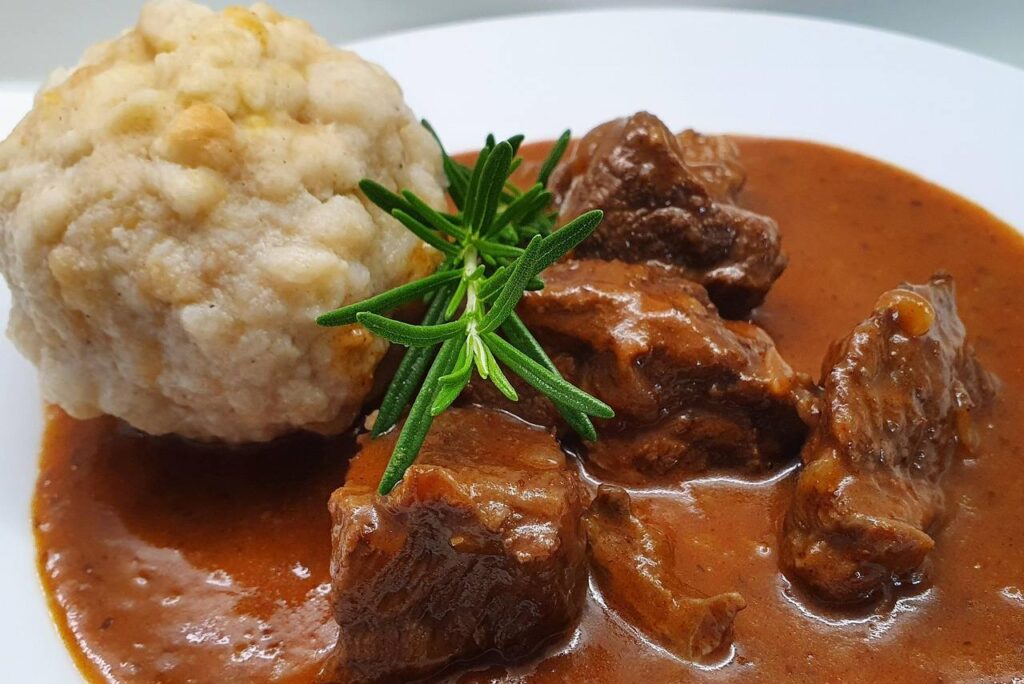
The technique itself is not mine. It was written up here in 2010 by Achim Thiemermann, known to his customers as Chef Keem, back when this address belonged to his food trailer in Austin rather than to this site. He built the post around a Hungarian goulash, but the technique underneath it applies to any stew or roast that starts on the stovetop, and it is the version taught below, in more detail than a trailer’s blog post had room for.
Why browning is not optional
Meat that goes straight into a pot of liquid poaches. It turns gray, it releases its juices into the broth instead of holding onto them, and nothing about the finished dish suggests it spent any time near a hot pan. Browning first builds a dark, savory crust on the outside of the meat before the liquid arrives, and that crust, along with everything it leaves behind in the pan, is where the finished dish gets most of its depth. Chef Keem was blunt about the target when he first wrote this up: a deep, cracked brown crust, never a burnt one, and stopping as soon as the meat merely loses its pink color is the most common mistake, because a lightly colored piece of meat leaves almost nothing behind in the pan to build a sauce from.
Hot fat, and why the pan goes first
Start with a little oil, enough to cover the bottom of the pan, and let it heat until it shimmers before any meat goes near it. A pan that is not properly hot when the meat lands will not sear it; it will steam it, and the surface never develops the crust the rest of the dish depends on. This is the same principle behind the sear on my Rouladen page, and it applies the same way to stew meat, a whole roast, or beef rolls tied shut with string.
Small batches, and the pan you do not crowd
Brown the meat in batches, in a single layer, with space between the pieces, and move each batch to a bowl once it is done to make room for the next. Crowding the pan is the single most common way this step fails: too much meat at once drops the pan’s temperature, the meat releases its liquid before it has a chance to form a crust, and it ends up gray and boiled instead of browned no matter how long it stays in the pan afterward. It takes longer to brown five pounds of beef in batches than it does to dump it all in at once, and that extra time is the entire point.
A heavy pan makes this easier because it holds its heat through each new batch instead of cooling down and needing to recover. A cast iron skillet is the pan for this, the Lodge Pre-Seasoned Cast Iron Skillet, 10.25 inches, which lists at $24.90 as of September 20261. It is heavy enough to stay hot through several batches of meat and it goes from stovetop to oven without a second thought.
Resi says Buy cast iron once and stop thinking about pans. The Lodge Pre-Seasoned Cast Iron Skillet is the one to reach for whenever a recipe calls for browning meat in batches, because it holds its heat instead of surrendering it to the first batch of cold beef. Its one limit is weight: it is heavier than a nonstick pan of the same size, and if that matters to you, buy the smaller size rather than skip cast iron altogether.
The fond, and what it looks like when it is right
Once every batch is browned and out of the pan, look at what is left behind: a layer of dark, sticky residue on the pan bottom, in the corners and partway up the sides. That residue is the fond, and it is not a sign the pan needs scrubbing before you continue, it is the next ingredient. Chef Keem’s own description of a properly built fond is exactly as unglamorous as fond actually looks: he called it “a somewhat scary-looking mess,” and the reassurance that goes with it still holds, as long as it is not black, it is not burned, it is flavor waiting to be released into the sauce. Cooking the aromatics, onion, garlic, whatever the recipe calls for, in the same pan after the meat comes out builds a second layer of fond on top of the first, from the vegetables and any tomato paste in the mix, before the meat goes back in.
Deglazing, in one motion
Deglazing is the step that turns fond from a stuck-on mess into a sauce. Add wine, stock or another liquid to the hot pan and bring it to a boil, then use a spatula or a wooden spoon to scrape the pan bottom and sides until every bit of the fond has lifted off the metal and dissolved into the liquid. Nothing should be left stuck to the pan once this step is done. From there, the rest of the braising liquid goes in, the pot gets covered, and the dish simmers on low heat until the meat is fork-tender, usually somewhere over an hour, longer for a tougher cut or a whole roast.
What this technique is not
This page will not tell you that a Maillard reaction happens at a specific temperature, because that is a claim for a food-science source to make, not a recipe page, and I have not fetched one that states it. What I can tell you, because Chef Keem said it and any home cook can confirm it in one attempt, is that a properly browned piece of meat looks and tastes different from a gray one, and the difference is not subtle.
Where to use it
This is the technique behind my Rouladen recipe, and it is exactly as necessary for Schweinebraten, Bavaria’s own pork roast, and for Sauerbraten, the marinated pot roast most people know from outside Bavaria. Any dish that spends time in liquid on low heat gets better for a few extra minutes of browning first, and none of them get worse for it.
Frequently Asked Questions
Why do you brown meat before making a stew?
Browning builds a crust on the meat and a layer of fond in the pan, both of which add flavor that a stew or braise cannot develop on its own once the liquid goes in.
What happens if you crowd the pan?
The pan’s temperature drops, the meat releases liquid before it can form a crust, and it ends up gray and boiled rather than browned, no matter how long it stays in the pan.
What is fond?
Fond is the browned, sticky residue left on the bottom and sides of a pan after meat is seared in it. It is the base of the sauce, not something to scrub away.
How do you deglaze a pan?
Add wine, stock or another liquid to the hot pan, bring it to a boil, and scrape the pan bottom and sides with a spatula until the fond has fully lifted into the liquid.
Do you need cast iron to brown meat properly?
No, but a heavy pan holds its heat through multiple batches better than a light one, which makes the technique easier to get right.
Does this technique only work for goulash?
No. It is the same technique behind Rouladen, Schweinebraten and Sauerbraten, and any braised dish benefits from it.
Related Articles
 Bavarian Food: The Dishes, How Munich Eats Them, and What to Cook at HomeFood
 Rouladen: The Rolled Beef Dish on Every Bavarian Menu That Is Not BavarianFood
 Schweinebraten: Bavaria’s Pork Roast with Dark Beer GravyFood
 Sauerbraten: The Marinated Pot Roast, Where It Comes From and How Bavaria Serves ItFood
 Schweinshaxe: Crackling Pork Knuckle, the Beer-Hall WayFood
 Chef Keem’s Bavarian Bistro Recipes: The Collection from the Austin Food TrailerFood
 Cooking Bavarian in North America: Where to Buy the Ingredients and the Tools That MatterPantry and tools
Sources
- Lodge Pre-Seasoned Cast Iron Skillet, 10.25 Inches — Amazon.com. Accessed 2026-09-27.