In brief
Fasching is Bavaria’s carnival season, and it runs on the church calendar: 2027’s Rosenmontag falls on Monday, February 8, Faschingsdienstag on Tuesday, February 9, and Ash Wednesday, when it all stops, on February 10. Munich’s own contribution is the Tanz der Marktweiber, market women dancing in costume at the Viktualienmarkt on Faschingsdienstag; the 2026 performance drew roughly 10,000 spectators and continues a tradition running more than 30 years. The morning after the dancing stops, the city runs Geldbeutelwaschen, the mayor washing the city’s ceremonial purse in the Marienplatz fish fountain for financial luck, a custom revived in the 1950s and run most years since 1976. Fasching in Munich is a civic event with specific dates and a specific square, not the days-long street parade you get from Cologne’s carnival, though I could not source a direct comparison between the two this session.
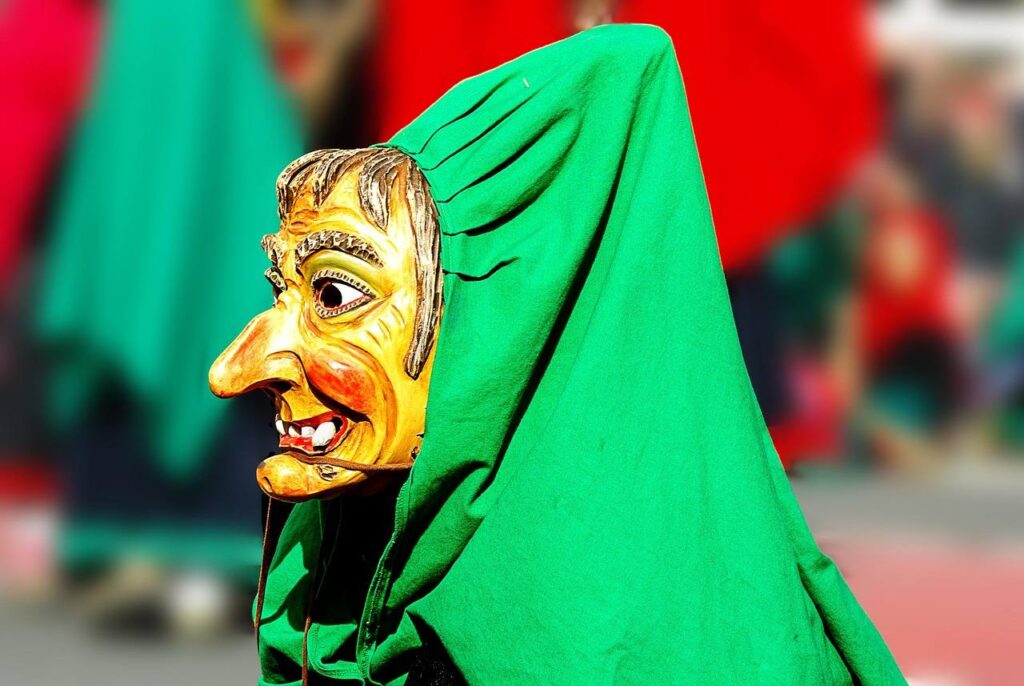
If Oktoberfest is the Bavarian festival everyone has heard of, Fasching is the one nobody outside Germany quite understands, mostly because it gets flattened into “German Mardi Gras” and left there. It has its own shape in Munich specifically, built around one square and one afternoon rather than a parade route through the whole city. This page covers what is actually confirmed about it; my Bavarian Year calendar sets Fasching in the context of the months around it, and the Trachten and Customs pillar has the rest.
The dates, and why they move every year
Fasching’s final days are fixed by Easter, not by the regular calendar, which is why the dates change from year to year. For 2027, Easter Sunday falls on March 28, which puts Rosenmontag, Rose Monday, on February 8, Faschingsdienstag, Shrove Tuesday, on February 9, and Ash Wednesday, when Fasching ends and Lent begins, on February 101. Those three days are the season’s actual climax; the weeks before them carry costume parties and events across Bavaria, but the dates that matter for planning a trip are the ones right before Ash Wednesday.
The Tanz der Marktweiber, at the Viktualienmarkt
Munich’s best-documented Fasching event is the Tanz der Marktweiber, the dance of the market women, held at the Viktualienmarkt, the city’s central food market, on Faschingsdienstag itself. The 2026 performance, confirmed directly on the city’s own event page, ran on Tuesday, February 17, 2026, starting at 10 a.m., and drew roughly 10,000 spectators to a tradition the market’s own association describes as running more than 30 years2. The market’s stallholders dress up and dance in costume among their own stands, a specifically Munich piece of Fasching that has nothing to do with a parade route; it happens in one place, at one market, and the market association itself helps run it.
I could not confirm the exact 2027 date for the Tanz der Marktweiber from a direct fetch this session; the city’s own page for the event confirms only that next year’s market women have already been chosen, without stating the 2027 performance’s time. Since Faschingsdienstag itself falls on February 9, 2027, that is the most likely date, but I am not printing it as confirmed until the city’s own page says so directly.
Resi says If you are building a trip around this specifically, treat the date as “Faschingsdienstag, whatever the actual calendar says that year” rather than memorizing a fixed date, and check the Viktualienmarkt’s own page as you get closer.
Geldbeutelwaschen: the morning after
Ash Wednesday itself brings its own small civic ceremony: Geldbeutelwaschen, purse-washing, in which the mayor dips the city’s ceremonial purse into the Fischbrunnen, the fish fountain, at Marienplatz, for financial luck heading into the new year. The custom traces to the 15th century, when Munich’s domestic servants told their employers their wallets were empty after Fasching spending, and the modern civic version was revived by mayor Thomas Wimmer in the 1950s and has run most years since 1976 with a local brewery’s support; free beer is handed out regardless of whether the ritual works3. It is a five-minute ceremony rather than an event to build a morning around, but it is the clean bookend to the season: the dancing at the Viktualienmarkt on Tuesday, the purse in the fountain on Wednesday, and then Lent.
What else the season includes, and what I am not claiming
Munich runs a broader public “München narrisch” open-air stage program around Marienplatz and Stachus during the days leading up to Faschingsdienstag, and the city keeps a running Faschingskalender of costume balls and parties across the season, with a newly elected Faschingsprinzenpaar, carnival prince and princess, each year. I was not able to load the city’s own calendar page or confirm the 2027 stage-program dates from a direct fetch this session, so beyond naming that these exist, I am leaving the specifics for a future update rather than guessing at them.
That gap is worth being upfront about, because it is the difference between what I can hand you as fact and what I can only point you toward. The Faschingsprinzenpaar and the wider costume-ball calendar are real, ongoing civic categories on the city’s own event listings, confirmed to exist even where the specific 2027 dates were not; treat the Tanz der Marktweiber and Geldbeutelwaschen as the two fixed points on your calendar, and the rest of the season’s parties as things to check closer to the date rather than plan around months out.
One comparison I get asked about constantly: how Munich’s Fasching differs from Cologne’s carnival, which is the version most Americans picture when they hear “German carnival.” I do not have a sourced basis for that comparison from this session’s research, so I am not going to invent one here; what I can tell you, sourced, is that Munich’s version centers on a market and a fountain rather than a parade route, which is a genuinely different shape of festival regardless of how the two compare in scale.
Resi says Do not book a trip to Munich expecting Cologne’s carnival with different street names. What you get here is smaller, more civic, and built around specific places, the Viktualienmarkt and Marienplatz, rather than a route through the whole city.
Frequently Asked Questions
When is Fasching 2027?
The season ends with Rosenmontag on February 8, Faschingsdienstag on February 9, and Ash Wednesday on February 10, 2027.
What is the Tanz der Marktweiber?
Munich’s Fasching dance at the Viktualienmarkt, where market stallholders dress in costume and dance among their own stands on Faschingsdienstag.
How many people attend the Tanz der Marktweiber?
The 2026 performance drew roughly 10,000 spectators, per the city’s own event page.
What is Geldbeutelwaschen?
A Munich ceremony on Ash Wednesday in which the mayor washes the city’s ceremonial purse in the Marienplatz fish fountain for financial luck, revived in the 1950s and run most years since 1976.
Is Fasching the same as Oktoberfest?
No. Fasching is Bavaria’s pre-Lent carnival season in February or March; Oktoberfest is the September and October beer festival, an entirely separate event.
Is Munich's Fasching like Cologne's carnival?
I could not source a direct comparison this session. What is confirmed is that Munich’s version centers on the Viktualienmarkt and Marienplatz rather than a citywide parade route.
Is there a Fasching parade in Munich?
Nothing in the sources I could confirm describes a citywide parade route; the confirmed events are the Tanz der Marktweiber at the Viktualienmarkt and the open-air “München narrisch” stage program around Marienplatz and Stachus.
Do Bavarians wear costumes for Fasching?
The Tanz der Marktweiber itself is a costumed event for the market’s own stallholders; broader costume parties happen across the season as part of the city’s ongoing Faschingskalender.
Related Articles
 The Bavarian Year: Fasching to Christkindlmarkt, Month by MonthTrachten and customs
 Dirndl, Lederhosen and the Bavarian Year: Trachten and Customs ExplainedTrachten and customs
 Starkbierzeit: Munich’s Strong Beer Season in Lent, and the NockherbergBeer
 The Viktualienmarkt: Munich’s Food Market and Its Beer GardenMunich
 Bavarian Christmas Traditions: Advent, Krampus, Christkind and the FoodsTrachten and customs
Sources
- Feiertage 2027 — schulferien.org. Accessed 2026-09-24.
- Tanz der Marktweiber 2026 — muenchen.de, City of Munich; and Viktualienmarkt Carnival — viktualienmarkt-muenchen.de. Accessed 2026-09-24.
- Geldbeutelwaschen 2026 — muenchen.de, City of Munich. Accessed 2026-09-24.