In brief
The Viktualienmarkt is Munich’s working food market, not a tourist stage, and it has run at the same spot behind Marienplatz since the early nineteenth century. Stalls trade Monday through Saturday, roughly 8 a.m. to 8 p.m., though individual vendors set their own hours. Its beer garden at the center of the square runs year-round on the same days, roughly 9 a.m. to 10 p.m. depending on weather, plus fair-weather Sundays, and pours a different one of Munich’s six major breweries every five to six weeks, so the beer itself tells you what month it is. Bring your own food to the tables if you like; nobody minds, and the beer garden’s whole culture depends on it.
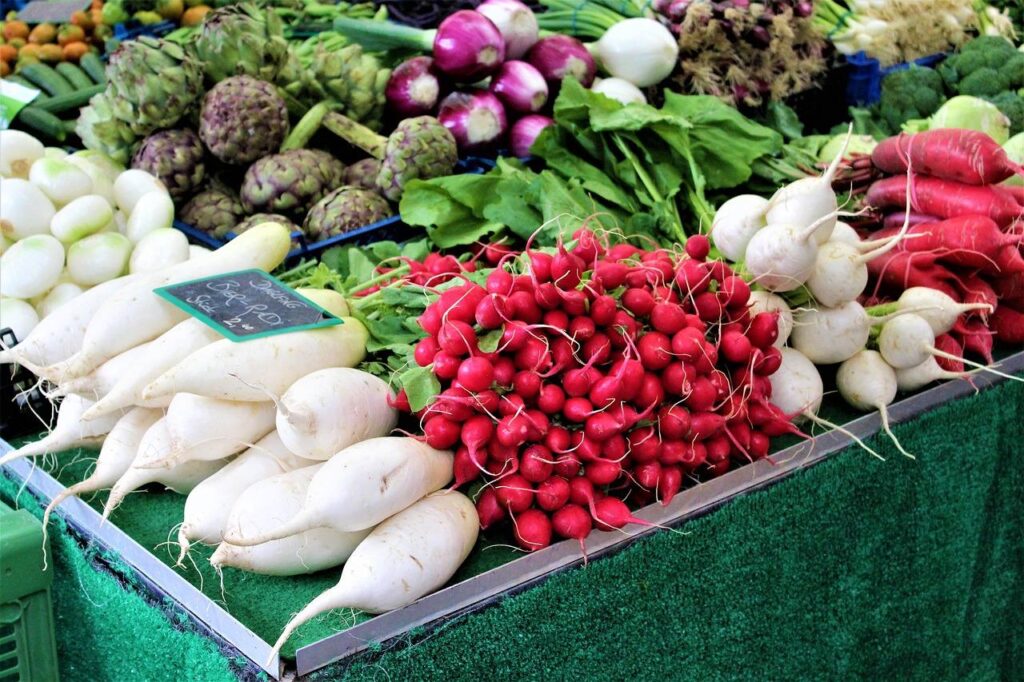
Most visitors walk through the Viktualienmarkt on the way to somewhere else and miss what it actually is: this is where Munich itself buys lunch, flowers, cheese and a beer on a weekday afternoon, not a market built for photographs. It sits two minutes off Marienplatz, so there is no excuse not to detour through it, and it pairs naturally with the rest of a first Munich trip since almost every walking route through the old town already passes its edge.
There is no entrance, no gate and no ticket. The market is a set of streets and a square that happen to be full of stalls, which means you can walk through it in five minutes on the way to the U-Bahn or spend the whole morning working from one counter to the next. Locals do both, depending on the day.
What is actually for sale
The market is a grid of permanent stalls rather than a single hall, each one specializing: a butcher here, a cheese counter there, a stand that sells nothing but mushrooms in season, another that sells only spices. Florists, bakers and caterers keep their own separate arrangements for Sunday, when most of the rest of the market is closed, and the square itself, as public space, is accessible at all times even when the stalls are shuttered1. A handful of stalls close for Carnival, Christmas Eve and New Year’s Eve, so a trip planned around one of those dates needs a backup.
Individual stall hours vary, and winter hours can run shorter than the summer 8-to-8 window, so a stall you are set on visiting is worth checking the morning you go rather than assuming it matches the market’s general schedule1.
Beyond food, the market is also where Munich buys cut flowers and potted plants, and a produce stand or a specialty spice counter is as common here as a butcher. None of that is arranged for a tour group; a stall that has sold the same three cheeses since before you were born is not going to rearrange its counter because a bus pulled up outside. That is most of the appeal.
The beer garden that rotates breweries
At the center of the market sits one of Munich’s more unusual beer gardens: instead of committing to one brewery, it hosts each of the city’s six major breweries in turn, roughly five to six weeks at a time, so the same table pours a different beer depending on when you show up1. It runs year-round, Monday to Saturday, roughly 9 a.m. to 10 p.m. and weather-dependent at the edges, and it also opens on Sundays when the weather cooperates, which no other city-center beer garden of its size does on a day the market itself is closed1.
The rule that makes it work is the same one every proper Bavarian beer garden follows: you may bring your own food to the tables. Buy your beer from the garden, and assemble the rest of lunch from the stalls around it, a Brez’n from one bakery stand, Obazda from another, a paper cone of something fried from a third, and you have built a Brotzeit nobody had to cook. My Obazda page and pretzel page go through what to look for at the stalls that sell them, and the general rules for Munich’s beer gardens cover what you may and may not carry in beyond food.
Resi says Of course the fresh Brez’n and the Obazda, a creamy cheese made from camembert and butter, are the first things I look for on a market table. Skip the tourist-priced stall right at the entrance and walk one row further in; the market rewards anyone willing to look past the first counter.
What to eat while you are there
The market is a meal in itself if you let it be. A Leberkäs Semmel from a butcher’s counter covers the stand-up lunch, my Leberkäse page explains what is actually in the loaf despite the misleading name, and a warm Bavarian potato salad, dressed in vinegar and broth rather than mayonnaise, is worth seeking out at any stall that sells prepared food; the potato salad page has the reason it never uses mayonnaise. For something sweet on the way out, look for a stall selling Auszogne, Munich’s fried-dough pastry, and my Auszogne and Schmalznudel page makes the case for it over anything from a chain bakery.
Getting there and when to go
The market sits immediately south of Marienplatz, close enough that it belongs on the same walk as the Rathaus and the Frauenkirche rather than as its own separate outing. A weekday late morning, before the lunch rush from nearby offices fills the beer garden benches, is the easiest time to find a seat; Saturday is the market’s busiest day and also its last day of full stall trading before Sunday’s near-total closure.
If you are choosing between a self-guided walk-through and a guided visit, a market-focused food tour solves the ordering problem for anyone who does not read German menus comfortably, walking you stall to stall with a guide who already knows which counter is worth the wait. My Munich food tours compared page lines up the options that include the Viktualienmarkt on their route, with prices and what each one covers.
What not to expect
This is not a farmers’ market with a folk band and free samples pushed at every stall, and it is not open late; most trading winds down by early evening even inside the 8-to-8 window, so an after-dinner visit will find half the market already shuttered. It is also not cheap by Munich standards, since central-city rent applies to a market stall the same as it applies to a restaurant, and a handful of counters closest to Marienplatz price accordingly. Walk a row or two further in before you decide the market is not for your budget.
Frequently Asked Questions
Is the Viktualienmarkt open on Sundays?
Most stalls are closed. Florists, bakers and caterers keep separate Sunday arrangements, and the beer garden opens on Sundays only when the weather is good.
Can you bring your own food to the Viktualienmarkt beer garden?
Yes. Bringing your own food to the tables is standard practice and part of the market’s culture; you are expected to buy your beer from the garden itself.
What beer does the Viktualienmarkt beer garden serve?
It rotates among Munich’s six major breweries, roughly every five to six weeks, so the beer on tap depends on when you visit.
Is the Viktualienmarkt touristy?
Parts of it, near the entrances closest to Marienplatz, cater to visitors with higher prices. Walk further into the market and it becomes what it actually is, a working food market for Munich residents.
How long do you need at the Viktualienmarkt?
An hour covers a walk-through and a snack; half a day covers a proper Brotzeit lunch in the beer garden with time to browse the stalls first.
Is the Viktualienmarkt open in winter?
Yes, the market and its beer garden run year-round, though stall hours can run shorter in winter than the summer schedule.
Is the Viktualienmarkt expensive?
Some stalls, particularly those closest to Marienplatz, are priced for visitors. Walk further into the market’s interior rows and prices drop toward what a Munich resident actually pays.
Related Articles
 Munich for a First Trip: What Is Worth It, What Is Not, and How the City WorksMunich
 What to Eat in Munich: 15 Dishes and Where the City Eats ThemMunich
 Munich Beer Garden Rules: Bring Your Own Food, Never Your Own BeerBeer
 Obazda: The Bavarian Beer-Cheese Spread, What Goes in It and How to Make ItFood
 Real Bavarian Pretzels at Home: Lye or Baking Soda?Food
 Brotzeit: Bavaria’s Bread-Time Meal, and What Goes on the BoardFood
 Bavarian Food: The Dishes, How Munich Eats Them, and What to Cook at HomeFood
 Munich Food Tours Compared: What Each One Feeds You and What It CostsMunich
Sources
- Opening hours — Viktualienmarkt. Accessed 2026-09-24.