In brief
Bamberg is the only place in the world where you can still order a beer brewed the way beer smelled before anyone thought to stop it from smelling like a campfire. Two breweries, Schlenkerla and Spezial, dry their malt over open beechwood fires, and both still pour their smoked beer from the same buildings they always have. The city’s old town has carried UNESCO World Heritage status since 1993, and it sits under two hours from Munich on the ICE line toward Nuremberg and Berlin. You do not need a car, a plan, or a taste for smoke going in; you will have an opinion on the way out.
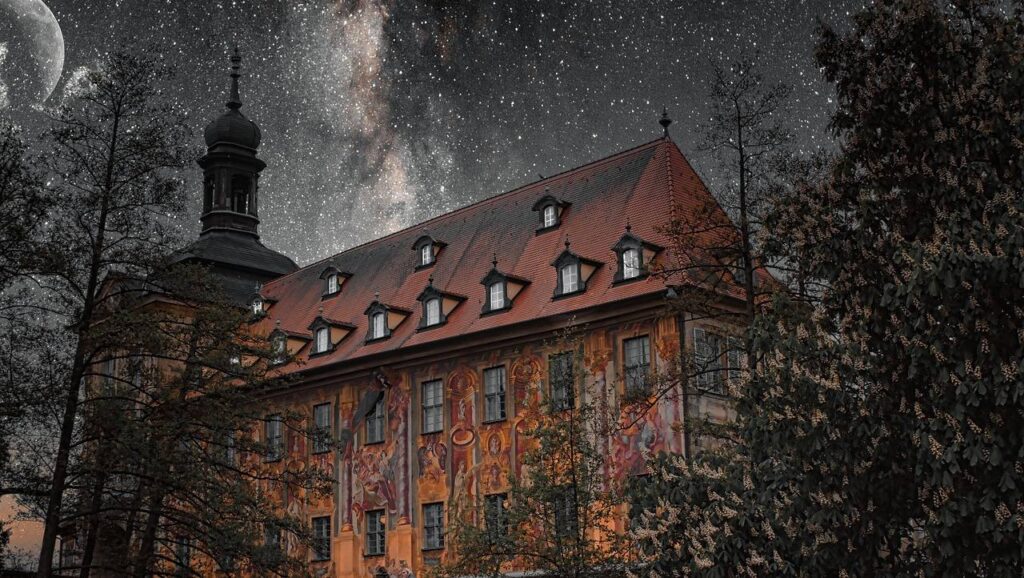
If you have ever been handed a dark, faintly bacon-scented beer with a straight face and no explanation, you have met Rauchbier, or you are about to. It is not a novelty someone brewed for a festival; it is what beer tasted like across much of Central Europe before kilns learned to dry malt without setting fire to it, and Bamberg is the town that never got the memo that the rest of the world moved on. This page covers the two breweries that still make it, how the beer differs between them, and how to get yourself to Bamberg from Munich without overthinking it. It belongs with my complete guide to Bavarian beer, and if Franconia’s brewery density is what brought you here rather than the smoke, my Franconia beer country page is the wider view.
What Rauchbier actually is
Ordinary malt is dried with hot air. Bamberg’s smoked malt is dried over an open beechwood fire, and the smoke goes into the grain the same way it goes into a rack of ribs, which is the whole trick and the whole flavor. Schlenkerla’s flagship, Aecht Schlenkerla Rauchbier, is a bottom-fermented, Märzen-style beer at 13.5 percent original gravity, working out to roughly 5.1 percent alcohol, and its own brewery describes it as very dark and herbal-spicy rather than sweet1. It is not subtle, and it is not trying to be; a first sip tends to divide a table into people who order a second one and people who quietly switch to a Helles.
Schlenkerla: the beechwood original
Schlenkerla sits at Dominikanerstraße 6, a timber-framed building first documented in 1405, though the property already belonged to a brewer in 1387 and its stone cellars go back to the 14th century, next door to a Dominican monastery built in 1310. The beer ages in those same rock cellars. It is open year-round from 9:30 a.m. to 11:30 p.m., with the kitchen running continuously from 11 a.m. to 10 p.m., and the Dominikanerhof beer garden opens seasonally from Easter through October, weather allowing; hours shift around Christmas and New Year’s1. Same-day tables can be reserved by phone rather than online, which fits a tavern that has not felt the need to modernize much else either.
Resi says I am on record as not much of a beer drinker; my Wiesn glass has always had lemon soda in it. Rauchbier is the one Bavarian beer I would order for the story rather than the taste, because nothing else in this country smells like it is lying to you about being a beer at all. Whether you finish the liter is between you and your dinner plans.
Spezial: the other smoke, quieter
A few minutes’ walk away at Obere Königstrasse 10, Spezial has been producing smoked beer since 1536 by its own account, drying malt over open beechwood fires in its own malthouse and turning out roughly 6,000 hectoliters a year. It keeps shorter, more ordinary hours than Schlenkerla, Saturday afternoons especially, and closes on Good Friday, May 1 and Ascension Day. The kitchen serves Franconian home cooking, Schäuferla with dumplings and sauerkraut among it, and the building has guest rooms, so it is possible to sleep two floors above the beer you drank the night before2. Fewer tour buses stop here, which some visitors will count as the whole point.
Why only two
Smoke-drying malt is slower, messier and less consistent than a modern kiln, and everywhere else in the brewing world abandoned it once hot-air drying arrived. Bamberg’s own trade guide states that Schlenkerla and Spezial are the only two breweries anywhere that have kept the traditional smoke-malting process running continuously rather than reviving it as a specialty batch, and Schlenkerla, now run by the Trum family’s sixth generation, has been inducted into Slow Food’s “Ark of Taste” for it1. That is not a marketing claim so much as an accident of stubbornness: nobody told either brewery to stop, so they didn’t.
The old town you're already standing in
Both breweries sit inside Bamberg’s UNESCO-listed old town, a designation the city received in 19933. You do not need to plan a separate sightseeing day around it; the Altes Rathaus perched on its own bridge over the Regnitz, the row of former fishermen’s cottages known as Little Venice, and the cathedral hill are all within the same easy walk that connects Schlenkerla to Spezial. Treat the beer crawl and the old-town walk as the same afternoon, because they are.
Getting there from Munich
Bamberg’s own tourism site puts the trip from Munich at under two hours, on the ICE corridor that continues north through Nuremberg toward Berlin4. That is a straightforward regional or long-distance train connection, not a multi-leg trip, which makes Bamberg a realistic day trip from Munich or a one-night stop on the way to Nuremberg or Bayreuth. Buy the ticket through Deutsche Bahn’s own site or app rather than a reseller, and check whether a regional day ticket beats a single fare for your dates.
When to go
A weekday lunch beats a Saturday evening at both taverns, for the same reason it beats a Saturday evening anywhere with one good story to tell: everyone else has heard it too. Bamberg is a manageable size, but a smoked beer at a shared table with strangers on either side of you, all of them also holding up a dark glass to the light and asking whether it is supposed to taste like that, is a better introduction than a crowded room. If you are coming as a day trip from Munich, an early train buys you a quiet Schlenkerla at midday and still leaves the whole afternoon for the old town before the evening crowd arrives.
If you'd rather someone else handle the logistics
Neither Schlenkerla nor Spezial runs an organized tour of its own, and there is no single “Rauchbier tour” that gets you into both. What Bamberg does have is a private countryside hike built entirely around beer: the Bamberg Countryside Breweries Beer Hike Food Experience, run by the operator Beerwanderers, a five-to-nine-hour walk through the villages of Memmelsdorf and Merkendorf on what locals call the Brewery Trail, stopping at small rural brewpubs along the way. It meets at the DM drugstore across from Bamberg’s central bus station at 9 a.m., runs $348.40 a person as of September 2026, and food and drinks at each stop are on you, not included in the price. It is rated 5.0 from 28 reviews, it is private to your own group, and it is non-refundable if your plans change5.
Resi says That tour is for the countryside villages around Bamberg, not for Schlenkerla and Spezial themselves, which need no guide and no booking beyond a same-day phone call. Book it if a full day of walking between tiny brewpubs sounds like your idea of a good afternoon; skip it and just walk the old town yourself if two breweries and a smoked beer are all you came for.
Frequently Asked Questions
What does Rauchbier taste like?
Smoky, dark and herbal-spicy rather than sweet, closer to a campfire or bacon than to a typical lager, because the malt is dried over an open beechwood fire instead of hot air.
Is Rauchbier only made in Bamberg?
The two breweries that have kept the traditional smoke-malting process running without interruption, Schlenkerla and Spezial, are both in Bamberg, though other breweries elsewhere have since brewed occasional smoked beers of their own.
How far is Bamberg from Munich?
Under two hours by train, on the ICE line that continues north through Nuremberg toward Berlin.
Can you visit Schlenkerla without a reservation?
Yes. It is a working tavern, not a ticketed attraction; walk in, and call ahead the same day if you want to guarantee a table.
Is Bamberg's old town worth a full day?
It can easily fill one, between the UNESCO-listed old town, Little Venice and the two breweries, but it also works as a half-day stop if you are continuing on to Nuremberg or Bayreuth.
Do Schlenkerla and Spezial taste the same?
No. Both smoke their malt over beechwood, but the two beers are brewed differently and taste noticeably different; trying both in the same afternoon is the point.
Is Rauchbier strong?
Not especially. Schlenkerla’s flagship comes in at roughly 5.1 percent alcohol, in line with an ordinary Bavarian lager.
Related Articles
 Bavarian Beer, Explained: Styles, Breweries, Beer Halls and Beer GardensBeer
 Franconia’s Beer Country: Kellerbier, Zoigl and Brewery DensityBeer
 Weihenstephan, Weltenburg and the Oldest Brewery QuestionBeer
 Bavarian Beer Styles: Helles, Dunkel, Weißbier, Märzen, Bock and the RestBeer
 The Reinheitsgebot Explained: What the 1516 Purity Law Says and What It Means TodayBeer
 Bamberg Day Trip: The Old Town, Little Venice and the Beer, by Train from Munich or NurembergBavaria
 Bavaria by Train: Day Trips from Munich and a Week Without a CarBavaria
Sources
- Rauchbier description — Schlenkerla. Accessed 2026-09-26.
- Brauerei Spezial — Brauerei Spezial, Bamberg. Accessed 2026-09-26.
- Weltkulturerbe — bamberg.info, Bamberg Tourism. Accessed 2026-09-26.
- Anreise — bamberg.info, Bamberg Tourism. Accessed 2026-09-26.
- Bamberg Countryside Breweries Beer Hike Food Experience — Viator, product 102049P2, operator Beerwanderers. Accessed 2026-09-26.