In brief
On April 23, 1516, in Ingolstadt, the Bavarian dukes allowed exactly three ingredients in beer, barley, hops and water, and left yeast off the list only because nobody yet knew fermentation existed. Munich had already written its own stricter version in 1487, the model the 1516 law copied. That law went nationwide by imperial decree on June 7, 1906, and its current form, restated on July 29, 1993, is still German law. Bavaria’s own rule is tighter than the federal one: it bans a sugar allowance the national law gives to wheat beer, even for beer brewed to export. Since 1987, foreign brewers may sell non-conforming beer inside Germany; German breweries themselves may not.
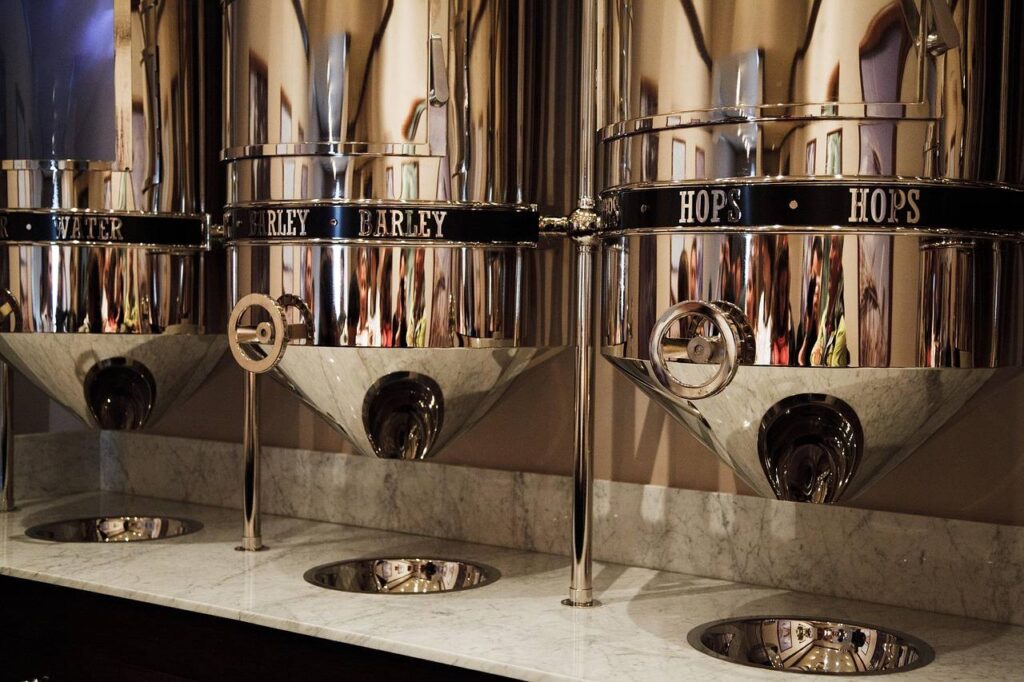
Somewhere on that German beer label is a little medallion reading Reinheitsgebot seit 1516, printed with the confidence of a Michelin star, and you have probably assumed it means the beer inside is good. It does not, and it never did. What it actually is turns out to be a better story: a five-century-old piece of Bavarian food regulation, still on the books in an amended form, sitting underneath every style in my guide to Bavarian beer, and the only thing it ever certified was that nobody had snuck soot or henbane into your mug. Here is what it actually says, in what order, and where it has quietly changed since 1516 without a single brewery bothering to update the label.
What the 1516 law actually says
On Georgitag, April 23, 1516, the ruling dukes Wilhelm IV and his younger brother Ludwig X stood before an assembly of nobility, clergy and town delegates in Ingolstadt and had a law read out. The Bayerischer Brauerbund still quotes the operative sentence: no more ingredients were to be used in beer, anywhere in the dukes’ cities, markets or countryside, than barley, hops and water1.
That is the whole list, and yeast’s absence is the detail everyone gets wrong retelling the story at dinner. The dukes were not banning it. Brewers had used yeast for centuries without knowing what it was, because nobody understood fermentation until Louis Pasteur’s work three hundred years later1.
I would put it the way the Brauerbund itself does: this was more a rule about what must not go into beer than an instruction on what must3.
Resi says People like to read the missing wheat as an early verdict on flavor, and it was not one. Wheat was the better bread grain, and keeping it out of the brew kettle protected the loaf, not your palate. The same family that wrote that rule turned around a few decades later and kept the exclusive right to brew wheat beer entirely for themselves, which is not the behavior of people who thought it tasted bad. I cover the monopoly on the Weißbier page.
Munich's own law came first
Bavaria did not invent beer regulation in 1516, whatever the label implies. Augsburg had a rule in 1156, Nuremberg had one around 1305, Munich in 1363, Regensburg in 1447, and the Deutscher Brauer-Bund and Bayerisches Bier both cite the same four dates12.
Munich’s own city government had gone further than any of them, in a full ordinance from November 30, 1487, restricting brewing to water, malt and hops under Duke Albrecht IV. That 1487 Munich ordinance is the direct template the 1516 statewide law was built on1.
A neighboring duchy had moved even faster on the part that mattered most: a Landshut order from November 7, 1486 banned harmful additives outright, without naming which roots or substances were dangerous enough to bother listing1.
The Deutscher Brauer-Bund is plain about what the 1516 law was actually trying to do: hold down beer prices, keep wheat, a bread grain, out of the kettle, and block additives that were genuinely dangerous, henbane, thorn apple and soot among them, all used at the time to bulk out or flavor cheap beer2.
Other German states took their time catching up. Baden adopted the rule in 1896, Württemberg in 1900, three and a half centuries after Ingolstadt2. Three hundred and fifty years is not a rounding error; it is Bavaria’s whole personality compressed into one footnote. I have always thought there is a grain of truth in the old line that it is nice to be a Preiß, a Prussian, which in Bavarian usage covers any non-Bavarian at all, but higher still to be a Bayer, and four centuries of having the beer law first is exactly the kind of thing Bavaria never lets anyone forget.
How the law moved from Ingolstadt to today
| Date | What happened |
|---|---|
| 1487 | Munich’s own brewing ordinance (Duke Albrecht IV), the direct model for 1516 |
| April 23, 1516 | Reinheitsgebot proclaimed in Ingolstadt: barley, hops, water |
| 1871 | Imperial constitution reserves beer taxation to the German Reich |
| May 31, 1872 | Reich’s Biersteuergesetz permits starch, sugar, syrup and rice; Bavaria, Baden and Württemberg are exempted and keep the stricter rule |
| June 7, 1906 | Imperial law makes the Reinheitsgebot binding on the rest of Germany |
| March 14, 1952 | Re-anchored in the Biersteuergesetz, §9 Abs. 1 |
| July 29, 1993 | Current text: §9 of the Vorläufiges Biergesetz |
| 1987 | Foreign breweries may sell non-Reinheitsgebot beer inside Germany |
Source: Bayerisches Bier on the Bavarian dates1; Deutscher Brauer-Bund on the Reich-wide law2.
What the law says today
The current legal successor is §9 of the Vorläufiges Biergesetz, restated July 29, 1993, and it splits beer into two rules. Bottom-fermented beer, the lager family of Helles, Dunkel, Märzen and Bock, may use only barley malt, hops, yeast and water. Top-fermented beer, Weißbier and its relatives, gets the same rule with two additions: other kinds of malt, and technically pure cane, beet or invert sugar, along with sugar-based colorings1.
That second clause is where the real split between the “German” and “Bavarian” Reinheitsgebot lives. Federal law allows that sugar in top-fermented beer; Bavaria’s own stricter version forbids it, even for beer brewed for export, under §9(7) sentence 1 of the Vorläufiges Biergesetz2. And since 1987, European law has required Germany to let foreign breweries sell non-conforming beer inside the country, though German breweries themselves stay bound by the standard no matter where their beer ends up2.
What it actually means for the beer in your glass
Here is the part a visitor can use. Any beer legally brewed in Bavaria under this law is, in the narrowest technical sense, additive-free: no preservatives, no flavor adjuncts, nothing beyond the four or five permitted ingredients. It is not, and never was, a quality guarantee. Two beers made from the same short list can taste nothing alike depending on the malt, the hops and the yeast strain, which is the entire reason Bavaria has as many distinct styles as it does; my guide to Bavarian beer styles is where I get into what those differences actually taste like.
Resi says The Reinheitsgebot has already changed twice in my lifetime’s worth of paperwork, once to let sugar into wheat beer and once to let foreign, non-conforming beer onto German shelves, so I raise an eyebrow every time I see “unchanged since 1516” stamped on a bottle like a papal decree. The sentence about barley, hops and water is 510 years old as of 2026. The law standing behind it is much younger, gets tinkered with every few decades, and nobody puts that part on the label.
Frequently Asked Questions
Is the Reinheitsgebot still the law in Germany?
A version of it is. The current text is §9 of the Vorläufiges Biergesetz, restated July 29, 1993, setting out what may be used to brew bottom-fermented and top-fermented beer in Germany.
Why doesn't the 1516 law mention yeast?
Because nobody understood fermentation in 1516. Brewers used yeast without knowing what it was or that it was alive; that understanding did not arrive until the 19th century.
What is the difference between the German and the Bavarian Reinheitsgebot?
German federal law allows technically pure cane, beet or invert sugar in top-fermented beer. Bavaria’s own stricter version forbids that sugar even in beer brewed for export.
Did Bavaria invent beer regulation in 1516?
No. Local rules on beer already existed in Augsburg (1156), Nuremberg (around 1305), Munich (1363) and Regensburg (1447), and Munich had its own full brewing ordinance in 1487, which the 1516 law was modeled on.
Can foreign brewers sell non-Reinheitsgebot beer in Germany?
Yes, since 1987. German breweries themselves remain bound by the Reinheitsgebot no matter where their beer is sold.
Was wheat excluded from the 1516 law because it makes worse beer?
No. The exclusion was food-security economics: wheat was the higher-grade bread grain, and keeping it out of the brew kettle protected the food supply, not anyone’s palate.
Related Articles
 Bavarian Beer, Explained: Styles, Breweries, Beer Halls and Beer GardensBeer
 Bavarian Beer Styles: Helles, Dunkel, Weißbier, Märzen, Bock and the RestBeer
 Weißbier: Bavaria’s Wheat Beer, and Where the Banana and Clove Come FromBeer
 What Is Oktoberfest Beer? Märzen, Festbier and Why They Are Not the SameBeer
 How Big Is a Maß? Bavarian Beer Sizes in Ounces, ExplainedBeer
 Munich’s Big Six Breweries: What Each One Is Known For and Which to VisitBeer
 Drinking Age and Beer Laws in Germany: What Applies to VisitorsBeer
Sources
- Reinheitsgebot: Geschichte und Bedeutung — Bayerisches Bier (Bayerischer Brauerbund). Accessed 2026-09-24.
- Reinheitsgebot: Entstehung — Deutscher Brauer-Bund. Accessed 2026-09-24.
- Geschichte des Weißbieres — Bayerisches Bier (Bayerischer Brauerbund). Accessed 2026-09-24.