In brief
Turn a German beer stein over and the base usually tells you two things: who made it and roughly when. King-Werk, a maker active since 1949, stamped “Western Germany” on its pieces from 1949 to 1990 and “Made in Germany” after that, typically in blue ink. Zöller & Born, founded in 1956, and Thewalt, a firm with roots in the 1800s, are two more names worth recognizing on a base. A genuinely collectible stein is hand-sculpted and hand-painted, never screen-printed like a souvenir mug, and “Made in Germany” is the marker importers point to as proof of that. New, decorated collector steins from these makers currently list from about $45 to $350 depending on size and limited-edition status.
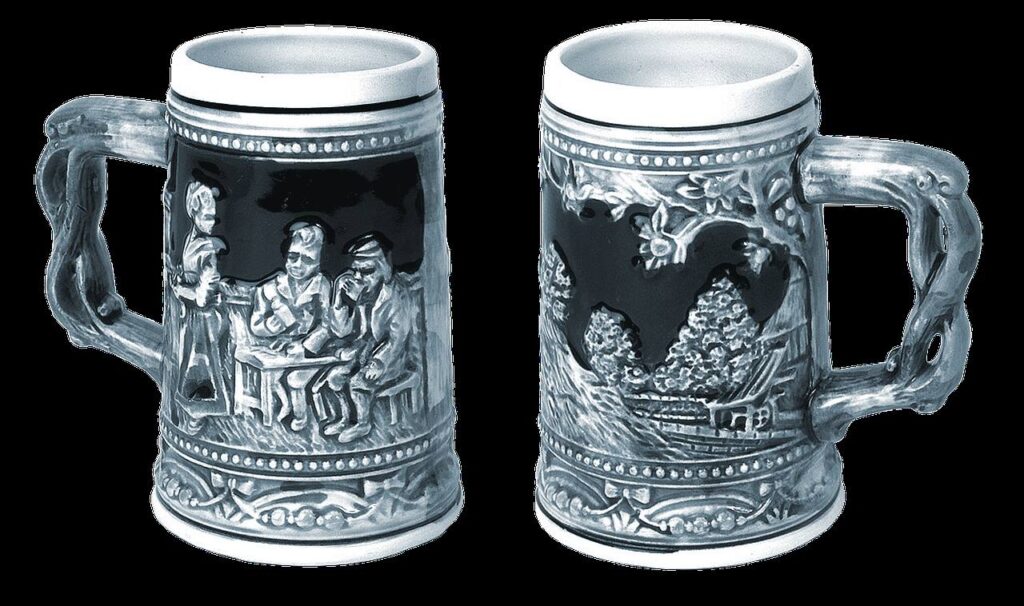
Every beer stein with a lid and a scene painted on the side looks, to someone who has never collected one, like it could be either a family heirloom or a gift-shop souvenir bought an hour before a flight home. The base is where you actually find out. It will not make you an appraiser, but it will tell you if a real German pottery made the piece, and roughly which decades it came from.
The two words that separate eras: Western Germany, Made in Germany
King-Werk, formally Würfel & Müller G.m.b.H. & Co. K.G. of Höhr-Grenzhausen in Rhineland-Palatinate, has made steins since 1949, and its own dating convention, per a stein-collector reference site, is straightforward: an ink stamp reading “Western Germany” marks a piece made between 1949 and 1990, and “Made in Germany,” usually in blue ink, marks anything made after 19901. That one phrase is the fastest read you will get off a base without any other research, because it lines up with German reunification in 1990 almost exactly.
King-Werk’s history includes one more wrinkle worth knowing if you come across an older-looking stein with a name you do not recognize. In 2011, the company acquired the rights to selected molds from A. J. Thewalt after Thewalt’s own production ceased on October 31, 2009. King-Werk’s Thewalt reissues carry “Thewalt 1893” alongside “Made in Germany,” are limited to 2,500 pieces per year with a refreshed design annually, and credit the original 1895-era designer by name on the piece1.
The other names on a base
Zöller & Born is a family-owned firm founded in 1956 by Alois Zöller and Werner Born, described by a German-stein importer as “celebrated for its detailed relief work” and richly colored glazes. The same importer describes Thewalt, separately from King-Werk’s later acquisition of its molds, as having “a legacy stretching back to the 1800s” and being “synonymous with traditional German stein production”2. That importer page is honest about its own limits: it does not mention Rastal at all, and it does not explain every mark you might find on an older base, so treat any name not covered here as one more fetch away from confirmed.
Resi says If a base says “Western Germany,” you are holding something made before 1990, full stop, and that alone is worth more to a buyer than any story a seller tells you about it. If it just says “Germany” with no West or Made-in qualifier, ask before you buy; that gap is exactly where a lot of the guessing happens.
What the marks do not tell you
A German-stein importer’s own collector-focused page draws a clear line for buyers: genuine collectible steins are “never mass-produced or screen-printed” the way a souvenir mug is; instead they are “sculpted, hand-glazed and hand-painted using traditional techniques,” and pewter lids are called out specifically as a hallmark of quality, “with some showcasing lathe-turned wooden tops”3.
What that page does not do, and what I want to be honest about rather than paper over, is define DBGM, a mark some sellers cite as proof of a 1949-or-later West German production date. Neither that importer’s page nor Stein Collectors International’s own Reading Room article on basic stoneware and pottery marks explains or even mentions DBGM specifically; the only related mark that article does cover is D.R.G.M., tied to a specific 1901 patent held by a maker named Adolf Diesinger, a different mark from a different era entirely. Until a fetched source actually defines DBGM, I am leaving it off this page rather than repeating a claim I cannot point you to7.
Stein Collectors International, if you want to go deeper
Stein Collectors International describes itself, on its own site, as “a non-profit, member owned and operated organization dedicated to advancing the knowledge and the appreciation of beer steins and other drinking vessels,” founded in 1965 with more than 20 regional and worldwide chapters, with members researching “original methods of production and decoration, identification of manufacturer’s marks and artists, and the use and meaning of the wide variety of themes and symbols which are used to decorate steins,” and publishing findings in its quarterly journal, Prosit5.
The organization’s Reading Room lists articles including “Basic Marks on Stoneware and Pottery Steins – A Beginning,” “The Marks of Finishing Firms,” “Mettlach Marks – The Essentials,” and “Pewter Fittings Through the Ages,” the last of which the organization describes as explaining “how metalware elements help establish a stein’s age and origin,” with a stated total across the Reading Room of “over 1,400 articles”6. If a mark on your base does not match anything above, this is the actual reference library to search next, not a general web search.
What new, marked steins actually cost
Since “value” for most readers means “what would a new one like this cost,” here are dated examples rather than an appraisal of anything you already own. A specialty importer’s current listings for King-Werk pieces run from a “Skull German Ceramic Beer Mug,” a reproduction of an 1870 design with a pewter inlay lid, at $44.95, up to a “216th Anniversary Oktoberfest Beer Stein,” a 0.75-liter piece with a pewter lid limited to 216 pieces, at $189.95, and a “250th USA Anniversary Commemorative” piece with a hand-painted, baroque-style pewter lid at $319.95, all as listed in September 20264. These are retail prices for new production, not appraisals of vintage pieces, and nothing here should be read as telling you what an old stein already in your cabinet is worth; that is a question for an appraiser who has actually held it.
Frequently Asked Questions
What does "Western Germany" on a stein's base mean?
Per King-Werk’s own dating convention, it marks a piece produced between 1949 and 1990, before German reunification. “Made in Germany” on the same maker’s pieces indicates production after 1990.
How can I tell if a beer stein is genuinely handmade in Germany rather than a souvenir?
Genuine collectible steins are sculpted, hand-glazed and hand-painted rather than screen-printed like a mass-market souvenir, and a pewter lid, especially a detailed or lathe-turned one, is a hallmark importers point to as a sign of quality production.
What does DBGM mean on a German stein?
This is a commonly repeated claim online, but no source checked for this article actually defines or confirms it, so it is left unanswered here rather than stated as fact.
Who is Thewalt, and why do some King-Werk steins say "Thewalt 1893"?
Thewalt was a German stein maker with roots in the 1800s whose production ended in 2009. King-Werk acquired rights to some of its molds in 2011 and now issues limited annual reissues marked “Thewalt 1893” alongside “Made in Germany.”
How much does a new collectible German stein cost?
Current retail listings for King-Werk pieces range from about $45 for a smaller reproduction design up to roughly $320 for a large, hand-painted, limited commemorative piece, as of September 2026.
Where can I research a stein mark I cannot identify?
Stein Collectors International’s Reading Room, a library of more than 1,400 articles on manufacturer’s marks, decoration and dating, is the dedicated reference for exactly this question.
Related Articles
 Buying a German Beer Stein: Stoneware, Glass, Pewter Lids and What Is Made in GermanyPantry and tools
 Cooking Bavarian in North America: Where to Buy the Ingredients and the Tools That MatterPantry and tools
 Bavarian Beer, Explained: Styles, Breweries, Beer Halls and Beer GardensBeer
 How Big Is a Maß? Bavarian Beer Sizes in Ounces, ExplainedBeer
 Munich Beer Garden Rules: Bring Your Own Food, Never Your Own BeerBeer
Sources
- King-Werk / Würfel & Müller marks and history — Steinmarks. Accessed 2026-09-26.
- Manufacturers — GermanSteins.com. Accessed 2026-09-26.
- Collector Beer Steins — GermanSteins.com. Accessed 2026-09-26.
- King Werk Beer Steins — GermanSteins.com. Accessed 2026-09-26.
- About Stein Collectors International — Stein Collectors International. Accessed 2026-09-26.
- The Reading Room — Stein Collectors International. Accessed 2026-09-26.
- Basic Marks on Stoneware and Pottery Steins – A Beginning — Stein Collectors International. Accessed 2026-09-26.