In brief
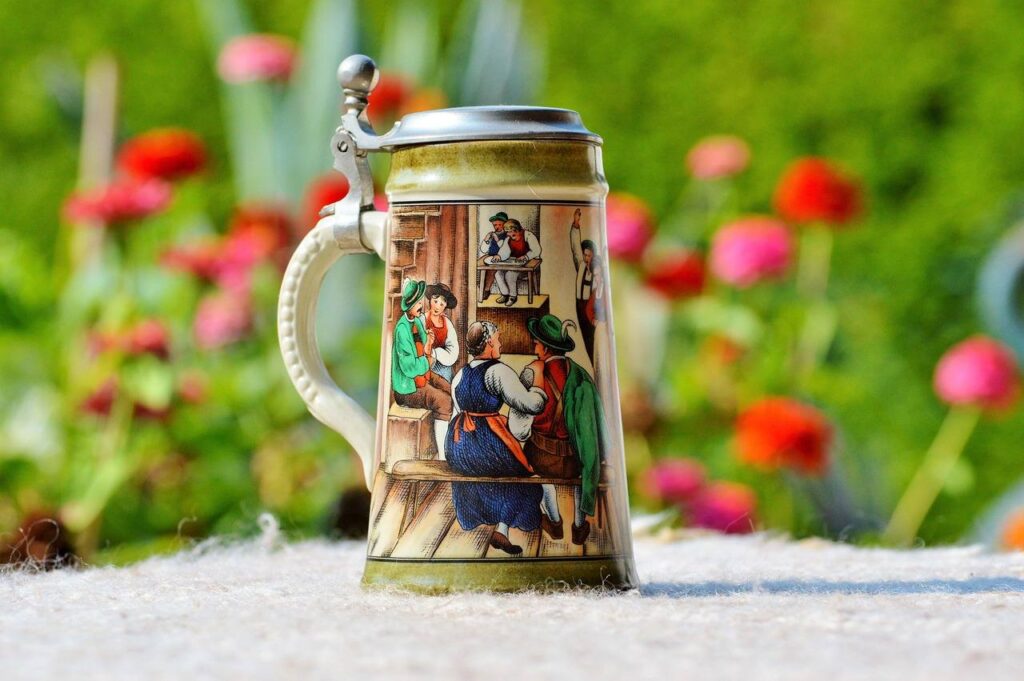
A German beer stein splits into two honest categories: the hand-painted stoneware piece with a pewter lid, made for a shelf, and the plain glass Maß, made for an actual beer hall table. A real Made-in-Germany stoneware drinking mug, unlidded and salt-glazed, runs about $37.95 for a half-liter as of September 2026, while decorated collector pieces with pewter lids from makers like King-Werk run from roughly $45 to $320 depending on size and edition. Rastal, a major German glass manufacturer based in Höhr-Grenzhausen for over a century, is who to credit for a lot of the branded glassware in North American beer bars. If you actually drink from your stein rather than display it, the glass version already on this site, the Hofbräuhaus München 1-liter dimpled stein, is the more honest buy.
Disclosure: some links on this page are affiliate links, marked by the products, tours and hotels they name. As an Amazon Associate, bavarianbistro.com earns from qualifying purchases. A purchase through these links may earn the site a commission at no cost to you, and it never affects what is recommended. How this works. Product prices and availability shown are as of the date stated and can change; the Amazon price at checkout applies.
Here is the thing nobody tells you before you buy your first stein: the pretty one with the pewter lid and the painted hunting scene is not what anyone in a Munich beer hall is drinking from. That one is a display piece, made to be looked at, and there is nothing wrong with that, as long as you know which category you are shopping in before you spend real money. This page is part of my guide to cooking Bavarian food in North America, because a stein sits on the same shelf as the rest of the gear worth getting right.
Stoneware: the collector category
A genuine collectible stein is stoneware or pottery, sculpted and hand-painted rather than screen-printed the way a souvenir mug is, and a German-stein importer’s own page calls this out directly as the line between a real piece and an imitation. Pewter lids are named specifically as a hallmark of quality on these pieces, with some featuring “lathe-turned wooden tops” as a further mark of craftsmanship4. My separate page on reading a stein’s base for maker’s marks covers how to tell an older piece from a new one once you have narrowed things down to stoneware.
Two names come up repeatedly in this category. King-Werk, active since 1949 out of Höhr-Grenzhausen, is the maker behind most of the pewter-lidded collector pieces you will find through specialty importers today. Zöller & Born, a family firm founded in 1956, is known for detailed relief work on its stoneware bodies5. A third name, Thewalt, has roots in the 1800s and was itself acquired in part by King-Werk in 2011 after its own production ended6.
For actual current prices rather than history, a specialty retailer’s listings in September 2026 ran from a $44.95 reproduction piece up to a $189.95 limited 0.75-liter Oktoberfest anniversary stein with a pewter lid, and as high as $319.95 for a large, hand-painted commemorative piece with a baroque-style lid2. None of that is an appraisal of anything you already own; it is only what new production from these makers costs right now.
Not every stoneware stein has a lid, and that is fine
Not everything stoneware is a collector piece with a lid. A German pottery can also make a plain drinking mug meant for actual daily use, no lid, no scene, just a stamped brewery logo and a salt-glaze finish. Hacker Pschorr’s own 0.5-liter salt-glaze stoneware beer mug, sold through a German-stein specialty retailer, is exactly this: hand-applied handle, a fill line at the half-liter mark, about 5 inches tall, and stamped “Made in Germany Handarbeit,” hand-made, on the base, at $37.95 as of September 20261.
Resi says If you want one stoneware stein and you are not building a collection, I would buy the plain one, not the pewter-lidded one. The Hacker Pschorr mug costs less than a tenth of the fancier pieces, it is still genuinely made in Germany by hand, and you are not managing a hinge and a thumb-lift every time you refill it. The pewter-lidded pieces are lovely. They are also, mostly, for looking at.
Glass: what Munich actually drinks from
Walk into any beer hall in Munich and the vessel on the table is glass, not stoneware. This site already has two glass options wired in for exactly that reason: the Hofbräuhaus München 1-liter dimpled stein and the Hofbräuhaus Maßkrug, both tied to a specific Munich beer hall’s own branding rather than a generic Bavarian theme. A dimpled glass Maß is the one you have actually seen photographed at Oktoberfest, heavy enough to double as a doorstop and holding a full liter, 33.8 ounces, of beer.
Rastal, a major German glassware manufacturer based in Höhr-Grenzhausen, describes itself on its own site as “a long-established family-run company” founded over 100 years ago, one that “initiated the brand signature glass” concept and implemented it for the first time in 1964, and that today sees “up to 500,000 decorated articles” leave its main factory daily3. If you have ever noticed how many bar and brewery glasses share a certain finish and branding style, a fair amount of that traces back to this one manufacturer, even when its name is not on the glass itself.
Pewter lids, plainly
A pewter lid does three things: it keeps flies and falling leaves out of an outdoor beer, it dates the stein to the collector category rather than the everyday-drinking one, and it adds real cost, since pewter is a separate material and a separate manufacturing step from the ceramic body underneath it. A thumb-lift mechanism, the little lever your thumb flips to raise the lid, is part of what you are paying for on any lidded piece, decorative or not. None of the research for this page found a plain, functional reason to want a lid on a stein you are actually drinking from indoors, which is one more reason the glass Maß and the unlidded stoneware mug above are the practical choices, and the pewter-lidded pieces are the display choices.
Caring for the two categories is also genuinely different, which is worth knowing before either one goes on your shelf or into your dishwasher. A plain glass Maß or an unlidded stoneware mug can go through a normal wash cycle without a second thought. A pewter-lidded piece is a different chore: hand-wash it, dry the hinge so it does not spot, and never let a pewter lid sit closed and damp for long stretches, since trapped moisture is what causes the tarnish collectors spend hours polishing off later. None of that is a reason to avoid a pewter lid if you want one for the mantel. It is a reason not to buy one thinking it will live in your kitchen cabinet in daily rotation with the coffee mugs.
A gift versus a glass you will actually use
If you are buying a stein as a gift for someone who collects them, or wants a mantel piece, the pewter-lidded stoneware category is the right aisle, and the price examples above give you a real range to shop within rather than guessing. If you are buying one for yourself because you host Oktoberfest parties or just like drinking beer out of something with weight to it, buy the glass or the plain stoneware mug, and spend the difference on the beer instead. Both are honest purchases. They are just answering two different questions, and a lot of first-time buyers do not realize they are choosing between them until the box arrives and the lid needs polishing before it has held a single beer.
Decorative versus drinking, side by side
| Stoneware, pewter-lidded | Stoneware, unlidded | Glass Maß | |
|---|---|---|---|
| Example price | $44.95–$319.95 | $37.95 (0.5 L) | Wired: Hofbräuhaus München 1-liter dimpled stein |
| Made for | The shelf | Daily use | The beer hall table |
| Lid | Yes, pewter | No | No |
Source: GermanSteins.com listings12.
Frequently Asked Questions
Is a stoneware beer stein or a glass Maß more authentic?
Both are authentic to different parts of Bavarian drinking culture. Glass is what Munich’s beer halls and beer gardens actually serve from; hand-painted stoneware with a pewter lid is a separate collector tradition, built to be displayed rather than filled and refilled all evening.
Why do some German beer steins have pewter lids and others do not?
A pewter lid marks a piece as a decorative or collector stein, historically meant to keep insects and debris out of an outdoor beer. Everyday drinking mugs and glass steins generally skip the lid entirely, since it adds cost and a mechanism you do not need indoors.
What does "Made in Germany" actually guarantee on a stein?
On a genuinely collectible piece, it indicates the stein was sculpted, glazed and painted by a German pottery using traditional methods, rather than mass-produced or screen-printed as a souvenir. It is also a dating tool: on King-Werk pieces specifically, it marks production after 1990.
Who makes Rastal glassware?
Rastal is a German glassware manufacturer based in Höhr-Grenzhausen, in business for over 100 years, credited with pioneering the branded “signature glass” concept for bars and breweries starting in 1964.
How much should I expect to pay for a real German stoneware stein?
A plain, unlidded drinking mug from a German pottery runs under $40 for a half-liter size. Decorated, pewter-lidded collector pieces range from roughly $45 for a smaller reproduction design up to $300 or more for a large, hand-painted, limited edition.
Should I buy a stein I plan to actually drink from?
If you want to use it regularly, buy glass or an unlidded stoneware mug. Pewter-lidded collector steins are heavier, carry a mechanism you do not need for indoor drinking, and cost more precisely because they are built to be looked at rather than washed daily.
Related Articles
 German Beer Stein Markings and Value: How to Read the BasePantry and tools
 Cooking Bavarian in North America: Where to Buy the Ingredients and the Tools That MatterPantry and tools
 Bavarian Beer, Explained: Styles, Breweries, Beer Halls and Beer GardensBeer
 How Big Is a Maß? Bavarian Beer Sizes in Ounces, ExplainedBeer
 Is the Hofbräuhaus Worth It? An Honest Look at Munich’s Most Famous Beer HallBeer
 Munich Beer Garden Rules: Bring Your Own Food, Never Your Own BeerBeer
 Spätzle Makers Compared: Press, Hopper, Board or ColanderPantry and tools
Sources
- Hacker Pschorr Brewery 0.5 Liter Salt Glaze Stoneware Beer Mug — GermanSteins.com. Accessed 2026-09-26.
- King Werk Beer Steins — GermanSteins.com. Accessed 2026-09-26.
- Rastal — Rastal. Accessed 2026-09-26.
- Collector Beer Steins — GermanSteins.com. Accessed 2026-09-26.
- Manufacturers — GermanSteins.com. Accessed 2026-09-26.
- King-Werk / Würfel & Müller marks and history — Steinmarks. Accessed 2026-09-26.