In brief
If you came here looking for Krampus in Bavaria, the honest answer is that the name itself barely appears; Berchtesgaden’s own tourism site describes its December figures as wild shapes dressed in fur and straw, who roam the town and surrounding villages on Saint Nicholas Day to the sound of ringing bells, without ever using the word “Krampus”. The two names doing that work are Buttnmandl and Kramperl, and the fuller procession, organized today by the Bundeswehr’s Gebirgsjäger mountain troops, runs December 5 and 6, starting at 2 p.m. from the Strub barracks and reaching the castle square by around 3:15, with St. Nicholas leading and small gifts handed to children along the way. The bell-ringing itself, per the town’s own account, traces to a pre-Christian custom meant to wake winter nature early in the cold season, later folded into the Christian Nikolaus feast rather than replacing it. Whether “Perchten” belongs in the same sentence, I could not confirm from a source I was willing to cite this session, so it is left out below.
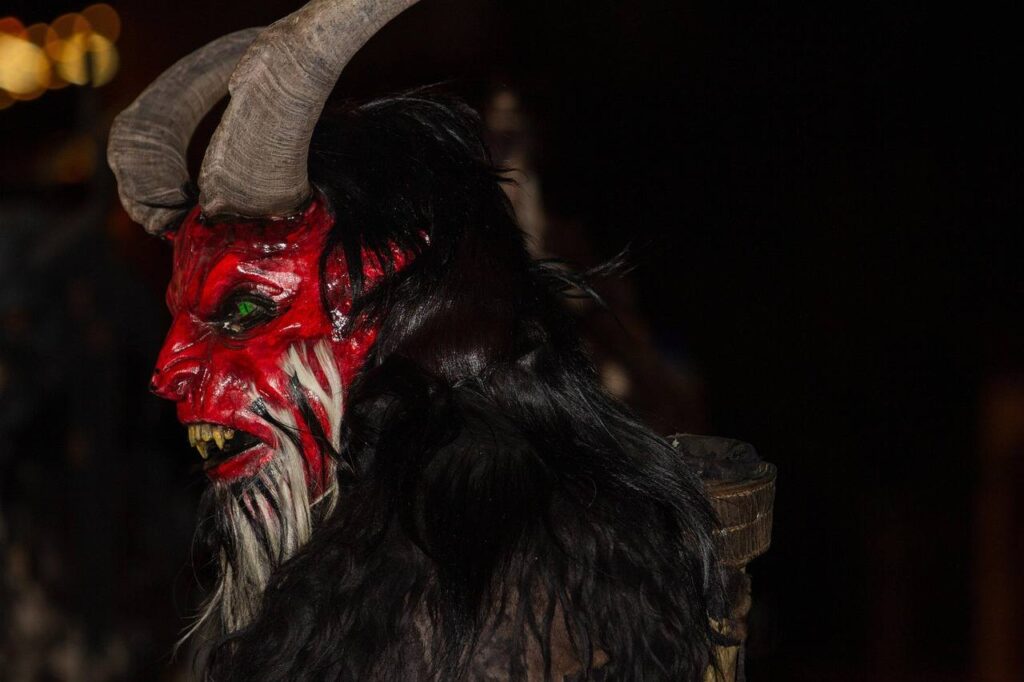
December in the Alps has a reputation, thanks largely to Austria, for a horned figure who punishes bad children while St. Nicholas rewards the good ones. Bavaria has its own version of the same week, and it goes by different names, run by a different organization, in a specific town whose own tourism board actually documents it. This page sticks to what those sources say, and to what they do not, rather than importing the Austrian picture wholesale. My Bavarian Christmas Traditions page covers the rest of the season, and the Trachten and Customs pillar has everything else.
What Berchtesgaden actually calls its own figures
Berchtesgaden’s own tourism and culture page, fetched directly for this article, does not use the word “Krampus” anywhere. It describes “wild figures dressed in fur and straw” who “roam through Berchtesgaden and the surrounding villages on Saint Nicholas Day, accompanied by the sound of ringing bells,” and traces the custom to Celtic-era practice later shaped by the arrival of Saint Nicholas traditions on the same calendar date1.
The same page describes a second, gentler custom running earlier in the season: Klöckl singing, where groups in traditional robes go house to house singing Advent songs on the first three Thursdays of Advent, bringing what the page calls “blessings to each home,” alongside a briefer mention of ceremonial “Christmas shooting,” gun salutes tied to Bavarian custom, without a specific date or town given for it1.
The names, and what each one wears
Two names carry the costume detail that “Krampus” does elsewhere in the Alps. “Buttnmandl” and “Ganggerl” wear long straw coverings hung with large bells, and “Kramperl” wear fur masks and carry smaller bells along with switches, called Lebensrute, life-rods2. None of this comes from the-quiet-time page itself, which names the figures but does not break down the costumes; the detail comes from Berchtesgaden’s own dedicated Buttnmandl page, a second official page from the same tourism site.
That the town needs two official pages to cover this, one general and one specific, tells you something: it is documented well enough that a writer can actually check it, rather than repeat whatever the last blog post said. It is also worth noting what neither page gives you, because the gap matters as much as the detail: no crowd figures, no count of how many towns nearby run their own version, and no ticket or viewing arrangement beyond showing up in the town center on the day. Straw and bells sounds almost gentle on paper; the noise itself is the actual point of a Buttnmandl costume, and it carries further than any photo of one suggests.
When and how it runs
The main event is the Buttnmandl-Laufen, and it is organized rather than a loose house-to-house wander: the Bundeswehr’s own Gebirgsjäger mountain troops run it as a public procession on December 5 and 6, Nikolaustag, starting at 2 p.m. from the Strub barracks and arriving at the castle square by roughly 3:15, with St. Nicholas at the front handing out small gifts to children as the group moves through town2. Additional village-level Buttnmandl-Laufen events happen elsewhere in Advent on their own separate days, at Loipl on the first Advent Sunday, Winkl on the second, and Maria Gern on Christmas Eve afternoon, layering the custom across the season rather than confining it to a single date.
Resi says If you want to see this and only have one afternoon, December 5 or 6 in Berchtesgaden itself is the version that is actually organized and publicized; the village-level versions are smaller and less predictable to plan a trip around.
Where the bells come from
The bell-ringing is not decoration; it is the point, historically. Berchtesgaden’s own Buttnmandl page states that the custom “was originally meant to awaken winter nature early in the cold season,” a pre-Christian practice that got folded into the Christian Nikolaus feast rather than displaced by it2. That layering, an older seasonal ritual absorbed into a saint’s feast day rather than erased by it, is the same shape you see across a lot of European winter customs, and it is worth knowing because it explains why a saint’s day comes with figures that look nothing like a saint.
Bavarian, not Austrian, and the actual distinction
The word “Krampus” is strongly associated with Austria and Salzburg’s Glöckler and Schönperchten runs, and Berchtesgaden’s own Buttnmandl page draws the line itself: it describes today’s public Buttnmandl-Laufen procession as an organized town event, historically distinct from, though related in character to, the private house-visiting customs across the border in the Salzburg and Upper Austrian region2. In other words, the figures rhyme with each other because they come from the same broad Alpine tradition, but Berchtesgaden’s own name for its custom, and its own account of how it is run today, is not simply Austrian Krampus relocated across a state line.
I want to be equally clear about what I could not confirm. The term “Perchten,” the separate costumed-figure tradition often mentioned alongside Krampus, did not appear on either Berchtesgaden page I used for this article, so I am not applying it to the town’s custom here; if you have seen “Perchten” used for a Bavarian event specifically, it was not on the pages I was working from. The same goes for any specific claim about which Bavarian towns beyond Berchtesgaden run their own version, and for any precise count of participants or spectators; neither page gave that either.
Resi says The single most useful thing I can tell you is the one nobody puts on a poster: ask what the local figures are actually called before you go looking for “Krampus” in Bavaria, because you may be standing three feet from the real thing and not recognize it by name.
Frequently Asked Questions
Does Bavaria have Krampus?
Berchtesgaden’s own tourism page does not use the name “Krampus” for its December figures; it describes wild fur-and-straw figures called Buttnmandl and Kramperl instead.
When does the Buttnmandl-Laufen happen?
December 5 and 6, Nikolaustag, in Berchtesgaden, organized by the Bundeswehr’s Gebirgsjäger mountain troops.
What is the difference between Buttnmandl and Kramperl?
Buttnmandl and Ganggerl wear long straw coverings with large bells; Kramperl wear fur masks and carry smaller bells and switches called Lebensrute.
Is Krampus Austrian or Bavarian?
The name and its most famous processions are strongly associated with Austria; Berchtesgaden’s own custom is a related but separately named Bavarian tradition, organized differently today.
Are the Perchten part of this Bavarian custom?
I could not confirm that from either Berchtesgaden source used for this page, so I am not applying the term here.
What is Klöckl singing?
A gentler, earlier Advent custom in the Berchtesgaden area: groups in traditional robes go house to house singing Advent songs on the first three Thursdays of Advent.
Do the figures actually scare children?
The sources describe gift-giving alongside the costumed figures rather than a punishment ritual; St. Nicholas leads the procession and hands out small gifts as it moves through town.
Can I watch the Buttnmandl-Laufen without a ticket?
Neither Berchtesgaden source describes any ticket or reservation system; the procession moves through public streets and the castle square.
Related Articles
 Bavarian Christmas Traditions: Advent, Krampus, Christkind and the FoodsTrachten and customs
 Dirndl, Lederhosen and the Bavarian Year: Trachten and Customs ExplainedTrachten and customs
 The Bavarian Year: Fasching to Christkindlmarkt, Month by MonthTrachten and customs
 Christmas Markets in Bavaria: Munich, Nuremberg, Rothenburg and the DatesTrachten and customs
 A Bavarian Christmas Party: Glühwein, Lebkuchen, Weißwurst and the Krampus QuestionParty
 Berchtesgaden and the Königssee: The Boat, the Salt Mine and the ObersalzbergBavaria
Sources
- The Quiet Time — berchtesgaden.de. Accessed 2026-09-26.
- Buttnmandl — berchtesgaden.de. Accessed 2026-09-24.