In brief
Lederhosen correspond to alpine hunting garb from around 1850, and Bavarian royals such as King Maximilian II Joseph and Prince Regent Luitpold were regularly seen wearing them. Deerskin is the traditional premium leather, prized for being soft and breathable while still holding up to hard wear; goat is lighter, and cowhide is firmer and needs a longer break-in. At Munich shops, a real pair runs roughly €99 at the budget end up to €1,799 for deerskin. A genuine, stitched pair breaks in and improves with age; a glued costume pair feels rubbery and never does. In North America, a real leather pair from a specialist retailer runs about $159.95 to $219.95.
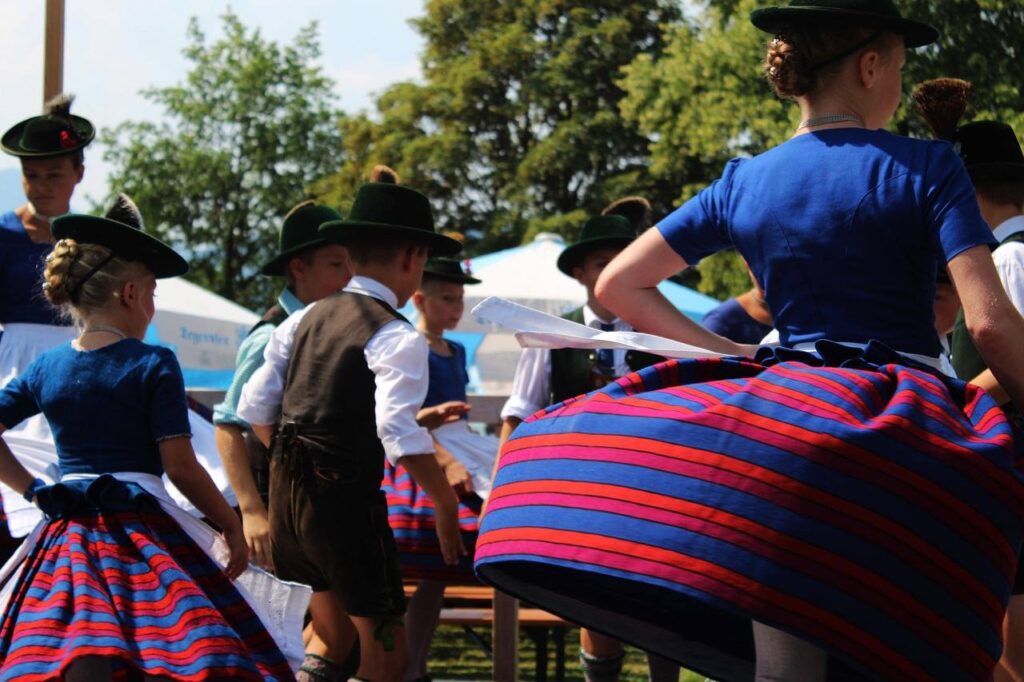
Lederhosen get treated two ways by people who have never worn a real pair: as a joke costume, or as something mysteriously expensive for what is, after all, just leather shorts. Neither is quite right. This page is the history and the buying guide together, for the slug that used to hold a much thinner version of this story; nothing of that old page survives here, and none of it should have.
Where Lederhosen actually come from
Lederhosen correspond to the hunting garb of the alpine regions from around 1850, worn by hunters and rural workers for the same reason leather is still chosen today: it holds up to brush, weather and hard use in a way cloth does not1. They were not a costume invented for tourists or festivals; Bavarian royalty wore them as ordinary dress. King Maximilian II Joseph and, later, Prince Regent Luitpold were known Tracht-wearers, frequently seen in leather hunting trousers as part of their regular wardrobe rather than a ceremonial one1.
The broader significance of Tracht, the traditional dress Lederhosen belong to, as a marker of Bavarian identity rather than just practical clothing dates to the early 19th century and the founding of the Kingdom of Bavaria, and it has been kept alive since by regional Trachten associations that are still active1. Bavaria’s Trachtenverband today recognizes six sub-regional mountain styles, the Berchtesgadener, Chiemgauer, Isartaler, Inntaler, Werdenfelser and Miesbacher Tracht, each with its own cut and pattern conventions, which is part of why a pair from one valley does not look quite like a pair from the next1.
The three lengths, and what they are made of
Munich retailers sell Lederhosen as three distinct product lines rather than one garment in different sizes: the short kurze Lederhose (Krachlederne), which ends just above the knee and is usually finished with a small cuff; the Kniebundhose, which extends below the knee and closes there; and long Lederhosen3.
The leather itself is where the real price differences come from. Deerskin (Hirschleder) is the traditional premium choice, described by one Munich retailer’s own buying guide as “especially fine: soft, breathable, and resilient at the same time.” Goat leather is lighter and more supple; cowhide is firmer, cheaper, and needs a longer break-in period before it stops feeling stiff2.
Six sub-regional styles is not a trivia footnote, either; it means a shop assistant in Bad Tölz and one in Berchtesgaden are working from slightly different templates even though both call the result Lederhosen. A visitor buying online will not need to choose between the six, since most retailers sell a general Bavarian cut rather than a specific valley’s pattern, but it explains why a photo of “the” traditional Lederhosen online can look subtly different from the pair you end up holding.
How to tell real leather from a good fake
A few tells hold up regardless of which leather you are looking at. Natural leather shows small scars, pores or irregular patches, and per the same Munich retailer’s guide, that is “not a flaw, but a sign that it is not an artificially smoothed surface.” Genuine leather smells faintly of leather rather than sharply of chemicals or plastic, and the stitching should be even and firm with clean, bound edges, especially at stress points like the crotch and side seams; loose threads or an irregular stitch pattern are a bad sign2. A high price alone is not proof of quality either. A mid-range goat or cowhide pair, properly made, is genuinely good value for someone who wants the real thing without the deerskin price tag2.
Getting the fit right
At a proper fitting, the waistband should close firmly but comfortably, and the way to actually test that is to sit, walk and lift a leg in the trousers, not just stand in front of a mirror. Waist, thigh and desired-length measurements tell a shop far more than a single European size letter, which matters especially for US buyers unfamiliar with how European Lederhosen sizing runs2.
Resi says If you can only measure one thing before buying online, measure your thigh, not your waist. A Lederhose that is fine at the waist and tight at the thigh is the single most common fit complaint I hear about, and it is the one measurement people forget to take.
What a real pair costs
Munich’s own shops make the price range concrete rather than abstract. Lodenfrey, in business since 1842, prices men’s Lederhosen from €599 for goat leather up to €1,799 for deerskin or lambskin3. Angermaier, a family-run Munich manufacturer, runs from €169.90 at the entry level to €499, with most styles in the €279 to €479 range, and offers a “Green-Line” vegetable-tanned option for buyers who want a more sustainable pair4. Trachten Rausch, positioned as the budget-to-mid option near the Theresienwiese, sells individual Lederhosen from €99, with complete outfits, trousers, shirt and socks together, from €139, plus a discount for buying the full set5.
Why a real pair lasts and a costume does not
This is the part that actually justifies the price gap. Munich’s own guidance is specific about the tell of a cheap pair: avoid glued, rather than stitched, Lederhosen, since they feel rubbery and do not improve with age the way stitched leather does6. That is the whole difference in one sentence. A real, stitched leather pair is built to be worn for years, breaking in and softening with use; a glued costume pair is built to survive one party and look worse every time you put it on again.
Resi says I do not own a pair myself, so take this as an observation rather than a memory: the entire case for spending real money on Lederhosen once is that you are not buying them again next year. A costume pair is a party expense. A real pair, cared for, is closer to a piece of furniture.
Buying a real pair from North America
Lederhosen Store carries genuine leather Lederhosen, including deerskin among its premium options, priced roughly $159.95 to $219.95, with free shipping on orders of $299 or more7. That is not a bargain-bin price, and it should not be; it reflects real leather and real construction rather than a costume-shop shortcut, and a pair bought at that level should still be wearable years from now.
Frequently Asked Questions
When did Lederhosen originate?
They correspond to alpine hunting garb from around 1850, worn by hunters and rural workers for the same durability leather still offers today, and Bavarian royalty wore them as ordinary dress rather than a costume.
What is the best leather for Lederhosen?
Deerskin is the traditional premium choice: soft, breathable and resilient. Goat leather is lighter and more supple, and cowhide is firmer, cheaper, and needs a longer break-in.
How much does a real pair of Lederhosen cost?
At Munich shops, roughly €99 at the budget end up to €1,799 for deerskin. In North America, a real leather pair from a specialist retailer runs about $159.95 to $219.95.
How can you tell if Lederhosen are real leather?
Natural leather shows small scars or pores rather than a perfectly smooth surface, smells faintly of leather rather than chemicals, and has even, clean stitching at the stress points. Glued rather than stitched construction is the clearest sign of a costume pair.
What is the difference between kurze and Kniebund Lederhosen?
Kurze Lederhosen end just above the knee; Kniebundhose extend below the knee and close there. Long Lederhosen are a less common third option.
How should Lederhosen fit?
The waistband should close firmly but comfortably, tested by sitting, walking and lifting a leg rather than just standing. Waist, thigh and length measurements matter more than a single European size letter.
Do Lederhosen actually last a long time?
A genuine stitched leather pair, properly cared for, is built to last for years and improves with wear. A glued costume pair is built for a single event and does not hold up the same way.
Related Articles
 Dirndl, Lederhosen and the Bavarian Year: Trachten and Customs ExplainedTrachten and customs
 How to Wear Lederhosen: Socks, Straps, Shirt and ShoesTrachten and customs
 Haferlschuhe and Loferl: The Shoes and Socks That Finish the OutfitTrachten and customs
 Renting a Dirndl or Lederhosen in Munich: Shops, Prices, FitTrachten and customs
 The Dirndl Explained: Blouse, Bodice, Skirt, Apron and How It Should FitTrachten and customs
 What to Wear to Oktoberfest, and Whether You Have ToOktoberfest
 Oktoberfest Costumes, Honestly Rated: From the $30 Costume Dirndl to the Real ThingParty
Sources
- Geschichte: Was Tracht in Bayern bedeuten — Wochenblatt. Accessed 2026-09-24.
- Qualitätsmerkmale echter Lederhosen — Heu und Stroh. Accessed 2026-09-24.
- Herren Trachten: Lederhosen — Lodenfrey. Accessed 2026-09-24.
- Herren: Lederhosen — Angermaier. Accessed 2026-09-24.
- Trachten Rausch — Trachten Rausch. Accessed 2026-09-24.
- Oktoberfest Outfits: Dirndl and Lederhosen — muenchen.de. Accessed 2026-09-24.
- Lederhosen Store — Lederhosen Store. Accessed 2026-09-24.