In brief
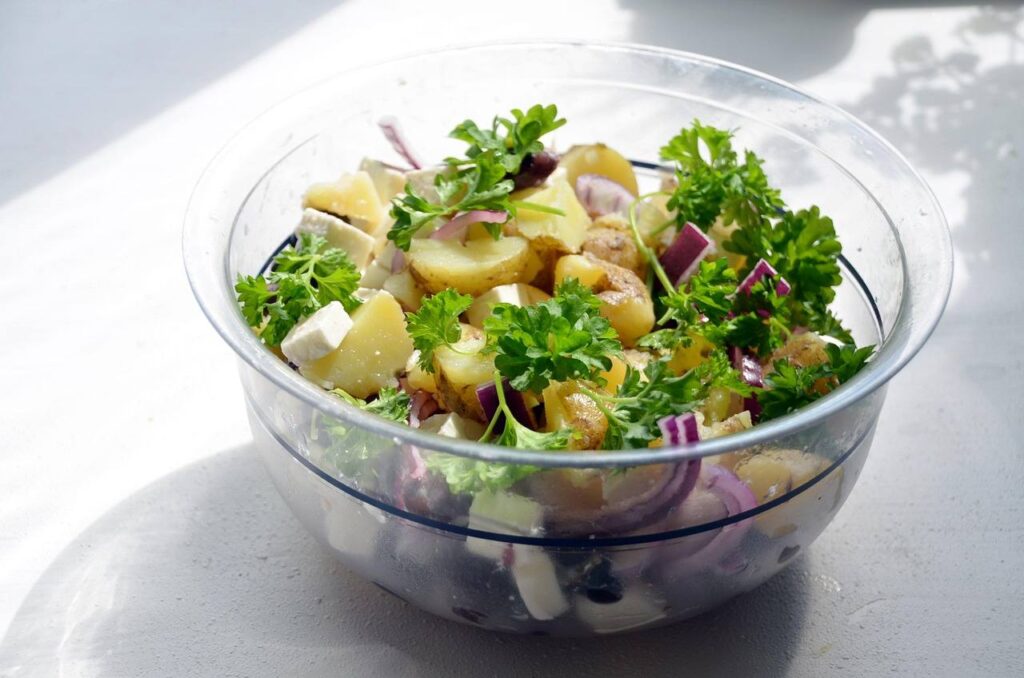
Bavarian potato salad, Kartoffelsalat, is dressed while hot with a warm vinegar-and-mustard vinaigrette made from vegetable stock, vinegar, mustard and oil, and it contains no mayonnaise at all. That single fact separates it from the creamy, egg-and-pickle version most North Americans grew up calling potato salad, which is the northern German style, not the Bavarian one. Waxy potatoes are non-negotiable, because they hold together instead of turning to mash. It is served warm or at room temperature, which the source calls the most traditional way to eat it, never cold from the fridge.
Disclosure: some links on this page are affiliate links, marked by the products, tours and hotels they name. A purchase through these links may earn the site a commission at no cost to you, and it never affects what is recommended. How this works.
If you have ever brought a bowl of the creamy, mayonnaise-based potato salad from every backyard barbecue you have ever been to and set it down next to the potato salad at a Bavarian table, you will notice the room go quiet for a different reason than you expected. Bavaria does not do the mayonnaise version, and it is not being precious about it; it is simply a different dish with different ancestry, and it belongs on my guide to Bavarian food as one of the clearest examples of how far “German food” and “Bavarian food” can diverge from what an American expects.
The two styles, and why they are not the same salad
A step-by-step recipe source lays the distinction out plainly: the Bavarian style is dressed with a warm vinegar-and-mustard vinaigrette poured directly over hot potatoes, while the northern German style is mayonnaise-based, often built with boiled eggs, pickles and sometimes apple, and noticeably richer and creamier1. The same source puts it bluntly: “This is not the creamy, mayonnaise-laden potato salad you might be used to. Bavarian potato salad is something else entirely.” If you grew up on the mayonnaise version and assumed all German potato salad was a variation on it, this is the moment that assumption gets corrected.
The reason the two exist side by side inside one country comes down to dairy, climate and regional habit more than any single rule, but the practical upshot for a cook is simpler: reach for a bottle of vinegar and a jar of stock, not a jar of mayonnaise, and you are already making the right one.
The potato that actually matters
Waxy potatoes are the ingredient the whole technique depends on. A starchy, floury potato, the kind you would reach for to mash, breaks down and turns gluey when you toss it warm with a vinaigrette; a waxy potato holds its shape, keeps a slight bite, and lets the dressing coat each piece instead of dissolving into it. The recipe source lists waxy potatoes alongside onion, vegetable stock, vinegar, mustard, vegetable oil, salt and pepper as the full ingredient list, and nothing on that list is unusual or hard to find in a North American grocery store1. Yukon Gold or a labeled “waxy” or “boiling” potato are the closest widely available substitutes.
What kind of vinegar and mustard
The recipe source does not specify a single named vinegar or mustard brand, only “vinegar” and “mustard” among the ingredients, so there is room to use what is already in your pantry1. A plain white wine vinegar is the closest match to what most home versions use, and a smooth German-style medium mustard, not the sharp American yellow kind, keeps the dressing in the right register. If your pantry already runs Bavarian, my German mustard brands page covers which jars fit best here versus on a Weißwurst plate.
The technique: hot into hot
The one instruction worth repeating word for word is the timing. The source states plainly that the potatoes must go into the dressing while both are still hot1. That is not a small preference; it is the mechanism that makes the salad work. Warm potato flesh is porous enough to absorb the vinaigrette as it cools, so the vinegar and stock end up seasoning the potato all the way through rather than sitting on the surface the way a cold dressing would. Let the potatoes cool first and you get a salad that tastes fine on the outside and bland in the middle.
- Boil the potatoes whole, skin on, until just tender, then peel them while still hot enough to burn your fingers a little.
- Slice them into a bowl immediately, before they have a chance to cool.
- Warm the vinegar, stock, mustard and oil together with the diced onion, just enough to bring the flavors together, not to cook anything further.
- Pour the warm dressing over the warm potatoes and toss gently, so the slices absorb it rather than break apart.
- Let it rest, covered, until it reaches room temperature before serving; do not refrigerate it cold.
How it is served, and what goes with it
The traditional serving temperature is warm or room temperature, which the source calls “equally good” and specifically names as the most traditional way to eat it, not a compromise for when you are short on time1. It is a common pairing with roast chicken, schnitzel and bratwurst, which is exactly the kind of rich, pan-fried or roasted main this bright, vinegar-forward side is built to cut through.
Resi says My own notes on Bavarian food keep coming back to the warm potato salad as one of the dishes I genuinely missed after I left, in the same breath as the Obazda and a fresh Brezn. It is the kind of side dish nobody photographs, and everybody finishes first.
If you are building a full Bavarian plate around this, my Schweinebraten page has the pork roast it traditionally accompanies, and the Bratwurst page covers the sausage side of the table.
Leftovers keep in the refrigerator for a couple of days, but bring the bowl back to room temperature before serving again rather than eating it cold out of the fridge; a short stint in a low oven or a few seconds in the microwave, just enough to take the chill off, gets it closer to how it is meant to taste. It does not freeze well, since the potato texture suffers, so this is a salad to make for the meal you are actually planning, not to bank for later.
A cast iron skillet earns its keep here if your version of the recipe starts by rendering a little bacon or frying the onion before the dressing goes in, which many home versions do even though it is not in the base recipe above; a 10.25-inch pre-seasoned Lodge skillet lists at $24.90 as of September 2026 and holds the fond you want to deglaze straight into the vinegar and stock2.
Resi says If you are going to fry onion or bacon for the dressing, do it in cast iron, not a thin nonstick pan. It is the same pan I would point you to for a Schweinshaxe or a Schweinebraten, so it earns its cupboard space many times over. The limit is the one every cast iron pan shares: it needs to be dried and lightly oiled after washing, or it will rust.
Frequently Asked Questions
Does Bavarian potato salad have mayonnaise?
No. Bavarian-style Kartoffelsalat is dressed with a warm vinegar, stock, mustard and oil vinaigrette. Mayonnaise-based potato salad, often with eggs and pickles, is the northern German style.
What kind of potatoes should I use for Bavarian potato salad?
Waxy potatoes, which hold their shape when tossed warm with a vinaigrette. A floury or starchy potato will break down and turn the salad mushy.
Should Bavarian potato salad be served warm or cold?
Warm or at room temperature. Serving it cold from the refrigerator is not the traditional way to eat it.
Why do the potatoes go into the dressing while still hot?
Warm potato flesh absorbs the vinaigrette as it cools, seasoning it all the way through. Dressing cold potatoes leaves the flavor sitting on the surface.
What do you eat with Bavarian potato salad?
Roast chicken, schnitzel and bratwurst are common pairings, since the vinegar-forward salad balances rich, pan-fried or roasted meat.
Is German potato salad the same everywhere in Germany?
No. The Bavarian, vinegar-and-broth style and the northern German, mayonnaise-based style are genuinely different dishes that happen to share a name.
Can Bavarian potato salad be made ahead of time?
Yes, it keeps for a couple of days in the refrigerator. Bring it back to room temperature before serving rather than eating it cold, and skip freezing it, since the potato texture does not hold up.
What vinegar and mustard work best in Bavarian potato salad?
A plain white wine vinegar and a smooth, medium-strength German-style mustard keep the dressing in the right range. Sharp American yellow mustard is too one-note for this dish.
Related Articles
 Bavarian Food: The Dishes, How Munich Eats Them, and What to Cook at HomeFood
 Schweinebraten: Bavaria’s Pork Roast with Dark Beer GravyFood
 Bratwurst in Bavaria: The Regional Varieties and How Each Is CookedFood
 Schweinshaxe: Crackling Pork Knuckle, the Beer-Hall WayFood
 Obatzda: The Bavarian Beer-Cheese Spread, What Goes in It and How to Make ItFood
 Bratkartoffeln: German Pan-Fried Potatoes Done the Beer-Garden WayFood
 Sauerkraut vs Bayrisch Kraut: Fermented Cabbage and Braised Cabbage Are Different DishesFood
Sources
- Bavarian Potato Salad (Kartoffelsalat) — Days of Jay. Accessed 2026-09-27.
- Lodge Pre-Seasoned Cast Iron Skillet, 10.25 Inches — Amazon.com. Accessed 2026-09-27.