In brief
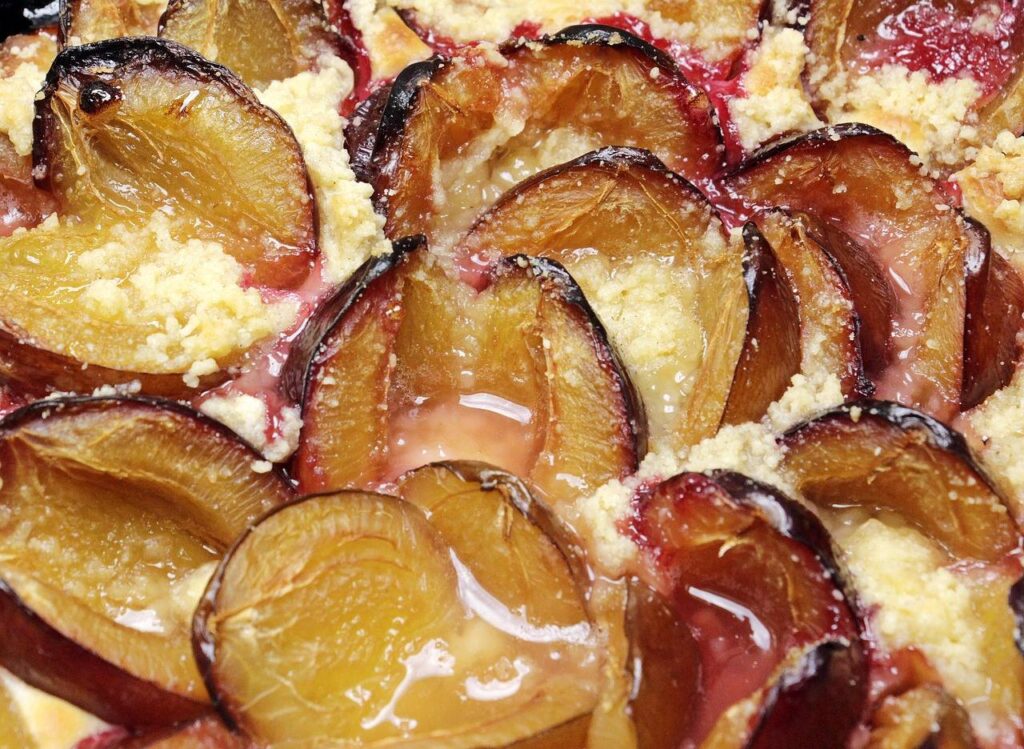
Zwetschgendatschi is a yeast-dough sheet cake from Augsburg, packed edge to edge with quartered Zwetschgen and finished with a dusting of cinnamon. It exists because of one fruit and one season: Zwetschgen, the small oval plums that ripen late, and nothing else will do. The name comes from “datschen,” to flatten or press, which is exactly what you do to the fruit before it bakes. Serve it lukewarm with a spoonful of whipped cream, and expect the pan to be empty by the time the coffee is gone.
Disclosure: some links on this page are affiliate links, marked by the products, tours and hotels they name. As an Amazon Associate, bavarianbistro.com earns from qualifying purchases. A purchase through these links may earn the site a commission at no cost to you, and it never affects what is recommended. How this works. Product prices and availability shown are as of the date stated and can change; the Amazon price at checkout applies.
If you have ever seen a sheet cake at a Bavarian bakery in late August, tiled edge to edge with plum quarters like fish scales, and wondered why nobody bothers arranging them more carefully: that is the arrangement. It is not casual, it is the whole point, and it is also why this cake vanishes from the counter the moment the plums do. It belongs on my guide to Bavarian food for the same reason a lot of the best things here do: it only shows up when it is supposed to, and it does not apologize for that.
What it actually is, and why Augsburg claims it
Bavaria’s own register of regional specialties files this one under Augsburg, not Munich, and calls it a yeast-dough plum sheet cake made only in late summer, because it needs plums that ripen late in the season1. The dough is described in the register’s own words as “not too thick and not too thin,” pressed thin across a sheet pan and then covered densely with quartered plums before it bakes1. It comes out of the oven, gets a dusting of cinnamon, and is served lukewarm with a little whipped cream on the side, which is the register’s own recommendation and not a garnish anyone needs to argue about1.
The plum in question is the Zwetschge, a small, oval, freestone plum with a deep blue-purple skin, not the larger round plum you would slice for a fruit salad. A round plum is wetter and rounder in cross-section, so it slumps and weeps when it bakes; a Zwetschge quarter holds its shape and its edges curl slightly, which is why the top of the cake looks tiled rather than puddled. That difference is why a recipe using the wrong plum comes out soggy in the middle no matter how careful the baker is.
Where the name comes from
“Datschi” is the register’s own explanation, and it traces the word to the South German verb “detschen” or “datschen,” which means to flatten or press down1. That is a description of the technique, not a brand name: you press the plum quarters into the dough by hand, cut side up, until the surface is fully covered. Augsburg has taken enough ownership of the cake that its own residents are nicknamed “Datschiburger,” a joke the register repeats with what reads like genuine affection rather than embarrassment1.
Resi says The dough argument never really ends. The official version is yeast-based, which is what you will get at a proper Bavarian bakery, and it is worth the extra hour of proofing because it turns bready and slightly chewy under all that fruit, the way a good coffee cake should. Plenty of home bakers outside Bavaria use a quick shortcrust or a butter-sugar-egg base instead, because it skips the rise entirely, and that version is a perfectly nice plum tart. It is just not what Augsburg means when it says Zwetschgendatschi.
The season, and why it will not wait for you
This is not a cake you can plan for in February. Zwetschgen ripen late, generally from late August into September in Central Europe, and the whole cake exists to use them up while they last1. In North America, look for Italian prune plums at farmers markets and some grocery chains in that same late-summer window; they are the closest match to a true Zwetschge, oval, firm-fleshed and freestone, and they hold their shape the same way under heat. Regular round plums will work in a pinch, sliced rather than quartered and patted dry first, but the cake will be softer and wetter in the middle than the Augsburg original.
How to make it, in outline
The method below is the general shape of the cake, described in my own words; none of the numbers are specific enough to need a source, and you should use whatever yeast-dough recipe you trust for the base.
- Make a lean yeast dough. Flour, a little sugar, yeast, milk, egg and butter, kneaded until smooth and left to rise until doubled. It should be soft, not enriched like a brioche.
- Press it into a sheet pan. Roll or pat the dough thin across the base of a lined half sheet pan, all the way to the edges, and let it rest another 15 to 20 minutes before topping it.
- Quarter the plums and press them in. Pit each Zwetschge, cut it into quarters, and set the quarters cut-side up in tight, overlapping rows until the dough is completely covered. This is the “datschen” step, and there is no shortcut for it.
- Bake until the dough is golden underneath. A hot oven, checked by lifting a corner of the cake to see the underside has browned, not just by the color of the fruit on top.
- Cool to lukewarm, then dust with cinnamon. Serve it the way the register does, a little warm, with a spoonful of whipped cream on the side rather than folded in.
A half sheet pan is the right tool for this, since the cake is meant to be thin and wide rather than tall, and Nordic Ware’s Naturals half sheet pan, a US-made aluminum one sold as a two-pack for $33.00 as of September 2026, heats evenly enough that the underside browns before the fruit on top scorches2.
Resi says Buy the two-pack, not a single pan, because you will use the second one for everything else in this book, and because a Zwetschgendatschi this size needs the full 13-by-18-inch sheet, not a quarter pan. The limit is exactly what you would expect from bare aluminum: no nonstick coating, so line it with parchment or it will need real scrubbing.
Frequently Asked Questions
What is Zwetschgendatschi?
A yeast-dough plum sheet cake from Augsburg, covered densely with quartered Zwetschgen plums and finished with cinnamon, traditionally served lukewarm with whipped cream.
What is the difference between a Zwetschge and a regular plum?
A Zwetschge is a small, oval, freestone plum that ripens late and holds its shape when baked. A round, wetter plum will slump and release more juice, making the cake soggier in the middle.
Can I make Zwetschgendatschi with regular plums?
You can, sliced rather than quartered and blotted dry first, but expect a wetter cake. Italian prune plums, sold in North America in late summer, are the closer substitute.
Is Zwetschgendatschi made with yeast dough or shortcrust?
The version documented by Bavaria’s own register uses a yeast dough. Many home bakers outside Bavaria substitute a shortcrust or butter-based base, which produces a different, tart-like result.
Why is Zwetschgendatschi only available in late summer?
Because Zwetschgen ripen late in the season, generally from late August into September, and the cake was built around that one fruit.
Why are people from Augsburg called Datschiburger?
It is a nickname, recorded by Bavaria’s own culinary register, that plays on the city’s association with the cake.
Related Articles
 Bavarian Food: The Dishes, How Munich Eats Them, and What to Cook at HomeFood
 Kaiserschmarrn: The Torn Pancake Bavaria Borrowed from AustriaFood
 Apfelstrudel: Why It Is on Every Bavarian Menu, and How the Pastry Is StretchedFood
 Dampfnudel: The Steamed Yeast Dumpling with the Salty CrustFood
 Bavarian Desserts: Bayrisch Creme, Kaiserschmarrn, Dampfnudel and the RestFood
 Prinzregententorte: Munich’s Eight-Layer Chocolate Cake and the Regent It HonorsFood
 Auszogne and Schmalznudel: The Fried Dough Munich Eats for BreakfastFood
Sources
- Augsburger Zwetschgendatschi — Genussorte Bayern, Bavarian State Ministry of Food, Agriculture and Forestry (Kompetenzzentrum für Ernährung). Accessed 2026-09-27.
- Nordic Ware Naturals Half Sheet, 2-Pack — Amazon.com. Accessed 2026-09-27.