In brief
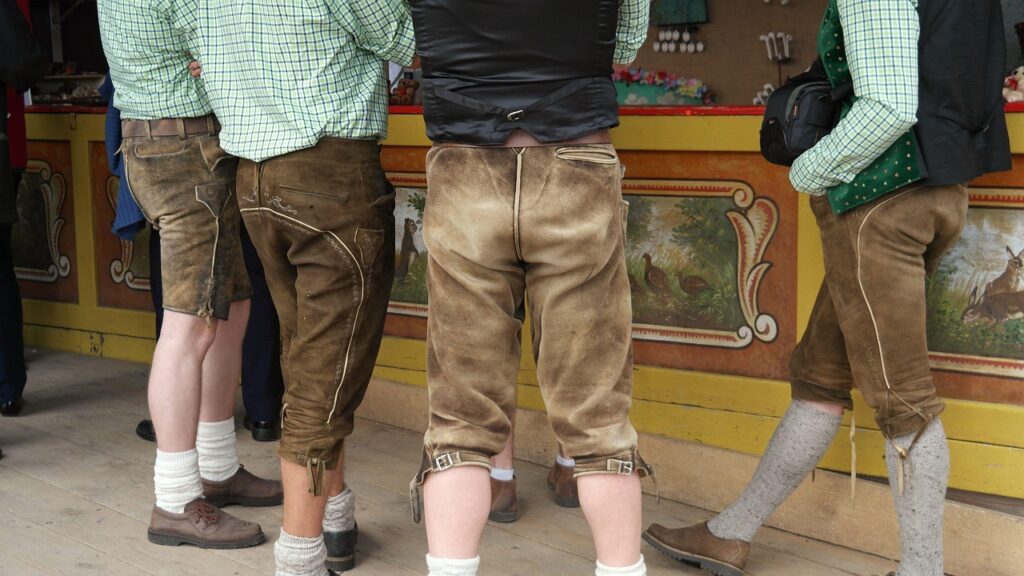
Haferlschuhe are the side-laced leather shoe now standard with men’s Lederhosen, descended from a rural Alpine work shoe. Loferl are the knitted calf-warmers worn between the knee and the Haferlschuh, traditionally over bare skin, not over socks, with a deliberate gap of skin left showing between the knit and the shoe. A real leather pair built for Oktoberfest wear runs about $115 on Amazon as of September 2026. Neither piece is essential to look right in North America, but both finish the outfit properly if you already own the Lederhosen.
Disclosure: some links on this page are affiliate links, marked by the products and tours they name. As an Amazon Associate, bavarianbistro.com earns from qualifying purchases. A purchase through these links may earn the site a commission at no cost to you, and it never affects what is recommended. How this works.
You bought the Lederhosen. Nobody warned you about the shoes, and the socks turn out to have their own rules too. If you have gotten this far into building an outfit, this is the last page you need, and it is short on purpose: the shoes and the socks are simpler than the trousers ever were. This closes out my guide to Trachten and Bavarian customs, the last piece after the Lederhosen and the shirt.
What a Haferlschuh actually is
A Haferlschuh is a side-laced leather shoe, originally a work shoe for the rural population of the eastern Alpine region, that has since become the standard shoe worn with men’s Lederhosen1. It is not a boot and not a dress shoe: low-cut, sturdy, laced along the side rather than the front, and built to survive a day standing in a beer tent rather than to look delicate doing it.
What Loferl are, and the detail everyone gets wrong
Loferl, also called Stutzn or Beinhösl, are knitted calf-warmers worn between the knee and the top of the Haferlschuh, found across the whole Alpine and pre-Alpine region from Lake Constance to the Berchtesgadener Land and documented in artwork from the 19th and 20th centuries. They were originally knitted from natural white spun sheep’s wool, running from knee to ankle, with women’s versions worked in a finer yarn; over time the patterns and colors grew more elaborate and came to mark which regional Trachten association a wearer belonged to, a grey-green version being one example paired with mountain Tracht2.
Here is the detail that trips up almost every non-Bavarian who buys a pair: Loferl were traditionally worn against bare skin, not over socks, with a deliberate gap of skin left visible between the top of the knit and the shoe. Bavaria’s own Trachten association calls wearing socks underneath a modern deviation from the authentic style, not a variation of it2.
Resi says I am not going to pretend I have ever worn Loferl over bare skin in September weather, and I am not going to tell you that you have to either. The gap of skin is a real detail of the real thing, and now you know it exists. What you do with that knowledge at your own Oktoberfest party is between you and your ankles.
What a North American can wear without looking wrong
You do not need the exact historical piece to look right at a party or even at Oktoberfest itself. A sturdy brown leather lace-up shoe or ankle boot with a low heel reads as a Haferlschuh to everyone who is not personally inspecting your side-lacing, and it is the detail Munich’s own guidance to visitors singles out as more important than getting every element museum-accurate. For the socks, tall wool-blend knee socks pulled up under the Lederhosen do the job of the Loferl without the bare-skin convention, and nobody at a house party in Ohio is going to check.
If you want the closer version rather than the easy substitute, a real leather Haferlschuh built for Oktoberfest wear is on Amazon: cowhide leather, a rubber sole, side lacing, sized 7 to 14, at $114.97 as of September 2026, with a 4.5-star average across 162 ratings3. A matching pair of tall Bavarian-style socks from the same kind of shop runs about $27.974, which is the easiest way to get the Loferl look without knitting your own or shopping for calf-warmers specifically.
Resi says If you already own real Lederhosen, buy the real Haferlschuh rather than pairing good leather trousers with sneakers; it is the one part of this outfit where the cheap substitute actually shows. The honest limit: at $114.97 it is not a costume-aisle price, so only make this purchase if you are going to wear the outfit more than once.
Sizing and care
Buy the Haferlschuh in your normal US shoe size and expect the leather to need a break-in evening the same way any new leather shoe does; wear them around the house before the first long day standing at a beer table. Real leather also means real care: wipe them down after a wet night out, and let them air dry away from direct heat rather than sitting them on a radiator, which cracks leather faster than almost anything else does. A rubber sole handles a beer garden’s gravel and spilled Radler better than a smooth leather sole would, which is one reason the modern version keeps it.
Loferl socks, whichever substitute you land on, should sit snug enough at the calf to stay up without a garter, since nothing undoes the effect of a finished outfit faster than a sock pooling around your ankle by the second Maß.
Frequently Asked Questions
What are Haferlschuhe?
A side-laced leather shoe, originally a rural Alpine work shoe, that is now the standard shoe worn with men’s Lederhosen.
What are Loferl?
Knitted calf-warmers worn between the knee and the top of the Haferlschuh, traditionally over bare skin rather than socks, found throughout the Alpine and pre-Alpine region.
Do you wear socks under Loferl?
Traditionally, no. Bavaria’s own Trachten association describes wearing socks underneath as a modern deviation, with a gap of bare skin between the knit and the shoe being part of the authentic look.
Can I wear regular boots with Lederhosen instead?
You can, and most people at a party will not notice the difference. A sturdy brown lace-up shoe reads close enough; the fit and fabric of the Lederhosen itself matter more to whether the outfit looks real.
What should I wear instead of real Loferl?
Tall wool-blend knee socks pulled up under the Lederhosen approximate the look without the bare-skin convention, and are the practical choice for most North American wearers.
How much does a real pair of Haferlschuhe cost?
A real leather pair built for Oktoberfest wear runs about $115 on Amazon as of September 2026; prices vary by retailer and material.
Are Haferlschuhe only worn by men?
The sourced description here covers the men’s shoe paired with Lederhosen; Loferl, by contrast, were made in both a coarser men’s yarn and a finer women’s yarn.
Related Articles
 Dirndl, Lederhosen and the Bavarian Year: Trachten and Customs ExplainedTrachten and customs
 How to Wear Lederhosen: Socks, Straps, Shirt and ShoesTrachten and customs
 Lederhosen: History, Types and What a Real Pair CostsTrachten and customs
 Renting a Dirndl or Lederhosen in Munich: Shops, Prices, FitTrachten and customs
 Where to Buy a Real Dirndl in the US and Canada, and What Real MeansTrachten and customs
 What to Wear to Oktoberfest, and Whether You Have ToOktoberfest
 Oktoberfest Costumes, Honestly Rated: From the $30 Costume Dirndl to the Real ThingParty
Sources
- Loferl: Herkunft und Bedeutung — Stockerpoint. Accessed 2026-09-24.
- Loferl — Bayerischer Trachtenverband. Accessed 2026-09-24.
- BAVARIA TRACHTEN Lederhosen Shoes Trachten Boots – Haferl Authentic German Shoe, Real Leather, Dark Brown — Amazon.com. Accessed 2026-09-26.
- BAVARIA TRACHTEN Lederhosen Socks for Men – German Oktoberfest Socks — Amazon.com. Accessed 2026-09-26.