In brief
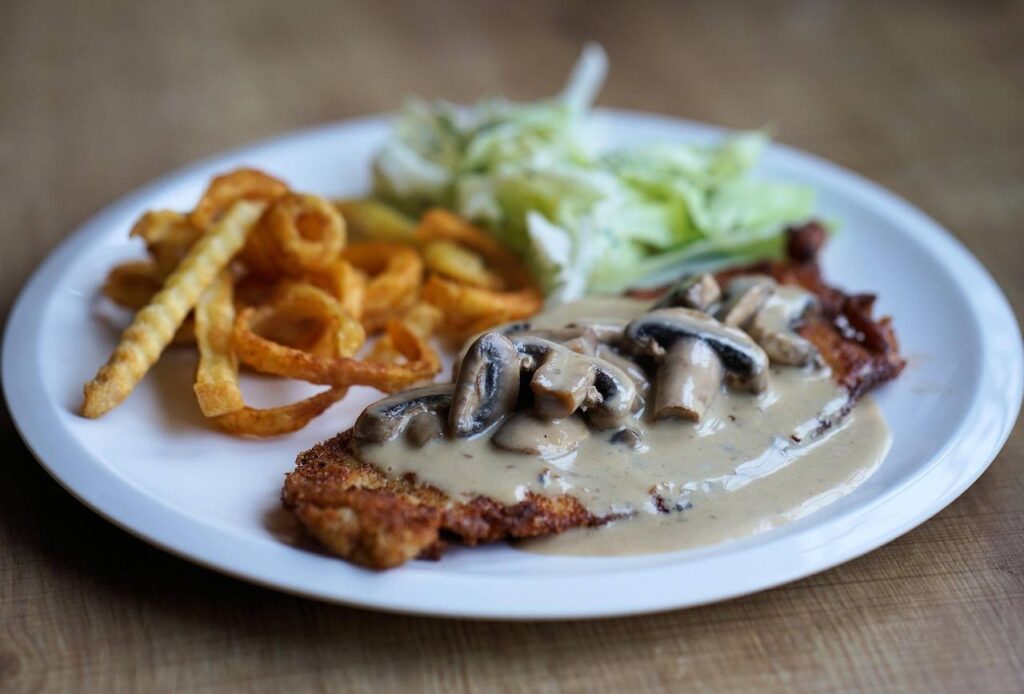
Jäger sauce, or Jägersoße, is the mushroom “hunter’s” gravy served over Jägerschnitzel, built in the same pan a cutlet was just fried in, from sliced mushrooms, onion, stock and a thickener. It takes its name, like the dish it tops, from the German word for hunter, and food historians often trace its mushroom base to the French sauce chasseur, “hunter’s sauce”. No Bavarian government page, city guide or other source I have found gives a written recipe with exact measurements, so I am giving you the method instead of inventing quantities nobody has actually published. It should be dark, savory and loose enough to spoon, never thickened into a paste.
Disclosure: some links on this page are affiliate links, marked by the products, tours and hotels they name. As an Amazon Associate, bavarianbistro.com earns from qualifying purchases. A purchase through these links may earn the site a commission at no cost to you, and it never affects what is recommended. How this works.
Ask five Bavarian or Austrian kitchens for their Jäger sauce and you will get five slightly different gravies, each cook convinced theirs is the only correct one. That is normal for a sauce built from whatever is in the pan rather than a fixed formula, which is also why I am not handing you a set of measurements dressed up as tradition just to sound authoritative. What follows is the actual structure of the sauce: what goes in, in what order, and why, so you can build it with whatever mushrooms and pan drippings you happen to have. It is the sauce behind Jägerschnitzel, one of the dishes in my guide to Bavarian food that actually started across the border in Austria, gravy and all.
What actually goes into it
Every description of Jäger sauce agrees on the core: mushrooms, onion, a savory stock or broth, and a thickener, built into a gravy dark enough to look like something a hunter cooked over a fire rather than a delicate reduction. The dish and the sauce share the word “Jäger,” hunter, and the mushroom-heavy style is often connected to the French sauce chasseur, which follows a similar logic: brown the meat, build a sauce from what clings to the pan, and let mushrooms carry most of the flavor1.
Because the sauce began as something a home cook improvised around a piece of game, no single Bavarian or Austrian institution has published an official recipe the way genusserbe.bayern.de defines a dish like Obatzda down to the percentage of cheese. What exists instead is a consistent method, described the same way everywhere I have found it discussed in detail, without matching measurements, so rather than invent a cup count nobody has actually written down, I am sticking to the method1.
That method traces back to the dish’s original cutlet: venison or wild boar loin, pounded thin and pan-fried without breading, the way a hunter working with what was on hand might have cooked it. The sauce grew up around that plain cutlet as a way to stretch a small amount of meat into a full plate, mushrooms being the one ingredient a hunter in the woods was as likely to find as game itself, which is also why the sauce leans savory and dark rather than sweet or bright, unlike a cream-based sauce built for a milder dish1. Think of it as a sauce built to stretch a small catch across a full table, not a sauce built to show off cream or wine, and the flavor makes a lot more sense.
Building it, step by step
- Start with the fond. Fry the cutlet first, breaded or not, and set it aside. The browned bits left in the pan, along with a little of the fat, are the base the whole sauce is built on. Do not wipe the pan clean before you start the sauce.
- Soften the onion. A diced onion goes into the same pan over medium heat, scraping up the fond as it cooks, until it turns translucent rather than browned.
- Add the mushrooms. Sliced mushrooms go in next, in enough quantity to be the dominant ingredient rather than a garnish. They release water as they cook; let it mostly evaporate before moving on, so the sauce reduces instead of stewing.
- Deglaze and build the liquid. A splash of stock, and in many kitchens a dark beer in keeping with Bavaria’s own pantry, goes in to lift whatever is left on the pan bottom and start the gravy itself.
- Thicken it. A little flour worked into the fat before the liquid goes in, or a cornstarch slurry stirred in afterward, brings the sauce to a consistency that clings to a spoon without turning into paste.
- Finish and season. Salt, black pepper, and, in some kitchens, a spoonful of cream to soften the color and the edge, go in last, off the heat, so the sauce does not break.
Dried mushrooms, rehydrated in warm water before they go into the pan, add a depth that fresh mushrooms alone will not, and the strained soaking liquid can stand in for some of the stock. A small bag of dried porcini keeps in the pantry for exactly this, longer than any fresh mushroom will last in your refrigerator2.
Resi says Keep the porcini on hand rather than buying them the day you need them. Dried mushrooms do not go bad the way fresh ones sulk in the crisper drawer, and a small bag gets you through several batches of this sauce before it even thinks about expiring.
Serving it
Spoon the finished sauce over a plain pan-fried cutlet for the older style, or over a breaded one for the version most restaurants serve now, with the crust left partly exposed rather than drowned1. Bread dumplings or Spätzle on the side will catch whatever sauce runs off the plate, which is most of it, and I would rather have too much sauce on the plate than too little.
Frequently Asked Questions
What does "Jäger" mean in Jägerschnitzel and Jäger sauce?
Hunter. Both the dish and the sauce are named for the wild-game origin of the original cutlet.
Is Jäger sauce the same as French sauce chasseur?
They are closely related. Sauce chasseur, “hunter’s sauce” in French, follows a similar mushroom-forward logic, and food historians often link the two, though the German version has its own character.
Do you need to bread the cutlet before adding Jäger sauce?
No. The traditional version uses a plain, pan-fried cutlet. Breading is common in restaurants today but is not required for the sauce itself.
Is there an official recipe for Jäger sauce with exact measurements?
Not one I have found from a Bavarian government or city source. The sauce is consistently described the same way, mushrooms, onion, stock and a thickener, but without matching measurements across sources, so treat any specific recipe you see elsewhere as one kitchen’s version.
Can you make Jäger sauce without meat drippings?
You lose some depth, but sautéing the onion and mushrooms in butter and building the stock from there gets you most of the way to the same sauce.
What do you serve with Jägerschnitzel besides the sauce?
Bread dumplings or Spätzle are the common sides, both suited to soaking up the gravy, and either one turns leftover sauce into a second meal the next day.
Related Articles
 Bavarian Food: The Dishes, How Munich Eats Them, and What to Cook at HomeFood
 Wiener Schnitzel vs Jägerschnitzel: Breaded or SaucedFood
 Wiener Schnitzel FAQ: Veal or Pork, Austrian or German, and Why It Is Not a Hot DogFood
 Browning Meat: The Flavor-Building Step Behind Goulash, Stews and RoastsFood
 Rouladen: The Rolled Beef Dish on Every Bavarian Menu That Is Not BavarianFood
 Sauerbraten: The Marinated Pot Roast, Where It Comes From and How Bavaria Serves ItFood
 How to Read a Bavarian Menu: 60 Words from Brezn to ZwetschgendatschiFood
Sources
- Authentic German Jagerschnitzel (Hunter Schnitzel with Mushroom Gravy) — The Daring Gourmet. Accessed 2026-09-24.
- Mushroom House Dried Porcini Mushrooms, Wild-Harvested Slices, 4 oz — Amazon.com. Accessed 2026-09-24.